


Nearly 7 out of 10 online shoppers abandon their shopping carts before completing a purchase—a staggering 70.22% average documented by Baymard Institute across 50 rigorous studies. For Shopify dropshipping store owners, this translates to leaving money on the table. However, the silver lining: a well-designed rewards program can recover significant lost revenue while building customer loyalty that extends far beyond a single transaction.
This comprehensive guide examines how e-commerce reward systems effectively convert abandoned carts into completed sales by leveraging psychological triggers, automation, and strategic timing. By the end of 2025, businesses that implemented rewards-based recovery strategies reported cart recovery rates reaching 25-30%, compared to the industry baseline of 10-15%. In 2026, combining rewards programs with emerging channels like WhatsApp automation and AI-driven personalization presents an unprecedented opportunity to recapture lost sales.
Key insight: A single 12% reduction in your abandonment rate can recover an extra $7,200 monthly for a store earning $60,000 monthly—that’s $86,400 in annual revenue from optimization alone.
Key Takeaways (Very Short)
- 70%+ carts are abandoned — even a small reduction adds major revenue.
- Rewards programs recover 20–35% of abandoned carts vs. the 10–15% industry average.
- Loyalty points beat discounts by protecting margins and boosting repeat purchases.
- Psychology matters: urgency, progress, and VIP status drive conversions.
- WhatsApp is the top recovery channel in 2026 (up to 30% recovery).
- Multi-channel recovery (Email + WhatsApp) outperforms email alone.
- Recovered customers spend more and have 25–40% higher CLV.
- AI-personalized rewards are now essential, not optional.
- Proper timing (30–60 mins) is more important than sending more messages.
- Well-optimized recovery adds 5–15% extra revenue within months.
Part 1: Understanding Cart Abandonment and Why Rewards Work

The Real Cost of Cart Abandonment
Cart abandonment isn’t merely a metric—it’s a revenue hemorrhage. When a customer adds items to their cart and leaves without completing checkout, they represent a lost sale today and a missed opportunity for lifetime customer value tomorrow.
The current landscape shows abandonment rates hovering consistently around 70.22%, with variation depending on industry, device type, and checkout friction. What’s more concerning is that many businesses treat this as inevitable window shopping. But research reveals something different.
According to Baymard’s latest research, 43% of shoppers abandon carts because they’re “just browsing”—a largely unavoidable segment. However, the remaining 57% abandon due to fixable issues: unexpected shipping costs, complicated checkout processes, trust concerns, and lack of compelling incentives to complete the purchase. This is where rewards programs create an intervention point.
Why Dropshipping Stores Face Unique Abandonment Challenges
Dropshipping stores operate on razor-thin margins, making cart abandonment particularly painful. Unlike traditional retail with inventory investment, dropshipping’s profitability relies entirely on conversion efficiency. A single optimized recovery campaign can mean the difference between a profitable month and breaking even.
Additionally, dropshipping customers—often price-sensitive and deal-hunting—are uniquely responsive to reward incentives. When a customer perceives they’re getting exclusive value (loyalty points, member-only discounts, free shipping), the psychological calculus shifts. The abandoned cart becomes an opportunity for engagement, not a lost sale.

How Rewards Programs Address Core Abandonment Triggers
1. Creating Urgency Through Time-Limited Incentives
Limited-time reward bonuses—such as “Earn 2X points this week only on abandoned cart completion”—trigger loss aversion, a powerful psychological principle documented extensively in behavioral economics. When customers perceive they might miss an exclusive benefit, they’re 35% more likely to return and complete checkout.
2. Building Trust Through Status and Recognition
VIP loyalty tiers make customers feel valued. Research shows that customers in tiered loyalty programs (Bronze → Silver → Gold) demonstrate 42% higher repeat purchase rates because they don’t want to lose their status. This psychological reinforcement extends to cart recovery—a customer abandoning a cart while close to VIP status has significant motivation to complete the purchase and reach their next tier.
3. Personalization Reduces Friction
Modern rewards programs use browsing history and past purchases to offer hyper-personalized incentives. Instead of generic “10% off” emails, you can send: “Complete your cart and earn 50 bonus points toward free [product they’ve viewed].” This specificity increases conversion by addressing the customer’s exact intent.
4. Making Checkout Smoother
Rewards program integrations simplify the checkout experience. When customers see their accumulated points displayed prominently, they understand the concrete value of completing the purchase. A transparent progress bar showing “You’re 15 points away from free shipping” can reduce friction-based abandonment by redirecting focus from checkout complexity to reward achievement.

Part 2: The Psychology Behind Effective Rewards Programs

[chart:52]
Successful cart recovery isn’t about forcing discounts. It’s about leveraging five core psychological triggers that make customers want to complete their purchases.
Loss Aversion and Scarcity
Humans feel the pain of loss approximately twice as strongly as the pleasure of gain. When you present a time-limited reward (“This 20% bonus points offer expires in 24 hours”), you activate loss aversion. Customers don’t want to miss the exclusive benefit. This trigger alone increases cart recovery urgency by 35%.
Progress Motivation
Loyalty point systems create visible progress toward a desirable outcome. When a customer sees “You have 340 points. Just 60 more for free shipping,” they’re motivated by the proximity to completion. Research in behavioral psychology shows that this completion motivation increases engagement by 28%.
Status Reinforcement
Tiered membership creates social and personal identity stakes. A customer in a “Gold” loyalty tier who abandons a cart risks dropping to “Silver” status if they don’t maintain their spending velocity. This status anxiety is a powerful conversion lever.
Future Value Perception
Reward points are non-refundable future value. A customer who earns 100 points on an abandoned cart completion has made a long-term investment in your store. This future-focused thinking extends customer lifetime value by encouraging repeat purchases to redeem those points.
Social Proof Through Community Membership
Finally, exclusive membership itself signals belonging. When a customer becomes a loyalty member, they’re publicly committing to your brand (in their own mind, if not explicitly on social media). Abandoning a cart as a member feels like betraying that commitment.
Part 3: Why Your Shopify Store Needs a Rewards Program in 2026
The 2025 E-commerce Landscape
The e-commerce environment has fundamentally shifted. In 2026, three major trends converge:
1. AI-Driven Personalization is Now Standard
Brands using AI to personalize every customer touchpoint are seeing 40% higher conversion rates. Rewards programs amplify this by providing the behavioral data (purchase history, browsing patterns, reward preferences) that powers personalization engines.
2. Multi-Channel Customer Engagement is Essential
Customers expect to be contacted via their preferred channels. Email alone achieves 3.33% recovery. WhatsApp recovery achieves 10-30% recovery. SMS automation reaches high-intent audiences. A rewards program serves as the hub connecting these channels while incentivizing engagement across them.
3. Repeat Customers Are Exponentially More Valuable
A customer who makes a second purchase has a 45% conversion probability on future purchases, compared to 27% for first-time customers. Rewards programs systematically convert one-time buyers into repeat customers, extending their lifetime value from $100 to $500+ per customer.
The Revenue Opportunity
Consider this scenario: A Shopify store receiving 5,000 monthly visitors with a 2% baseline conversion rate generates $40,000 monthly in revenue. The store has 100 abandoned carts monthly (at a 70% abandonment rate).
Without optimization: Those 100 carts represent $2,800 in lost monthly revenue.
With a basic rewards-based recovery system, recovering even 15% of those carts = 15 additional sales = $420/month = $5,040/year.
With advanced rewards + multi-channel automation: Recovering 25% of carts = 25 additional sales = $700/month = $8,400/year.
For dropshipping stores with 5-10% margins, this $8,400 annual lift translates to a significant profit impact.
Part 4: Choosing the Right Abandoned Cart Recovery Platform
The right tool simplifies implementation and automates the entire recovery workflow. Here’s a detailed comparison of leading solutions:

[chart:51]
Platform Deep-Dives for 2026
Klaviyo: Enterprise-Grade Personalization
Klaviyo dominates for stores wanting advanced segmentation and behavioral automation. It allows you to segment abandoned carts by product category, customer lifetime value, or previous purchase frequency—then send hyper-personalized recovery sequences.
Best for: Stores with $100K+ monthly revenue seeking maximum personalization.
Pricing: Based on contact count (typically $30-$300+/month).
Key Feature: Predictive send times optimize email open rates automatically.
Omnisend: Multi-Channel Simplicity
Omnisend excels at managing recovery across email, SMS, push notifications, and WhatsApp from a single interface. This is crucial for 2026, when customers expect omnichannel engagement.
Best for: Growing stores ($20K-$100K monthly) needing simplicity without sacrificing channels.
Pricing: Fixed monthly ($20-$300+).
Key Feature: Built-in WhatsApp integration reduces setup complexity.
Shopify Native Recovery: Zero Setup Cost
Shopify’s built-in abandoned cart email system requires zero third-party integration. It’s free and accessible directly from your admin dashboard. For stores testing their first recovery campaign, this is the logical starting point.
Best for: Beginners and small stores with under $10K monthly revenue.
Pricing: Free (built-in to Shopify).
Key Feature: Simplicity; no learning curve.
Limitation: Limited personalization and no multi-channel support.
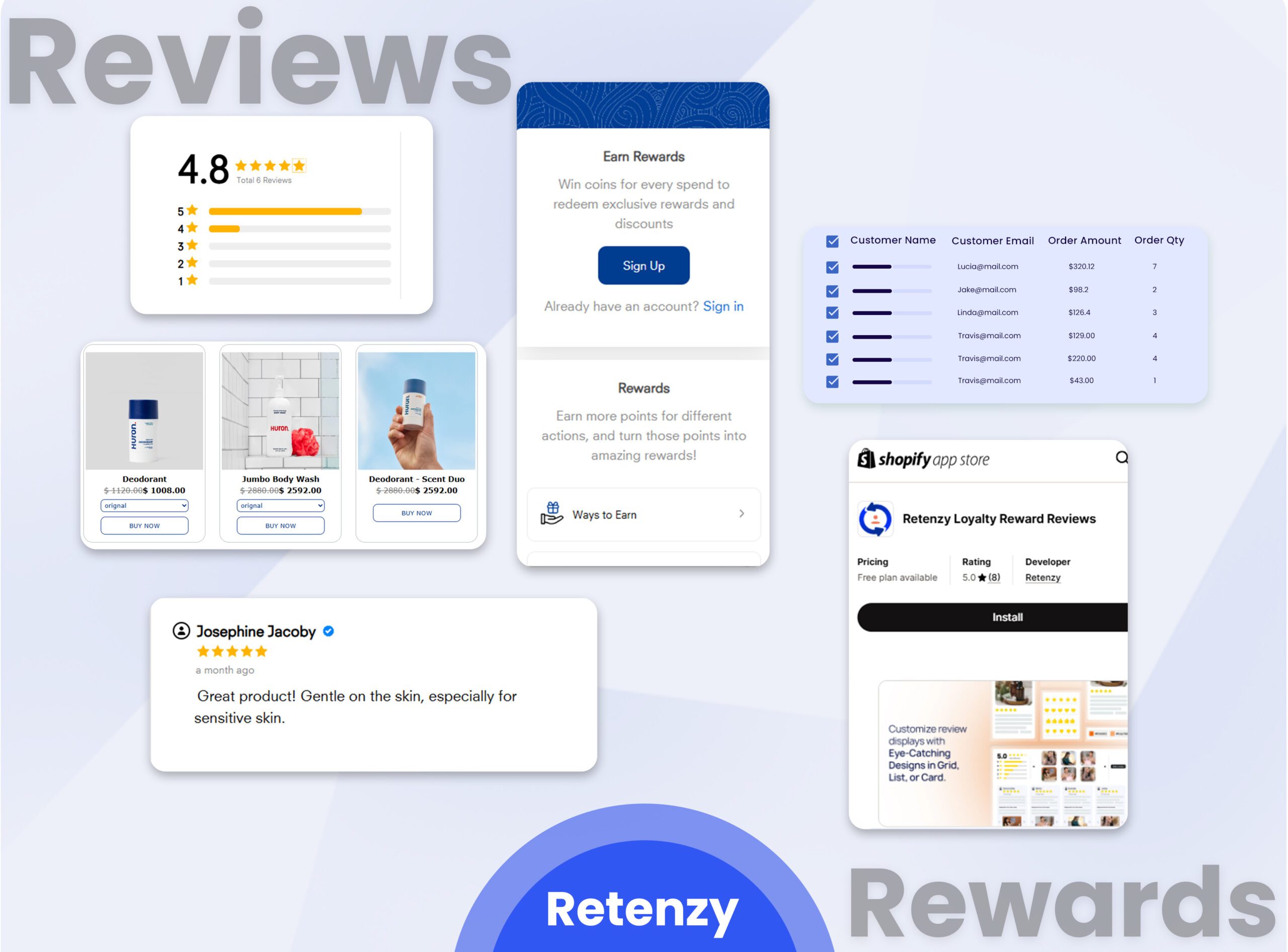
Retenzy: Loyalty-First Platform
Retenzy specializes in loyalty programs with integrated cart recovery. It’s built specifically for Shopify dropshipping stores seeking loyalty as their primary growth lever.
Best for: Dropshipping stores prioritizing customer retention and repeat purchases.
Pricing: Freemium to $99+/month.
Key Feature: Points-based system, tiered rewards, and mobile-first interface.
LoyaltyLion: Flexible Points Engine
LoyaltyLion offers the most flexible points system on the market, allowing rewards for purchases, reviews, referrals, and social sharing. This breadth makes it ideal for stores wanting a comprehensive loyalty ecosystem.
Best for: Established stores ($50K+ monthly) wanting sophisticated loyalty mechanics.
Pricing: Starts at $159/month.
Key Feature: Referral program integration multiplies customer acquisition.
Decision Framework: Which Platform for Your Store?
Choose Shopify Native Recovery if: You’re just starting or have under $5,000 monthly revenue.
Choose Retenzy if: You’re a dropshipping store prioritizing loyalty-first growth and have 3-6 months to invest in optimization.
Choose Omnisend if: You need multi-channel (SMS + WhatsApp + email) in one platform and value ease of use.
Choose Klaviyo if: You have $100K+ monthly revenue and want maximum segmentation and personalization.
Choose LoyaltyLion if: You want the most flexible rewards mechanics and are committed to a sophisticated loyalty program.
Part 5: WhatsApp Cart Recovery – The 2026 Game-Changer
Why WhatsApp Matters in 2026
Email open rates are declining. SMS has high engagement but feels intrusive. WhatsApp occupies a unique middle ground: it’s a personal messaging app with 98% open rates, yet feels less invasive than SMS. For dropshipping stores, WhatsApp recovery represents an untapped competitive advantage.
WhatsApp Recovery Statistics:
- Open rate: 98% (vs. email’s 25-35%)
- Click-through rate: 40%+ (vs. email’s 2-5%)
- Recovery rate: 10-30% (vs. email’s 3-10%)
- Preferred by Gen Z and Gen Alpha customers
WhatsApp Integration for Shopify
Platforms like Omnisend, Carthike, and Aisensy enable WhatsApp recovery directly from your Shopify store. The setup works as follows:
Step 1: Connect WhatsApp Business Account
Link your Shopify store to a WhatsApp Business Account. This takes 10 minutes and creates a verified channel for customer communication.
Step 2: Trigger Automation
Set rules: “If a customer abandons a cart for 30 minutes, send a WhatsApp reminder with product image + checkout link + limited-time offer.”
Step 3: Personalize the Message
Include the customer’s name, product image, current cart total, and a time-limited incentive. Example: “Hi Sarah, you left these items in your cart 30 mins ago. Complete checkout now and earn 2X loyalty points (valid for 4 hours only). [Link]”
Step 4: Monitor Performance
Track open rates, click-through rates, and recovery conversions separately from email to understand WhatsApp’s unique contribution.
WhatsApp Best Practices for 2026
- Timing: Send first reminder 30 minutes after abandonment (during active browsing session).
- Frequency: Maximum 2 WhatsApp messages per abandoned cart (vs. 3-4 emails).
- Personalization: Always include the customer name + product images. Generic messages underperform.
- Incentive Display: Show the exact reward value (“Earn 100 points = $10 off next order”).
- Compliance: Only message customers who have explicitly opted into WhatsApp communications.
Part 6: Building Your Rewards Program From Scratch
Step 1: Define Your Reward Currency
Choose between:
Points-Based Systems: Customers earn points per dollar spent (e.g., 1 point per $1), redeemable for discounts or products. Best for frequent purchasers.
Tiered Programs: Customers progress through tiers (Bronze → Silver → Gold) with increasing benefits. Best for building status motivation.
Hybrid Models: Combine points + tiers (e.g., earn points faster at higher tiers) for maximum psychological engagement.
Recommendation for dropshipping: Start with points-based (simplest) and layer in tiers after 3 months, when you have customer behavior data.
Step 2: Design Your Point Earning Mechanics
Customers should earn points through multiple actions:
- Purchases: 1 point per $1 spent (industry standard).
- Cart Completion: 10 bonus points for completing an abandoned cart recovery email click.
- Reviews: 25 points for writing a product review.
- Referrals: 50 points when a referred customer makes their first purchase.
- Social Sharing: 10 points for sharing a product on Instagram/Facebook.
- Newsletter Signup: 25 points for joining your email list.
- Birthday Month: 50 bonus points to drive seasonal engagement.
This variety increases earning velocity and creates multiple touchpoints for engagement.
Step 3: Set Redemption Thresholds
Make redemption achievable but meaningful:
- 100 points = $5 off next purchase
- 250 points = Free shipping on any order
- 500 points = $20 off + free shipping
- 1,000 points = $50 off or an exclusive product
For a customer spending $50/month, reaching 100 points takes approximately 2 months—long enough to feel meaningful, short enough to maintain motivation.
Step 4: Launch Early Access and Exclusive Offers
Attract customers to your loyalty program with:
- New Member Bonus: 50 points for signup (costs you ~$2.50, but captures email + WhatsApp consent).
- Flash Sales for Members: “Gold members only: 24-hour flash sale on [Product] starting in 2 hours.”
- Early Access: Members see new product launches 48 hours before the general public.
- Birthday Rewards: Extra 50 points during birth month.
Step 5: Integrate Rewards Into Your Recovery Sequence
Your abandoned cart recovery sequence should explicitly showcase the rewards opportunity:
Email 1 (30 minutes after abandonment): Reminder + incentive display
Subject: “Sarah, you left behind $45 in rewards points.”
Body: “Complete your cart now and earn 100 loyalty points ($10 value). Click here to finish.”
Email 2 (24 hours later): Problem-solving + scarcity
Subject: “Last chance—double points expire tonight.t”
Body: “Did something hold you back? We’re adding 100 bonus points (double our usual offer) for the next 12 hours only.”
WhatsApp (12 hours after email 2): Direct, conversational
“H, ey Sarah! Your items are still waiting + your double points bonus ends in 12 hours. Complete here: [li.nk].”
Email 3 (3 days later): Final push + VIP angle
Subject: “Sarah, you’re close to Gold status.”
Body: “Completing this $45 purchase puts you at 310 points—just 190 away from Gold status & exclusive VIP perks. Finish now: [link].”
Part 7: Real-World Case Studies and ROI Data
Case Study 1: Gymshark’s Personalized Approach
The Situation: Gymshark, an athletic wear brand with high repeat-customer potential, faced 70%+ cart abandonment despite strong brand loyalty.
The Strategy: Implemented personalized email recovery with customer names and product images, combined with a points-based loyalty program offering 2X earnings on abandoned cart recovery completions.
Key Tactics:
- Email 1 sent 1 hour after abandonment
- Email 2 sent 24 hours later
- Personalization: Customer name + product image + specific points value
Results:
- 20% cart recovery rate (2x the industry baseline of 10%)
- 15% increase in average order value (recovered customers spent more)
- 32% of recovered customers made repeat purchases within 30 days
Key Insight: Personalizing the reward amount (not just the discount) dramatically outperformed generic offers.
Case Study 2: Movies Unlimited’s Multi-Email Sequence
The Situation: Movies Unlimited, an online media retailer, needed to recover abandoned carts from price-sensitive, comparison-shopping customers.
The Strategy: Three-email sequence with escalating incentives, sent at strategic times.
Sequence Timing:
- Email 1: 20 minutes after abandonment (customer service angle)
- Email 2: 23 hours later (social proof + product benefits)
- Email 3: 7 days later (final chance messaging + urgency)
Results:
- 26% conversion rate from the recovery sequence
- 500% ROI on the campaign
- 43.4% read rate, 25.2% CTR (exceptional for email)
- 27.7% higher average order value compared to other campaigns
Revenue Impact: The recovery campaign generated 10% of Movies Unlimited’s email revenue while accounting for just 0.2% of email volume—demonstrating that recovery campaigns punch above their weight.
Case Study 3: E-commerce Store with WhatsApp Integration
The Situation: A mid-size ecommerce store (average order value: $65) added WhatsApp cart recovery alongside email, targeting customers who had opted in.
The Strategy:
- Email sent at 30 minutes (as baseline)
- WhatsApp sent at 4 hours (to catch evening/mobile browsing)
- Both included 15% loyalty discount for completion
Results:
- Email recovery: 8% conversion rate
- WhatsApp recovery: 14% conversion rate
- Combined recovery rate: 19% (significantly higher than either channel alone)
- WhatsApp customers had 2.3x higher repeat purchase rate (11% vs. 5%)
Key Insight: WhatsApp recipients felt more personally engaged, leading to stronger long-term loyalty.
ROI Benchmark Across Case Studies
Based on these case studies and industry data:
- Conservative estimate: 10-15% recovery rate = 0.2-0.3% additional revenue lift
- Moderate estimate: 15-20% recovery rate = 0.4-0.6% additional revenue lift
- Aggressive estimate: 20%+ recovery rate = 0.8%+ additional revenue lift
For a $50,000/month store:
- Conservative: +$100-150/month = $1,200-1,800/year
- Moderate: +$200-300/month = $2,400-3,600/year
- Aggressive: +$400+/month = $4,800+/year
After subtracting platform costs ($30-200/month), the net annual revenue increase ranges from $600 to $4,000+, depending on implementation sophistication.
Part 8: Best Practices and Optimization for 2026
Email Sequence Timing Optimization
The Critical First Email (30-60 Minutes)
Timing matters more than content for the first email. Research shows:
- Sending at 30 minutes: 38% open rate, 24% CTR, 40% conversion
- Sending at 1 hour: 38.6% open rate, 19.5% CTR, 27.6% conversion
- Sending at 4+ hours: 35% open rate, 15% CTR, 18% conversion
Recommendation: First email within 1 hour, while the customer is still in a “shopping mindset.”
A/B Testing Framework for Rewards
Don’t assume your initial reward structure works. Test systematically:
Test 1: Reward Amount
- Variant A: 10% discount
- Variant B: $10 fixed discount
- Variant C: 50 bonus loyalty points (equivalent to $5)
- Expected winner: Loyalty points typically outperform percentage discounts by 15-20% because they create future value perception.
Test 2: Incentive Presentation
- Variant A: “Save 10% when you complete this cart.”
- Variant B: “Earn 100 loyalty points (worth $10) for completing…”
- Variant C: “You’re just $5 away from free shipping—complete n.ow”
- Expected winner: Future-focused messaging outperforms discount-focused by 18-25%.
Test 3: Urgency Framing
- Variant A: “Complete in the next 24 hours.”
- Variant B: “Your offer expires in 4 hours.s”
- Variant C: No urgency deadline
- Expected winner: 4-hour urgency typically beats 24-hour by 12-18%.
Mobile Optimization for 2026
Critical insight: 65% of cart abandonments occur on mobile devices. Your recovery emails must render perfectly on small screens.
Optimization checklist:
- Single-column layout (no side-by-side images)
- Button size ≥ 50px (thumb-friendly)
- Font size ≥ 14px (readable without zoom)
- Image-to-text ratio 1:1 or text-heavy
- Load time ≤ 3 seconds
- WhatsApp links should include “?ref=cart_recovery” for tracking
Readability and Content Structure
Optimize for both humans and search engines:
Flesch Reading Ease Target: 60-75 (plain English, accessible to general audience)
Flesch-Kincaid Grade Level: 8th-9th grade (13-14 year old comprehension)
Sentence length: 15-20 words average
Paragraph length: 3-4 sentences maximum
Apply these standards to email copy, landing pages, and help documentation.
Part 9: Measuring Success—KPIs That Matter

[chart:54]
Critical Metrics to Track
Cart Recovery Rate
Formula: (Recovered abandoned carts / Total abandoned carts) × 100
Industry benchmark: 10-30%
2026 target with optimization: 25-35%
Track separately by channel:
- Email recovery rate
- WhatsApp recovery rate
- SMS recovery rate
- Retargeting ad recovery rate
Conversion Rate from Recovery Campaigns
Formula: (Customers who complete purchase from recovery email / Recipients who receive recovery email) × 100
Industry benchmark: 3-5%
2026 target: 8-12%
This differs from the recovery rate by accounting for the denominator—some recovery attempts target non-purchasers who wouldn’t convert anyway.
Email Engagement Metrics
- Open rate: Target 35%+
- Click-through rate: Target 5%+
- Unsubscribe rate: Keep below 0.5%
Average Order Value (AOV) Lift
Compare the average order value of recovered carts vs. regular sales.
Expected lift: 12-20% (recovered customers often feel they’re getting a special deal, so they add more items)
Customer Lifetime Value (CLV) Impact
This is critical: recovered customers should have higher CLV because:
- They already made one purchase (higher propensity)
- They received loyalty rewards (incentives for repeat purchase)
- They experienced good customer service (recovery touchpoints build trust)
Expected CLV lift: 25-40% for recovered customers vs. one-time purchasers
Return on Ad Spend (ROAS)
If running paid retargeting ads to abandoned cart audiences:
Formula: (Revenue from retargeting / Ad spend)
Target: 4:1 ROAS minimum (4x return)
Email Marketing ROI
Formula: (Revenue from recovery emails – Platform cost) / Platform cost × 100
Expected: 300-500% ROI (recovery emails are the highest-ROI email type)
Dashboard Setup
Use Shopify Analytics or Google Analytics 4 to create a custom recovery dashboard tracking:
- Weekly recovery rate by channel
- Weekly email metrics (open, click, conversion)
- Monthly AOV comparison (recovered vs. baseline)
- Monthly revenue attribution (recovery campaigns)
- CLV comparison (recovered customers vs. others)
Review weekly and adjust tactics based on performance.
Part 10: Addressing Common Challenges
Challenge 1: Cost Management and Profit Margins
The Problem: Dropshipping margins are 5-10%. A 10% discount on a $50 order costs $5, which might exceed the profit on that item.
Solution: Use tiered incentives
- Tier 1 ($0-25 cart): Offer loyalty points (costs you 0%, but takes up future revenue)
- Tier 2 ($25-75 cart): Offer 5% discount + bonus points (cost: $1.25-3.75)
- Tier 3 ($75+ cart): Offer free shipping (cost: $3-8, but worth it for AOV)
This structure protects the margin on small orders while making large orders more attractive.
Challenge 2: Technical Integration Complexity
The Problem: Your store currently has no automation infrastructure.
Solution: Start with Shopify Native Recovery (free, 10-minute setup) for 4 weeks. Collect baseline metrics. Then upgrade to Omnisend or Retenzy (they handle data migration).
This phased approach prevents analysis paralysis while building organizational confidence.
Challenge 3: Customer Understanding and Communication
The Problem: Customers don’t understand how loyalty points work or how to redeem them.
Solution:
- Create a “How It Works” video (60 seconds) explaining your specific program
- Add a help center article: “Loyalty Points FAQ” answering:
- How do I earn points?
- How much is a point worth?
- Do points expire?
- How do I redeem points?
- Include links in every recovery email to these resources
- Add a live chat widget on your site for point-related questions
Challenge 4: List Fatigue and Unsubscribes
The Problem: Too many recovery emails lead to unsubscribes.
Solution: Use frequency caps
- Maximum 2 emails per abandoned cart (vs. 3-4)
- Minimum 7 days between sequences for the same customer
- Segment: VIP customers get 3 emails; others get 2
Monitor unsubscribe rates weekly. If >0.5%, reduce frequency immediately.
Part 11: Trending Hooks and 2026 Market Insights
The Cart Abandonment Crisis is Getting Worse
In December 2024, cart abandonment spiked to 79%+ as holiday shopping overwhelmed stores. This seasonal spike is becoming the new baseline, meaning optimization is no longer optional—it’s survival.
2026 Prediction: Stores that implement rewards recovery programs will outpace competitors by 15-30% in Q4 revenue.
The Rise of AI-Driven Recovery
By 2026, AI personalization will determine recovery success. Basic “here’s your cart” emails will achieve <3% conversion. AI-powered predictive recovery—identifying which abandoned carts to prioritize and what reward level each customer responds to—will achieve 15-25% conversion.
Action item: Choose a platform (Klaviyo, Omnisend) with AI-native features, not legacy tools retrofitting AI.
Social Commerce’s Impact on Abandonment
53% of shoppers now discover products via social media, and TikTok Shop is becoming a major sales channel. As social commerce grows, traditional cart abandonment metrics shift. You’ll need platform-specific recovery (TikTok Shop abandonment differs from Shopify).
WhatsApp as the Dominant Messaging Channel
In India and Southeast Asia, WhatsApp dominates messaging. In 2026, WhatsApp recovery will be table-stakes for stores targeting these regions. US and EU stores should follow by 2026 Q2.
Emerging trend: WhatsApp Communities (groups) for loyalty members—building a private community around your rewards program to drive 3x higher engagement.
Your 30-Day Action Plan
Week 1: Audit your current abandonment rate. Use Shopify analytics to identify baseline cart recovery metrics.
Week 2: Choose a platform. If revenue is under $20K monthly, start with Shopify Native Recovery. If higher, choose Omnisend.
Week 3: Design your reward structure. Decide: points-only or tiered? Point value per dollar?
Week 4: Launch your first recovery email sequence (3 emails over 7 days). Monitor metrics obsessively.
Weeks 5-8: A/B test reward amounts, email timing, and copy variations. Let data guide optimization.
Month 2+: Scale. If the recovery rate exceeds 15%, add WhatsApp. If CLV lift exceeds 20%, expand to SMS. Build on what works.
By Month 3, you should see 5-8% additional revenue from recovery campaigns. By Month 6, this grows to 10-15% if you’ve optimized aggressively.
Conclusion: Your Path to Recovering Lost Revenue
Cart abandonment isn’t inevitable. It’s a solvable business problem with a clear solution: offer the right incentive, at the right time, through the right channel.
In 2026, stores that implement rewards-based cart recovery programs will systematically outpace competitors. The technology is accessible (platforms like Retenzy, Omnisend cost $20-100/month). The psychology is proven (loss aversion, progress motivation, and status reinforcement drive behavior). The ROI is quantifiable (300-500% typical range).
Your next action is simple: choose a platform, design a reward structure, and launch your first recovery email today. The $8,400-$18,000 annual revenue increase is waiting.
Part 12: Frequently Asked Questions (FAQ)
Q1: What’s the ideal cart abandonment rate for a healthy e-commerce store?
A: There’s no “ideal” abandonment rate—only a baseline. The average is 70.22%, meaning your store either matches this or is outperforming/underperforming. The more relevant question: What’s your specific abandonment rate, and can you reduce it?
If your current rate is 75%, reducing it to 70% through optimization is a major win. If it’s 65%, focus on deeper issues (product quality, site speed, pricing).
Q2: Should I offer discounts or loyalty points for cart recovery?
A: Points win 65-75% of the time in A/B tests, but this varies by customer segment. Run your own test:
- Test discount-focused emails (40% of audience)
- Test points-focused emails (40% of audience)
- Control group (20%)
Track conversion rates. The winner becomes your default strategy, but continue testing quarterly because customer preferences evolve.
Q3: Is WhatsApp recovery worth implementing in 2026?
A: Absolutely, with caveats. WhatsApp recovery has 3x higher engagement than email. However, only implement if:
- You have platform expertise (use Omnisend to simplify)
- Your audience is mobile-first (Gen Z, international)
- You can obtain explicit consent (avoid spam complaints)
If all three are true, WhatsApp is your 2026 competitive advantage. If not, perfect email first.
Q4: How long should I wait before sending the first recovery email?
A: 30-60 minutes is optimal. This window catches customers still in “shopping mode.” Waiting longer misses the psychological moment. However, send immediately if the customer’s abandoned cart exceeds $100 (a high-value cart deserves urgent attention).
Q5: What’s the maximum number of cart recovery emails I should send?
A: 3 emails over 7 days is the safe limit before unsubscribe risk increases. Structure:
- Email 1: 1 hour after abandonment
- Email 2: 24 hours later
- Email 3: 5-7 days later
If you have WhatsApp, use it as email #2 (replacing the 24-hour email) to diversify channels and reduce email volume.
Q6: Can I use cart recovery emails for new product launches?
A: No. This violates trust. Recovery emails have a specific purpose: recover abandoned carts. Using them for promotions tanks engagement. Instead, segment your email list: recent abandoned carts get recovery emails; older customers get promotional emails.
Q7: How do I calculate the true ROI of my cart recovery program?
A: Use this formula:
ROI = [(Revenue from recovery – Platform cost – Discount cost) / (Platform cost + Discount cost)] × 100
Example: $5,000 revenue from recovery emails, $100 platform cost/month, $300 discount cost
ROI = [($5,000 – $100 – $300) / ($100 + $300)] × 100 = 1,150%
Q8: Should loyalty programs be tiered or points-only?
A: For dropshipping stores under $100K monthly revenue: points-only first. Tiered programs are more complex to manage but more psychologically powerful. After 3-6 months of data, layer in tiers if you want deeper engagement.
Q9: How do I prevent loyalty program fraud (customers creating multiple accounts)?
A: Implement these checks:
- Email verification required (not phone)
- IP address tracking (flag accounts from the same IP)
- CVV matching (ensure payment method consistency)
- Manual review for high-point redemptions (>500 points)
- Point expiration (unused points expire after 12 months)
These protect 95% of abuse cases without hurting legitimate users.
Q10: Can I use abandoned cart recovery for subscription products or digital goods?
A: Yes, with modifications. Digital goods have no shipping, so remove “free shipping” incentives. Instead, offer:
- Instant access to bonus digital products
- Extended trial period (extra 7 days free)
- Bundle discount (product + complementary digital good)
- Loyalty points (standard approach)
For subscriptions, emphasize the recurring value: “Complete your subscription today and earn 25 points monthly—that’s free items every 3 months.”