

The Indian D2C ecosystem is poised for a major transition in 2026. What started as a high-growth, investor-fueled wave is now shifting toward profit-first, retention-led, and efficiency-driven business models. With more than 1,200 active D2C brands, rising competition, and platforms like Meta & Google increasing ad costs year after year, founders no longer have the luxury of relying solely on paid acquisition.
At the same time, customer expectations are evolving. Shoppers aren’t just looking for new brands – they want trust, faster delivery, frictionless returns, and strong brand experiences. This means brands must rethink how they acquire, convert, and retain customers while keeping unit economics healthy.
Key takeaways:
✔ Why loyalty matters
✔Dropshipping economics: Acquisition vs Retention
✔ How to build one
✔ Comparison tables
✔ Two data-backed pie charts
✔ A detailed structure optimized for SEO & Discover
Why Customer Loyalty Matters in Dropshipping
Dropshipping comes with challenges: long shipping times, limited differentiation, fluctuating supplier quality, and intense competition.
Loyalty programs help solve these problems by increasing trust, improving retention, and creating habit-driven repeat purchases.
Dropshipping – Without vs With Loyalty Program
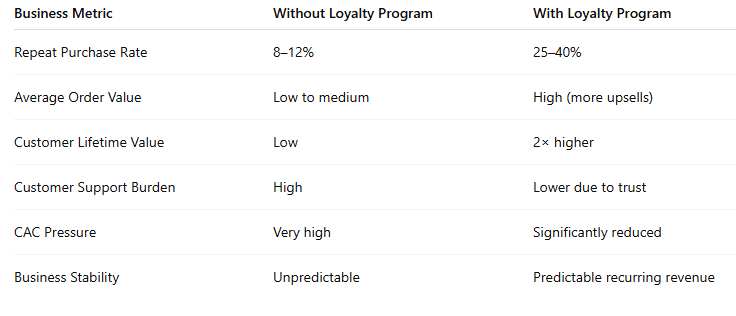
Why loyalty is essential:
- Reducing CAC impact: Retained customers cost 5–7x less than new acquisitions.
- Increasing LTV: Repeat buyers spend 2–3× more.
- Brand insulation: Loyal customers forgive delays or minor issues.
- Predictable revenue: Returns become consistent because repeat orders stabilize cash flow.
Dropshipping Economics – Acquisition vs Retention
Cost Comparison – CAC vs Retention Cost
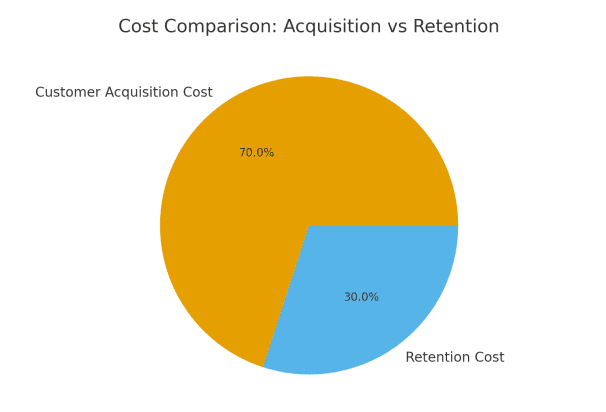
New customers are costlier because you must spend on ads, influencers, creative production, landing page tests, and discounts to break through and convert cold audiences. These one-time spends quickly add up and make each new customer expensive.
Retention costs are lower because they lean on cheaper touchpoints – email, push, WhatsApp, small reward redemptions, and personalised content. Once a customer knows and trusts your store, small investments (a points bonus, a targeted discount, or free shipping) nudge them to buy again far more cheaply than acquiring a replacement customer.
Quick takeaway: view acquisition as the high fixed cost and retention as the low-cost way to scale margin and predictability.
Benefits of Loyalty Programs for Dropshipping Stores
➜ Increase repeat orders:
Loyalty systems give customers a reason to return – points to earn, tiers to climb, or exclusive member sales. Even modest incentives (e.g., 5–10% off a second purchase) materially lift repeat rates because they change the customer’s decision calculus from “buy elsewhere” to “buy here again.”
➜ Boost average order value (AOV)
Use points thresholds and bundled reward rules to encourage larger carts (e.g., “earn double points on orders ₹2,500+” or “200 points = ₹200 off on orders above ₹1,500”). Customers chase rewards, which nudges them to add an extra item or upgrade to free shipping thresholds.
➜ Improve customer lifetime value (CLV)
When customers buy more often and spend more each time, their CLV rises. Loyalty programs extend the revenue window of each customer – turning one-off buyers into multi-purchase customers.
➜Encourage referrals
Referral rewards turn happy customers into acquisition channels. A two-sided reward (both referrer + referee get value) is the most effective because it removes friction for both parties and amplifies word-of-mouth.
➜Enhance emotional connection
Beyond discounts, loyalty programs that include exclusive perks, early access, or personalised experiences create a felt relationship. Customers who feel “valued” are more forgiving of occasional service issues and more likely to advocate for the brand.
➜ Build a brand moat
In crowded niches, a loyalty ecosystem points, tiers, community benefits, and referral loops create switching friction.
Quick Implementation Checklist
- Choose the program model that matches your margin and customer frequency.
- Set simple, transparent rules that customers can understand at a glance.
- Integrate a loyalty app that automates points, tiers, and referrals.
- Promote the program at checkout, on product pages, and via email.
- Run a small launch promotion (double points weekend) to seed engagement.
- Measure repeat rate, redemption, referral conversions, and churn – then optimize.
Types of Loyalty Programs Dropshippers Should Use –
1. Points-Based Programs
How it works: Customers earn points for purchases and actions (e.g., 10 points per ₹100 spent). Points are redeemable for discounts, product samples, or free shipping.
Why it fits dropshipping: Flexible (doesn’t promise a particular SKU), scalable across product lines, and easy to gamify with promotions.
Implementation tips:
- Keep math simple (round numbers) so customers understand value.
- Offer small, immediate ways to earn (sign-up bonus, first-purchase points) to drive early adoption.
- Limit point expiry windows or communicate them clearly to avoid customer frustration.
Example: 100 points = ₹100 off; 10 points per ₹100 spent; 50 points for a product review.
2. Tiered VIP Programs
How it works: Customers progress through levels (Bronze → Silver → Gold) by cumulative spend or points. Higher tiers unlock better perks: bigger discounts, free shipping, early access to sales, or exclusive products.
Why it fits dropshipping: Encourages customers to consolidate spend with you and increases perceived status – powerful for fashion/beauty or hobby niches.
Implementation tips:
- Make tiers achievable but aspirational (first upgrade should feel reachable).
- Publicly show progress bars on account pages to trigger goal completion behavior.
- Time-limited challenges (e.g., “reach Silver this month for an extra bonus”) accelerate activity.
Example perks: Bronze: welcome perks; Silver: 5% off + free shipping; Gold: 10% off + priority support + exclusive drops.
3. Referral & Ambassador Programs
How it works: Customers get a unique referral link/code. When a referred friend purchases, both parties receive a reward (wallet credit, discount, or points).
Why it fits dropshipping: Lowers CAC because you leverage existing customers as acquisition channels, and the referred buyers tend to have higher trust and conversion rates.
Implementation tips:
- Use two-sided incentives (e.g., referee gets 10% off, referrer gets ₹200 credit).
- Make sharing frictionless (share to WhatsApp, Instagram, or SMS).
- Add social proof in referral messages (e.g., “I love this bag – get 10% off with my code!”).
Example: Refer a friend → friend gets 15% off; you get ₹250 credit after their first purchase.
4. Membership Loyalty (Paid)
How it works: Customers pay a subscription (monthly/yearly) for guaranteed perks such as free shipping, exclusive discounts, early access, or bonus points.
Why it fits dropshipping: Converts fickle buyers into committed customers and creates predictable, recurring revenue, which offsets the variability of dropshipping margins.
Implementation tips:
- Offer a free trial or 30-day satisfaction guarantee to reduce buyer resistance.
- Ensure members feel exclusive value: member-only products, flash sales, or faster support.
- Monitor churn closely; keep iterating on membership benefits.
Example: ₹199/month membership → free shipping, 2× points on all purchases, early access to new collections.
5. Cashback Loyalty
How it works: Customers receive a percentage of their purchase back as store credit or a wallet balance that can be used on future orders.
Why it fits dropshipping: Simple to understand and doesn’t require discounting products directly; credit circulates back into the store, keeping revenue within the ecosystem.
Implementation tips:
- Cap cashback on promotional SKUs to protect margins.
- Use cashback to fund cross-sell campaigns (“You’ve earned ₹200 cashback – apply it to this recommended item”).
- Be transparent about expiration and minimum redemption thresholds.
Example: 5% cashback credited to the wallet, redeemable on orders over ₹500, expires in 6 months.
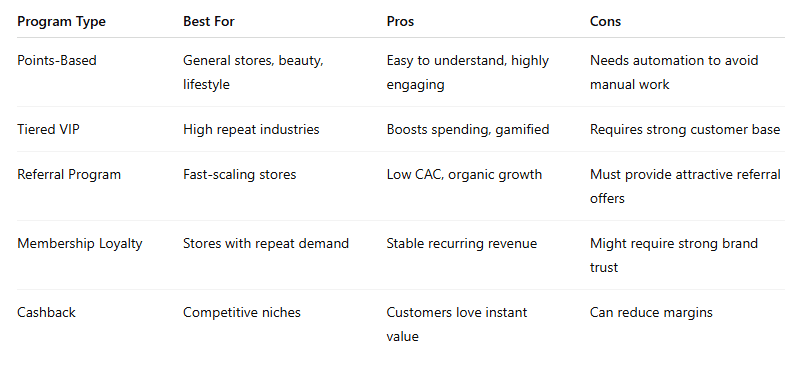
Loyalty Program Types – COMPARISON
How Loyalty Programs Increase ROI & Sales
Revenue Contribution – New vs Repeat Customers
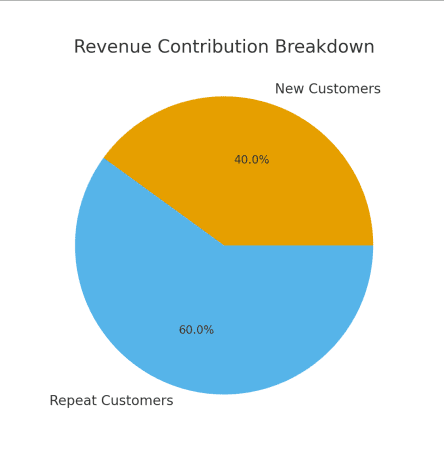
Most dropshipping stores observe a predictable pattern:
- 40% of revenue comes from new customers – but these purchases are usually expensive because you’ve paid high CAC through ads, influencers, or discounts.
- 60% of revenue comes from repeat customers – these customers cost almost nothing to bring back and tend to spend more over time.
This clearly shows that long-term profitability is driven by repeat buyers, not one-time customers. When loyalty programs increase repeat purchases even by a small percentage, the overall ROI of your ad spend and store margins rises dramatically.
Revenue Contribution New vs Repeat Customers
Final thoughts:
In the competitive world of dropshipping, loyalty is the most reliable growth engine. A smartly designed loyalty program boosts repeat purchases, reduces your dependency on expensive ads, increases LTV, and builds genuine customer relationships. When customers feel rewarded and recognized, they return more often and spend more.
If your goal is stable revenue, predictable growth, and long-term profitability, building a loyalty program isn’t optional anymore – it’s a strategic necessity.
➜ Every day without a loyalty program, you’re losing repeat customers – and giving your profits to competitors.
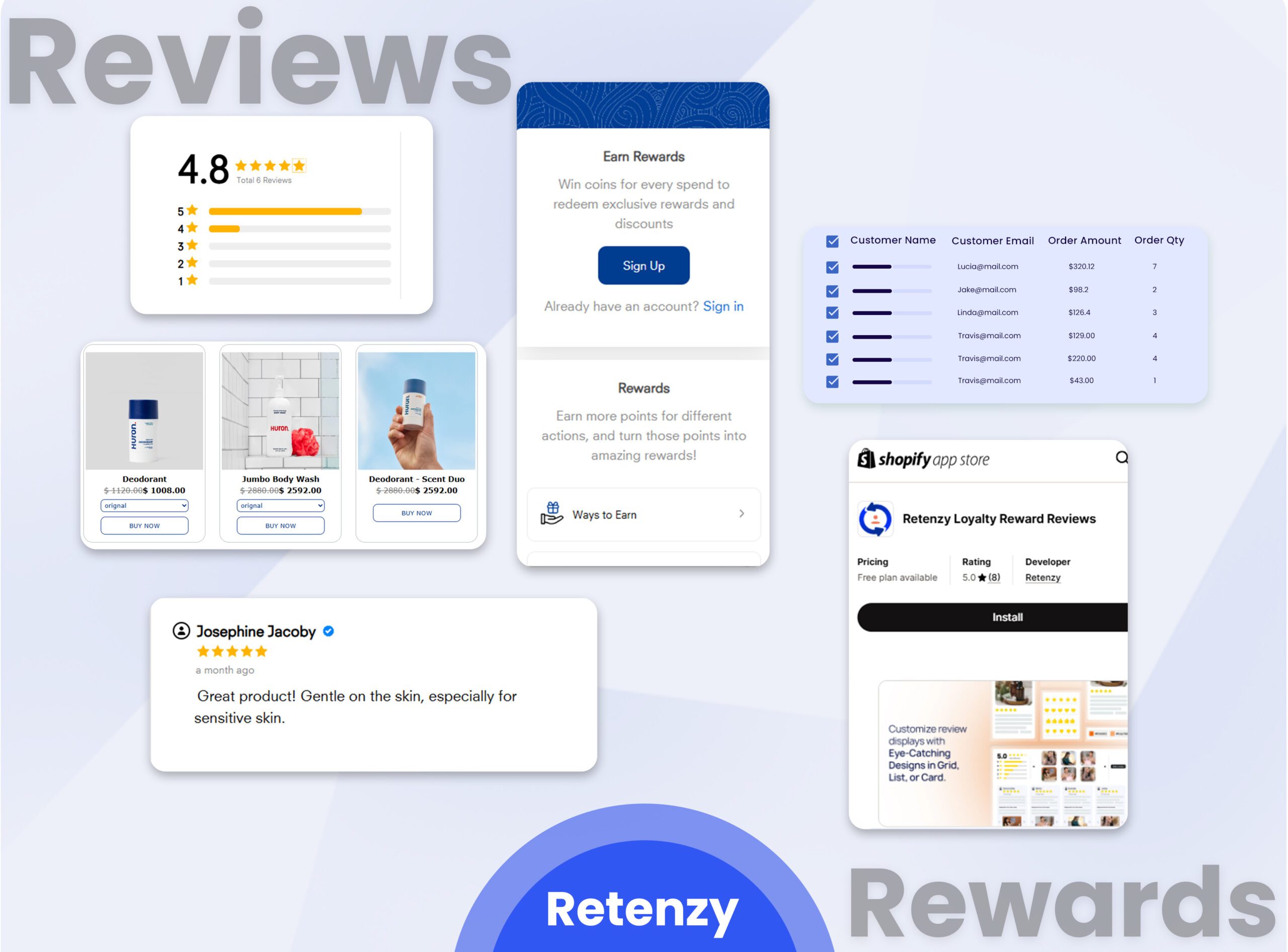
Retenzy stops the leak.
➜ Top D2C & dropshipping brands don’t rely on discounts – they rely on Retenzy.
Because loyalty-driven growth beats CAC every single time.
If you want to convert your traffic into long-term customers, Retenzy is the fastest way to build loyalty programs that actually work.
⚡ Points
⚡ Referrals
⚡ VIP tiers
⚡ Cashback
⚡ Memberships
⚡ Automated retention flows
Start building the loyalty system your customers won’t ignore.
Get Retenzy now. https://retenzy.com/