
- Features
Features



In today’s hyper-competitive eCommerce landscape, customer acquisition is just the opening move—retention is where real business growth happens. The data tells a compelling story: acquiring a new customer costs up to five times more than retaining an existing one. Yet despite this fundamental truth, many Shopify merchants remain laser-focused on driving traffic while neglecting the goldmine of repeat business sitting right in their customer database.
Consider these sobering statistics: the average eCommerce store maintains only a 31% customer retention rate, with repeat purchase rates hovering around 28.2%. This means nearly 70% of your customers never return. However, the opportunity is equally massive—stores that implement effective loyalty programs see dramatic improvements in repeat purchases, customer lifetime value (LTV), and brand advocacy.

The trending market shift in 2026 is clear: merchants who invested in loyalty infrastructure in 2025 are now reaping the rewards, while lagging competitors are scrambling to catch up. Loyalty isn’t just a feature anymore—it’s a fundamental growth lever that separates industry leaders from the rest of the pack.
This comprehensive guide walks you through the 10 best Shopify loyalty and rewards apps available in 2026, complete with detailed comparisons, pricing breakdowns, and strategic recommendations tailored to different business stages.
key takeaways in a concise, high-impact format:
✔️Retention = Profit: Keeping a customer is 5x cheaper than acquiring one; loyalty programs can boost Lifetime Value (LTV) by up to 45%.
✔️Shatter the Average: Most stores keep only 31% of customers—loyalty apps bridge this gap by creating psychological “loops.”
✔️Best for Beginners: Smile.io is the top pick for ease of use and free entry.
✔️App Fatigue Fix: Growave and Retenzy offer the best all-in-one suites (loyalty + reviews + wishlist).
✔️Points vs. Cash: Rise.ai wins on simplicity by using store credit instead of confusing point systems.
✔️Global Reach: BON Loyalty is the leader for international stores, supporting 250+ languages.
✔️Beyond Discounts: The best strategies reward social actions and referrals, not just purchases.
Before diving into specific apps, let’s establish why loyalty programs matter and what makes an effective one.
Effective loyalty programs do three critical things:
First, they create behavioral loops that encourage repeat purchases. Customers who earn rewards have psychological incentives to return, increasing purchase frequency and average order value.
Second, they provide valuable customer data. Loyalty programs act as data collection engines, helping you understand purchasing patterns, preferences, and customer segments—insights that transform your entire marketing strategy.
Third, they build emotional connections. Customers in loyalty programs feel recognized and valued, which converts them from transactional buyers into brand advocates who leave positive reviews, refer friends, and defend your brand online.
The statistics validate this approach: customers enrolled in loyalty programs spend 12-18% more annually compared to non-members, and loyal customers are 5-25 times more likely to refer friends or leave positive reviews.
Best for: SMBs and growing stores seeking simplicity and affordability
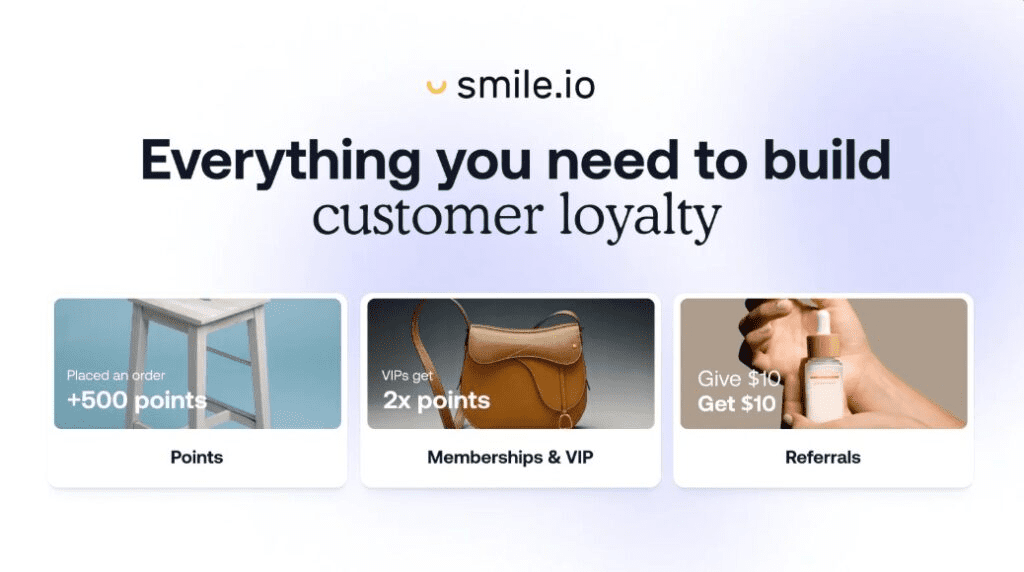
Smile.io remains the most widely adopted loyalty app on Shopify, trusted by over 100,000 active stores for good reason. Founded in 2012, it has perfected the art of balancing functionality with ease of use.
Core Features:
Why It Stands Out:
Smile.io excels at removing friction from loyalty program setup. The intuitive interface means even non-technical merchants can launch a program in minutes. The free plan allows unlimited rewards programs, making it ideal for testing before scaling. Customer support is responsive, and the app ecosystem integration ensures it plays well with your existing Shopify stack.
Pricing:
Limitations: Advanced segmentation and automation require paid tiers. Analytics are good, but not as robust as enterprise solutions.
Best for: Brands already using Yotpo for reviews who want unified UGC management
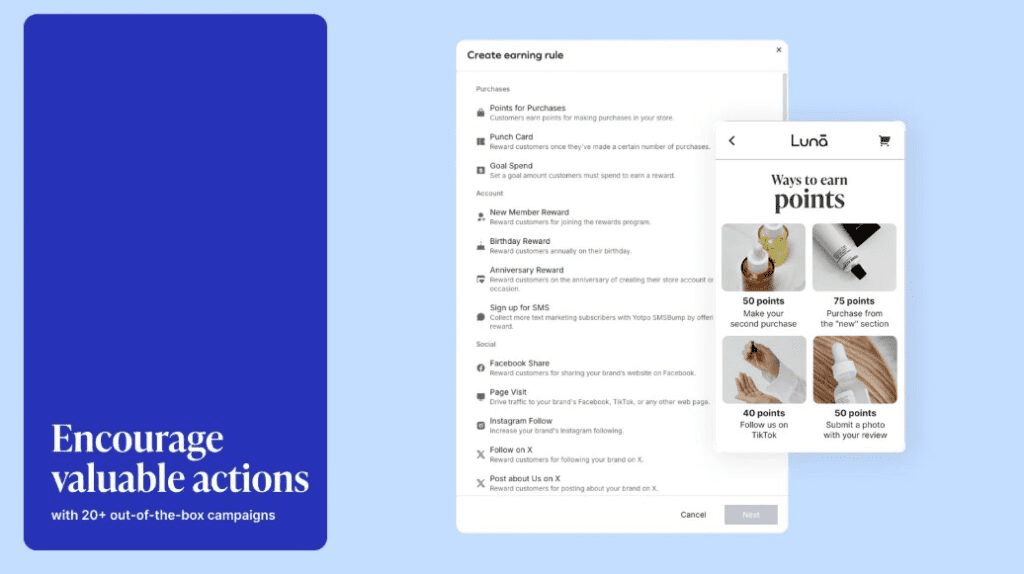
Yotpo has built a loyal following by creating a seamless integration between reviews, user-generated content, and loyalty programs—a powerful combination for building trust while driving repeat purchases.
Core Features:
Why It Stands Out:
If you’re serious about leveraging user-generated content and reviews as conversion tools, Yotpo creates a powerful flywheel. Reward customers for leaving reviews, automatically display those reviews to drive conversions, and track which reviewers become repeat buyers. This creates a self-reinforcing cycle of trust and sales.
Pricing:
Limitations: Setup can be complex for beginners. Steeper learning curve than Smile.io. Best utilized when paired with their full review platform.
Best for: Merchants seeking unified loyalty, reviews, and deal management without app clutter
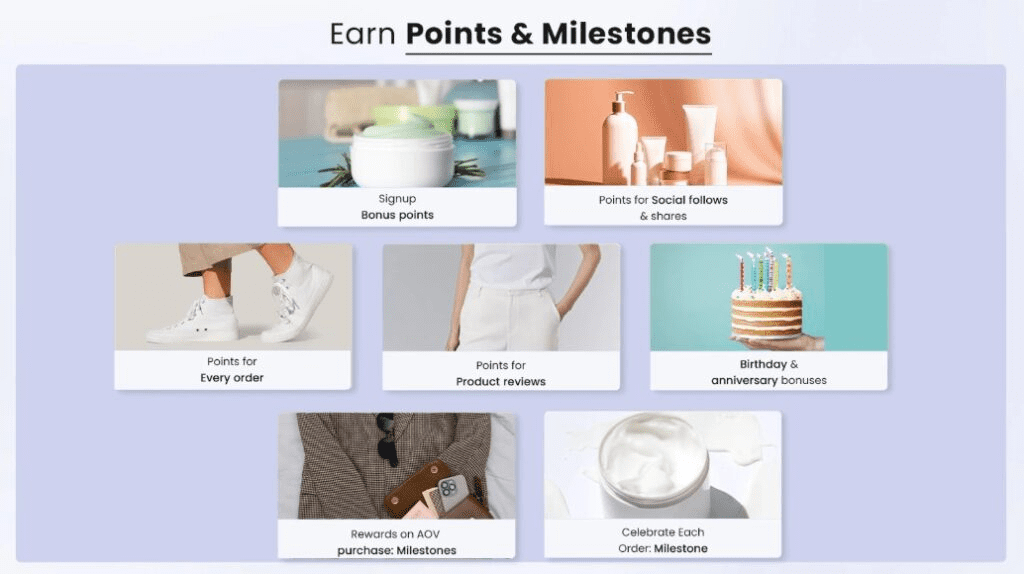
Retenzy represents a newer generation of retention platforms designed specifically for Shopify, combining loyalty, verified reviews, and personalized deals into one seamless ecosystem. This is why it deserves prominence in this list.
Core Features:
Why It Stands Out:
What makes Retenzy particularly compelling is its “pay-as-you-grow” pricing model. Unlike competitors charging flat monthly fees regardless of your store size, Retenzy scales with your business. The platform was built from the ground up for Shopify merchants, showing attention to native functionality. Integration between reviews and loyalty is native, not bolted-on, meaning reviews naturally contribute to loyalty points and drive engagement loops.
Pricing:
Limitations: Smaller review base compared to Yotpo or Judge.me. Best suited for merchants who want simplicity over maximum customization.
Best for: Stores wanting to reduce app fatigue with an integrated engagement suite
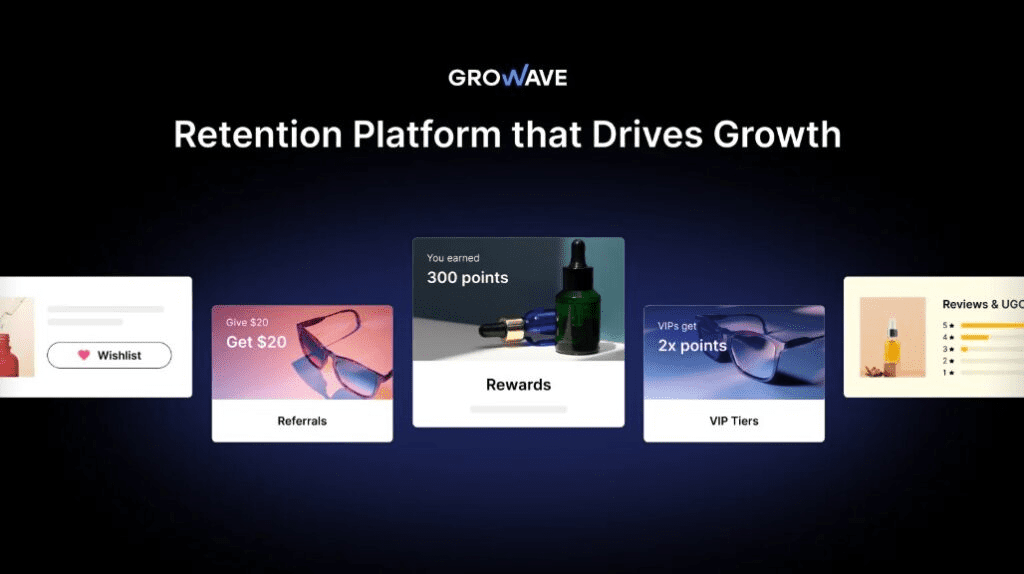
Growave solves a common merchant problem: the need for multiple retention tools (loyalty, reviews, wishlists, referrals) without managing a dozen different dashboards.
Core Features:
Why It Stands Out:
The consolidated dashboard reduces operational complexity. You’re not context-switching between apps—everything lives in one place. For merchants tired of app overload, this consolidated approach offers genuine operational efficiency. Growave has accumulated over 1,197 reviews with a 4.8-star rating, reflecting strong merchant satisfaction.
Pricing:
Limitations: Broad feature set means a steeper learning curve. Best for merchants willing to invest time in setup for long-term efficiency gains.
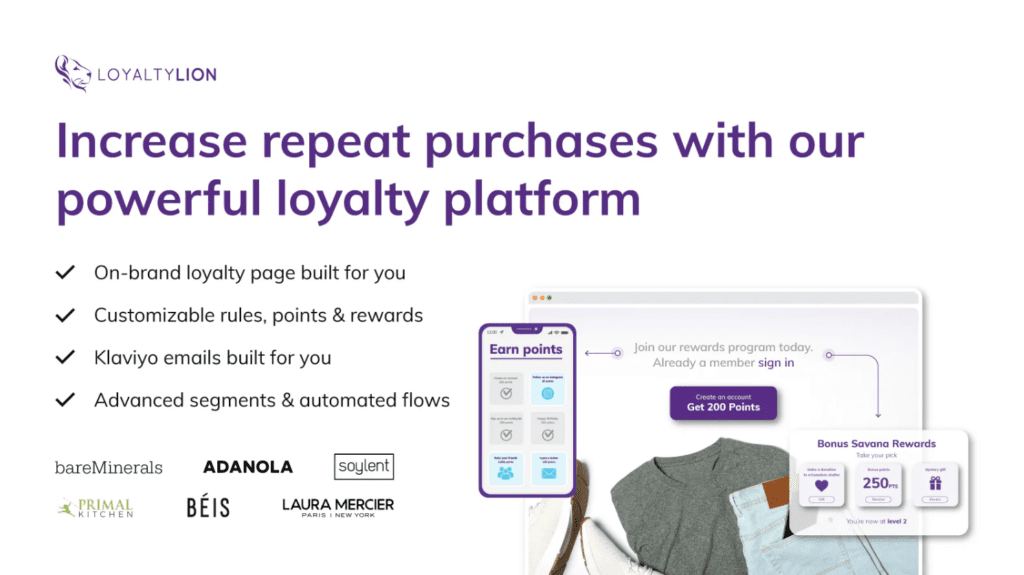
Best for: Mid-market and enterprise Shopify stores with complex loyalty requirements
LoyaltyLion powers loyalty programs for some of the most sophisticated DTC brands online. It’s the choice when you need advanced customization and strategic guidance.
Core Features:
Why It Stands Out:
LoyaltyLion’s strength lies in treating loyalty as a strategic tool, not just a feature. The platform empowers sophisticated brands to use precise earning and redemption rules to influence customer behavior at scale. The analytics dashboard clearly demonstrates program ROI, helping justify the investment to stakeholders.
Pricing:
Limitations: Overkill for small stores. Setup requires strategic planning to maximize ROI.
Best for: Brands wanting to simplify rewards through store credit instead of point tracking
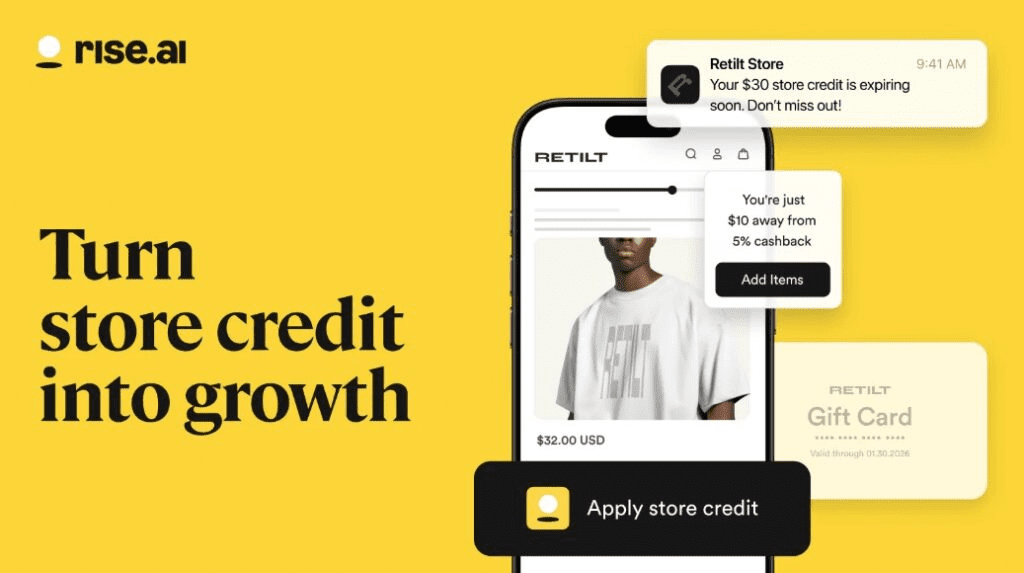
Rise.ai takes a fundamentally different approach: instead of tracking earned points, customers earn store credit they can spend immediately.
Core Features:
Why It Stands Out:
Some customers find point systems confusing or feel trapped by expiration dates. Rise.ai eliminates this friction by offering immediate, spendable store credit. The psychology is powerful: customers see tangible value they can use right now, driving immediate repeat purchases.
Pricing:
Limitations: Less feature-rich for advanced segmentation compared to competitors. Best as a complementary tool rather than a standalone loyalty strategy.
Best for: Global merchants and value-conscious stores seeking advanced features at accessible pricing
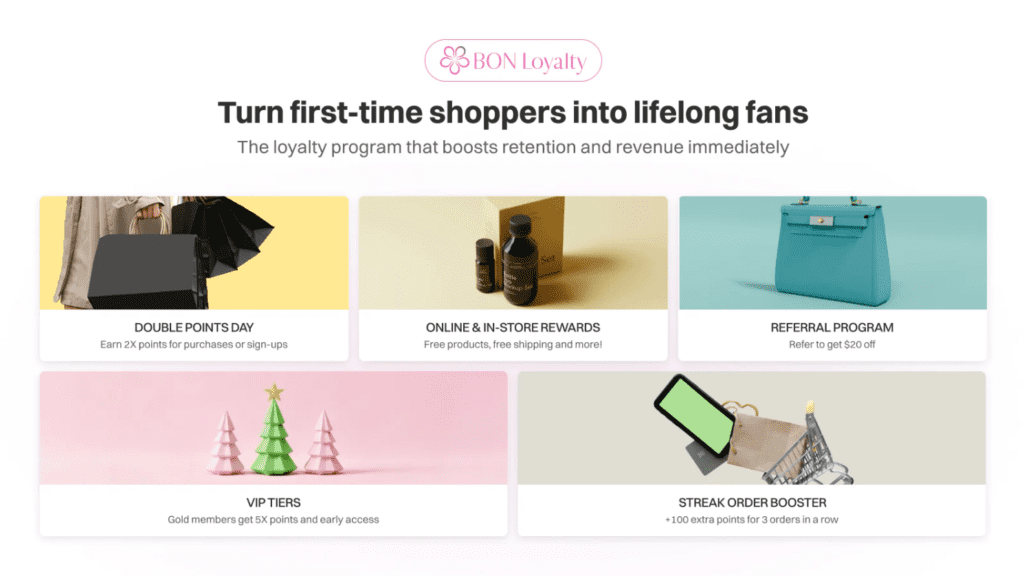
BON Loyalty punches above its weight in the value-for-money category, offering enterprise-level features at SMB pricing.
Core Features:
Why It Stands Out:
The pricing structure is refreshingly transparent and affordable. For $99/month, you get unlimited monthly orders—a massive advantage over competitors who cap orders per tier. The multilingual support is particularly valuable for global merchants. BON’s technical flexibility makes it suitable for agencies and developers building custom solutions.
Pricing:
Limitations: Smaller merchant community compared to Smile.io or Yotpo. Support can be slower during peak times.
Best for: Tech-savvy merchants and agencies building custom loyalty experiences
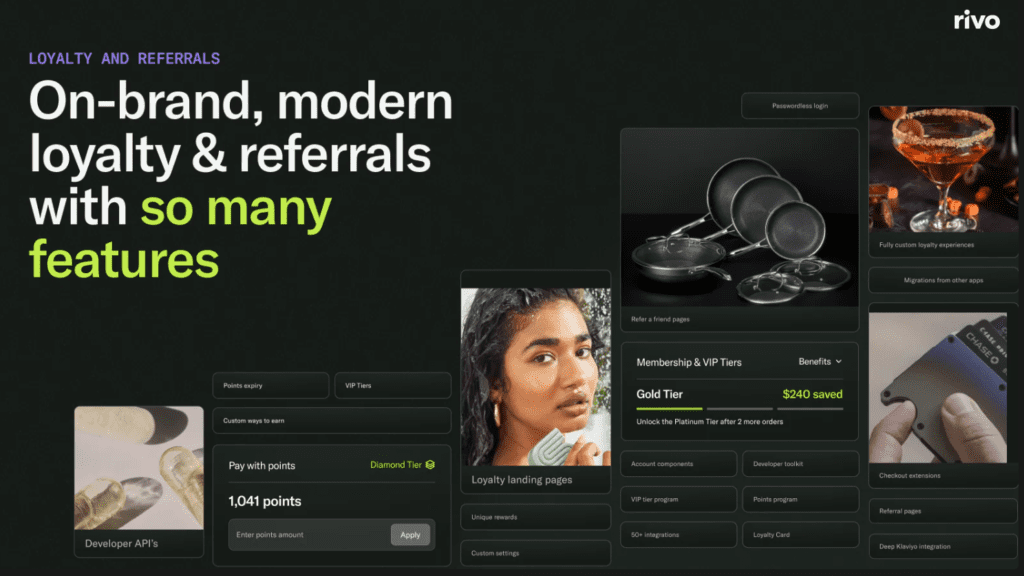
Rivo positions itself at the technical end of the loyalty app spectrum, with API access and developer tools as core features.
Core Features:
Why It Stands Out:
If you have technical resources and want total control over your loyalty implementation, Rivo provides the flexibility. The developer toolkit means you can build custom integrations and experiences that other platforms don’t allow. This appeals to agencies and scaling brands with engineering teams.
Pricing:
Limitations: Requires technical expertise to fully leverage. Smaller community and fewer turnkey templates compared to Smile.io.
Best for: Brands wanting to build engaged communities and make earning rewards fun
Toki represents the modern approach to loyalty: gamification and community building rather than simple transactional rewards.
Core Features:
Why It Stands Out:
Toki’s focus on making loyalty fun transforms the program from a discount engine into an engagement platform. Customers don’t just earn rewards—they progress through levels, earn badges, and compete with their social circles. This psychological layer increases program participation and repeat engagement.
Pricing:
Limitations: Best for brands willing to invest in loyalty as a community engagement tool. Less suitable for merchants seeking simple, transactional loyalty.
Best for: Brands prioritizing user-generated content and visual reviews over points-based mechanics
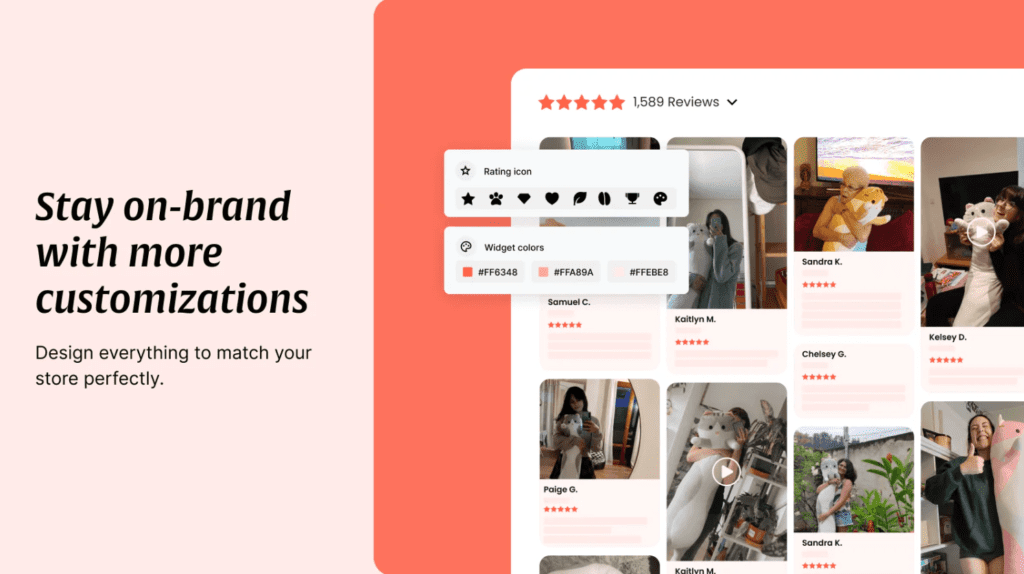
Loox specializes in displaying stunning visual reviews from customers, which simultaneously serves as a loyalty incentive and conversion tool.
Core Features:
Why It Stands Out:
Loox recognizes that modern customers trust visual reviews more than text. By combining review collection with loyalty rewards, you’re building trust while incentivizing repeat engagement. The visual reviews become social proof that drives conversions for future visitors.
Pricing:
Limitations: Primarily focused on reviews rather than a comprehensive loyalty program. Best paired with another loyalty app for complete coverage.
| App | Price Range | Points-Based | VIP Tiers | Referrals | Reviews | SMS/Email | Integrations | Best For |
| Smile.io | $0-$999/mo | ✓ | ✓ | ✓ | Limited | Via partners | 1000+ | Growing SMBs |
| Yotpo | $199-Custom | ✓ | ✓ | ✓ | ✓ Deep | Native | 50+ | UGC-focused brands |
| Retenzy | $5-Custom | ✓ | ✓ | ✓ | ✓ Native | Automated | Shopify native | B2B simplicity |
| Growave | $49-$199/mo | ✓ | ✓ | ✓ | ✓ | Native | Multiple | Reduction of app clutter |
| LoyaltyLion | $199-Custom | ✓ Advanced | ✓ Advanced | ✓ | Limited | Via partners | 40+ | Enterprise brands |
| Rise.ai | $19.99+ | Store credit | Via rules | ✓ | Via partners | Automated | Multiple | Store credit preference |
| BON | $25-$349/mo | ✓ | ✓ | ✓ | Limited | Via partners | Multiple | Global + value seekers |
| Rivo | Variable | ✓ | ✓ | ✓ | Limited | Via API | API-first | Tech-savvy brands |
| Toki | Free-Custom | ✓ Gamified | ✓ | ✓ | Via partners | Native | Multiple | Community builders |
| Loox | Paid only | Reviews primary | Limited | ✓ | ✓ Visual focus | Via partners | Select | Visual commerce |
Choosing the right app is just the beginning. Implementation strategy determines success.
Phase 1: Define Your Program Architecture
Before launching, clarify your program’s purpose. Are you optimizing for repeat purchase frequency? Average order value? Customer lifetime value? Different objectives require different earning and redemption mechanics.
Phase 2: Design Earning Rules
Consider what actions you want to reward:
Phase 3: Create Compelling Rewards
Points mean nothing without desirable rewards. Popular options include:
Phase 4: Communicate & Launch
Don’t assume customers will find your loyalty program. Communicate proactively through:
| Business Stage | Budget | Recommendation | Alternative | Why |
| Startup (0-100 orders/mo) | Low | Smile.io Free | BON Free | No credit card needed; essential features available |
| Growing (100-1000 orders/mo) | $50-100 | Smile.io Growth | Retenzy | Proven track record; better integration ecosystem |
| Scaling (1000-5000 orders/mo) | $100-300 | Yotpo or Retenzy | Growave | Advanced segmentation; integrated reviews valuable |
| Enterprise (5000+ orders/mo) | $300+ | LoyaltyLion | Yotpo Enterprise | Custom rules, dedicated support, and scalability |
| Global D2C Brand | Custom | BON Growth | Toki | Multilingual; no order caps; developer-friendly |
| Community-Focused | Medium | Toki | Smile.io | Gamification; engagement layers; social integration |
| UGC & Reviews Priority | Medium-High | Yotpo | Loox + Smile.io | Native reviews; unified platform reduces friction |
The shift into 2026 is undeniable: merchants who treated loyalty as a core business function in 2025—not a nice-to-have feature—are now seeing exponential returns. As we head deeper into 2026, the loyalty infrastructure gap between leaders and laggards will only widen.
Here’s the strategic roadmap based on your business stage:
Just Starting? Begin with Smile.io’s free tier. Get your first program live, collect customer data, and understand what works for your audience. The simplicity accelerates your learning curve.
Growing & Ready to Scale? Invest in Retenzy or Yotpo. These platforms provide the sophisticated features—reviews, segmentation, automation—that drive real ROI as you scale.
Enterprise or Complex Needs? LoyaltyLion or custom implementations through developers using Rivo’s API give you the control and sophistication required at scale.
Unique Focus on Community? Toki’s gamification approach transforms loyalty from a discount mechanism into an engagement engine that builds lasting customer relationships.
Reducing App Overload? Growave consolidates loyalty, reviews, and wishlists into one dashboard, freeing your team from context-switching chaos.
The bottom line: your ideal loyalty app isn’t determined by features alone—it’s determined by your current business stage, your strategic objectives, and your operational capacity. Choose accordingly, implement thoughtfully, and measure results religiously.
The merchants winning in 2026 aren’t those with the most features—they’re those with the clearest strategy and most consistent execution. Your loyalty program is your growth engine. Build it intentionally, optimize it continuously, and watch your customer lifetime value transform your bottom line.
The merchants building loyalty programs now—in 2026—are the industry leaders of 2027 and beyond. Don’t get left behind.
The 2026 Shift is Here: Are You Retaining or Losing? Don’t let your customers drift to competitors. Future-proof your Shopify store with Retenzy’s pay-as-you-grow loyalty platform. Built natively for Shopify, it’s the fastest way to build a community that stays, spends, and refers.
Claim Your Growth Edge – Try Retenzy Risk-Free
The best loyalty app for Shopify depends entirely on your business stage and strategic objectives. Smile.io excels at growing SMBs seeking simplicity and affordability. Retenzy works best for merchants wanting pay-as-you-grow scaling without complexity. Yotpo dominates for brands prioritizing user-generated content and reviews. LoyaltyLion serves enterprise-level merchants with advanced customization needs. Use our selection matrix above to match your specific situation—there’s no universal “best app,” only the best app for YOUR business.
Loyalty rewards programs operate on a simple psychological principle: customers earn points (or credits) for specific actions, then redeem those points for benefits. The earning mechanism might include purchases (typically 1 point per dollar), product reviews (50-100 bonus points), referrals (tiered rewards for both referrer and referred customer), social actions (following social media accounts), or birthday rewards (special occasion engagement). Redemption options include percentage discounts (10-20%), free shipping, free products, or exclusive early access to collections. This creates behavioral loops: customers return to earn more rewards, increasing repeat purchase rates and lifetime value.
“Best features” depend on your priorities. For comprehensive features: Growave offers loyalty, reviews, wishlists, and referrals in one unified dashboard. For advanced customization, LoyaltyLion provides a sophisticated rules engine with unlimited complexity. For UGC integration: Yotpo seamlessly connects reviews, loyalty, and SMS into one data-rich platform. For gamification: Toki adds achievement systems, tiered progression, and community engagement. For simplicity: Smile.io delivers core loyalty functionality without overwhelming configuration options. Evaluate based on YOUR specific needs, not feature abundance.
Pricing varies significantly by app and business size. Free options: Smile.io and BON both offer free tiers with essential loyalty features—ideal for testing. Budget-friendly: Rise.ai starts at $19.99/month, BON at $25/month. Growing stores: Smile.io’s Growth plan ($49/month), Retenzy ($5-50/month depending on orders), and Growave Entry ($49/month). Mid-market: Yotpo ($199+/month), Smile.io Pro ($199/month). Enterprise: LoyaltyLion ($199-499+/month), custom pricing from larger platforms. Many apps use order-based or scaling models—you only pay for what you use. Shopify loyalty app free options exist, but premium features require investment proportional to your business growth.
Technically, yes, you can install multiple loyalty apps simultaneously. However, consolidation is strongly recommended for operational efficiency. Running two loyalty programs fragments your customer experience, creates administrative overhead, and wastes budget. Instead, choose ONE comprehensive platform and optimize it thoroughly. If your chosen app lacks specific features (like visual reviews), consider a complementary tool (Loox for reviews + Smile.io for loyalty) rather than two competing loyalty apps. The better strategy: invest deeply in one well-chosen platform rather than spreading resources thin across multiple tools.
While often used interchangeably, subtle distinctions exist. Loyalty programs are designed to build long-term emotional relationships and repeat purchase behavior through progressive engagement. Customers earn status, recognition, and escalating benefits over time. Examples: VIP tiers that unlock exclusive perks as customers spend more. Rewards programs focus on transactional incentives—earning points for specific actions that customers redeem for immediate tangible benefits. The distinction matters strategically: loyalty program design emphasizes engagement and emotional connection, while rewards program design emphasizes transaction incentivization. Modern apps like Smile.io, Retenzy, and Growave blend both approaches effectively.
Data consistently shows loyalty programs increase customer lifetime value (CLV) by 18-45%, depending on implementation quality. Conservative estimates: 15-20% CLV improvement from basic loyalty programs. Moderate performance: 25-35% CLV improvement from well-executed programs with email integration and tiered rewards. High-performing programs: 40%+ CLV improvement from sophisticated platforms with AI personalization, gamification, and community engagement. The variance depends on: program design quality, reward attractiveness, communication frequency, product offering, and competitive positioning. Shopify merchants implementing loyalty programs see average LTV increases of 28-34% within 6 months.
Effective eCommerce loyalty programs follow these proven practices: 1) Clear Value Proposition: Make it obvious why customers should join. Display the program prominently on your website and in checkout. 2) Easy Enrollment: Remove friction—one-click signup beats multi-step forms. 3) Compelling Rewards: Offer benefits customers actually want (discounts, free shipping, exclusive products). 4) Multiple Earning Actions: Points for purchases, reviews, referrals, social follows, and birthdays create diverse engagement. 5) Transparent Mechanics: Clearly explain how points are earned and redeemed. 6) Regular Communication: Email campaigns, push notifications, and SMS keep members engaged. 7) Tiered Structure: VIP tiers reward top customers with escalating benefits. 8) Mobile Optimization: Ensure loyalty access on mobile devices. 9) Integration: Connect loyalty with email marketing, reviews, and SMS for cohesive experiences. 10) Measurement: Track enrollment rates, engagement rates, redemption rates, AOV increase, and repeat purchase rate improvements. Best practices vary by business type—fashion eCommerce benefits from exclusive early access, while food eCommerce benefits from birthday rewards.
Loyalty apps increase repeat purchase rates through psychological and mechanical levers: Behavioral Motivation: Points create tangible incentives to return and make another purchase. Progress Psychology: Tiered programs make customers feel invested in progression. Personalization: Targeted reward offers drive immediate purchase intent. Social Proof: Leaderboards and gamification encourage repeat engagement. Milestone Rewards: Free rewards at specific spending milestones (e.g., every $500 spent) create purchase targets. Email Automation: Post-purchase follow-ups with exclusive member discounts drive repeat behavior. Referral Incentives: Reward existing customers for bringing new customers, growing your customer base while rewarding loyalty. VIP Benefits: Exclusive perks for high-value customers drive increased spending. Data shows well-executed loyalty programs increase repeat purchase rates by 34% on average within 6 months. The specific tactics that work best depend on your product category and customer segment.
Critical features in a Shopify customer retention tool include: Loyalty Engine: Points-based or tiered reward systems with customizable earning rules. Review Integration: Automatic post-purchase review requests that incentivize customer participation. Referral Program: Shareable referral links with rewards for successful referrals. Segmentation: Ability to target different customer groups with tailored messages. Email Integration: Native integration with Klaviyo, Growave, or built-in email capabilities. Analytics: Real-time dashboards tracking enrollment, engagement, repeat purchase rate, and customer lifetime value. SMS Capability: SMS campaigns for time-sensitive promotions and reminders. VIP Tiers: Multi-tier programs rewarding high-value customers. Mobile Optimization: Mobile-friendly rewards program for smartphone-first customers. Support Quality: Responsive customer support for troubleshooting and strategy. Pricing Transparency: Clear pricing without hidden fees. Shopify customer retention tools should integrate seamlessly with your existing stack and provide measurable ROI through improved retention metrics.
Setting up a loyalty program on Shopify involves these steps: 1) Choose Your Platform: Select from our 10 recommended apps based on your business stage and budget. 2) Install the App: Go to the Shopify App Store, find your chosen app, and install it. 3) Configure Earning Rules: Decide what actions earn points (purchases, reviews, referrals, birthdays). 4) Set Redemption Options: Define what rewards customers can earn (discounts, free products, exclusive access). 5) Brand the Program: Customize the look and feel to match your brand. 6) Design Communications: Create email templates announcing the program and celebrating member benefits. 7) Train Your Team: Ensure staff know how the program works and can answer customer questions. 8) Test the User Experience: Walk through signup and redemption as a customer to identify friction points. 9) Soft Launch: Start with existing customers and gather feedback before a major promotion. 10) Full Launch & Promotion: Announce via email, website banners, social media, and checkout. Most Shopify loyalty apps enable launch within 2-7 days. How to set up a loyalty program on Shopify varies by app, but basic setup typically takes 1-2 hours.
For small Shopify stores (under 100 monthly orders), Smile.io Free is the clear winner. It requires no credit card, includes essential loyalty features, and scales affordably as you grow. Alternatives include BON Free (offers multi-language support) and Rise.ai Starter ($19.99/month). For small stores prioritizing simplicity over advanced features, free Shopify loyalty app options like Smile.io’s free tier enable program launch without financial risk. Once you reach 100+ monthly orders, graduate to Retenzy (pay-as-you-grow) or Smile.io Growth ($49/month). The best loyalty app for small Shopify stores is one you can afford to maintain and actually implement well. A simple, well-executed program outperforms a feature-rich, abandoned program every time.