
- Features
Features



In 2025, customer service is no longer just a support function—it’s a revenue-generating engine. But by 2026, the landscape will have shifted even more dramatically. Conversational AI is now mission-critical infrastructure for Shopify merchants, not an optional luxury.
The numbers tell the story: 87.2% of consumers rate their interactions with AI chatbots as either neutral or positive, and 67% of business leaders have reported measurable increases in sales through chatbot implementation. More striking, 26% of all sales transactions now initiate from bot interactions, fundamentally reshaping how e-commerce businesses approach customer engagement.
Yet here’s the critical insight many merchants miss: the chatbot market is expanding at 23.3% annually and will reach $15.5 billion by 2028. This explosive growth signals one clear message—brands that delay adoption will fall behind competitors who’ve already integrated AI-powered support into their customer journey.
For Shopify merchants specifically, the stakes are personal. With the average Shopify conversion rate hovering between 1.4–2.0%, every interaction that addresses customer hesitation can swing that percentage dramatically. A customer confused about sizing, shipping costs, or return policies abandons their cart. A chatbot that answers instantly? It completes the sale.
But here’s where it gets interesting: not all chatbots are created equal, and the wrong choice can waste thousands in implementation costs without delivering results. This comprehensive guide breaks down the top 7 AI chatbots and customer support platforms purpose-built for Shopify in 2026, analyzing features, automation depth, real-world ROI, and how to choose the right solution for your specific business stage.
➢87.2% of consumers rate chatbot interactions positively—adoption is now a baseline consumer expectation
➢Memory-rich AI in 2026 understands context across sessions, enabling hyper-personalized customer experiences
➢Gorgias leads for omnichannel ecommerce; Tidio offers best value-for-money; Intercom dominates enterprise
➢Choose based on business stage: Solopreneurs (Tidio free), Growth ($100K–$1M, Re: amaze), Scaling ($1M–$5M, Gorgias), Enterprise ($5M+, Intercom/Steps AI)
➢Hybrid human-AI model proves most effective—AI handles 60–75% of conversations, humans focus on complex cases
➢ROI timeline: 3–6 months with quick wins (cart recovery, response time) visible immediately, larger cost reductions by month 4+
➢GEO (Generative Engine Optimization) now critical—optimize for ChatGPT, Gemini, Perplexity alongside Google
➢Klarna achieved $40M profit improvement with AI-driven support—proof of concept at scale
Customer expectations have fundamentally changed. Over 50% of consumers now expect businesses to be available 24/7, and 61% of new buyers actively prefer faster AI-generated responses over waiting for a human agent. This isn’t a preference—it’s become a baseline expectation, especially for first-time shoppers forming their initial impression of your brand.
The data supporting chatbot implementation is now overwhelming:
But beyond speed, modern AI chatbots now do something revolutionary: they understand context, remember customer preferences, and perform actual business actions like processing returns, updating orders, or initiating refunds—all without human intervention.
Traditional chatbots operated on a stateless model: each conversation existed in isolation. If a customer asked about their order status on Monday and needed to follow up on Wednesday, they’d repeat themselves entirely. By 2026, memory-rich AI has fundamentally changed this dynamic.
Modern systems now retain context across sessions, eliminating the frustration of repetitive explanations. Over 67% of customers now expect brands to offer personalization, and memory-rich AI makes this expectation achievable at scale. The AI remembers what products they viewed, which sizes didn’t fit, their previous purchase history, and their stated preferences—creating an experience that feels less like automation and more like talking to a trusted personal shopper.
Before diving into specific platforms, understanding the landscape itself is crucial. Shopify chatbots fall into distinct categories, each optimized for different business goals:
These platforms unify support across email, chat, social media, SMS, and voice. They excel at ticket management, agent collaboration, and a comprehensive customer view. Best for: stores with 2+ support agents and multiple communication channels.
Simple, fast to implement, focused on real-time messaging with optional AI automation. Minimal setup time, predictable costs, but limited advanced features. Best for: solopreneurs and small teams (under 3 agents).
Purpose-built for automation and revenue impact. These systems understand product catalogs deeply, make product recommendations, handle complex transactions, and learn from conversations. Best for: stores where cart abandonment recovery and AOV improvement are top priorities.
Focused on preventing tickets through proactive self-service portals. Customers answer their own questions (order status, returns, FAQs) without needing agent interaction. Best for: established stores with high support volume and clear, documented policies.
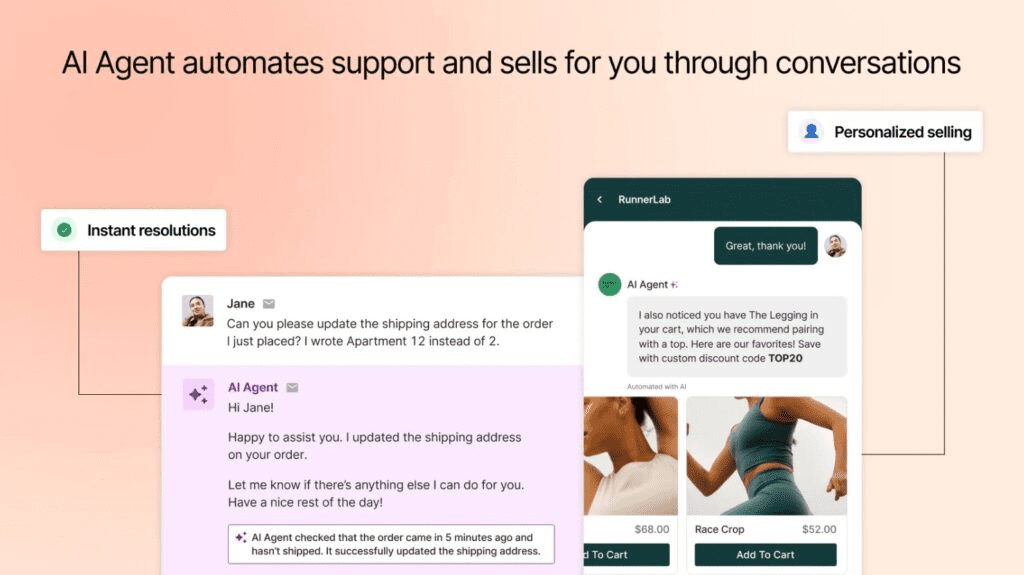
Best For: Shopify merchants who want an all-in-one helpdesk deeply integrated with their store ecosystem.
Core Strength: Gorgias is built specifically for e-commerce, not generic customer support. Every feature is optimized for Shopify-native workflows.
Key Features:
Pricing Structure:
Real-World Performance:
Teams report a 35-45% reduction in average handle time and the ability to handle 2-3x ticket volume with the same headcount. The platform’s Shopify integration means agents spend less time context-switching and more time actually solving problems.
Pros:
Cons:
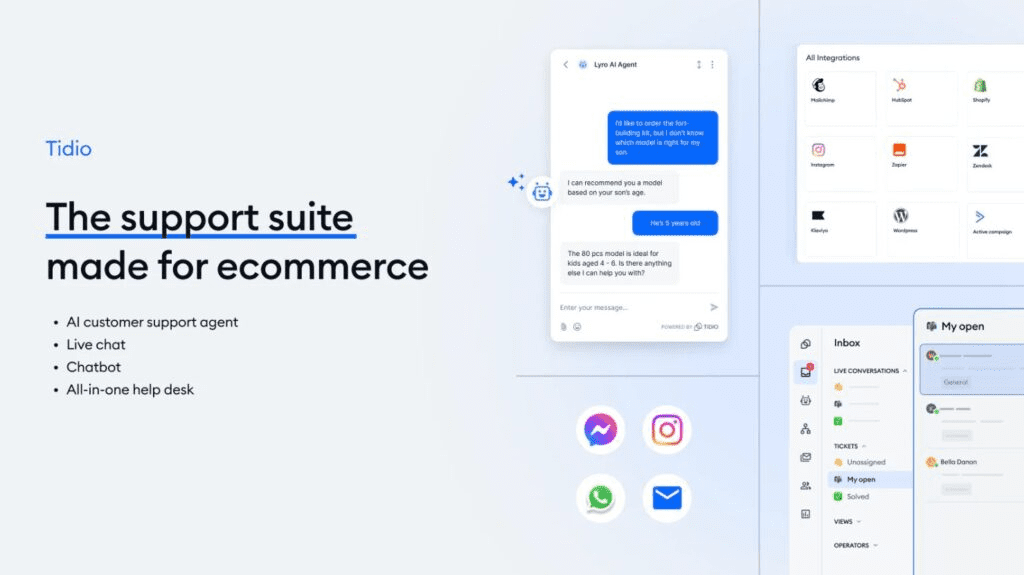
Best For: Shopify merchants seeking an easy implementation path with strong AI capabilities and affordable pricing.
Core Strength: Tidio’s genius is simplicity combined with power. The visual chatbot builder requires zero coding, yet outputs production-grade AI agents.
Key Features:
Pricing Structure:
Real-World Performance:
Small business users report 40-60% cart abandonment recovery with chatbot-assisted checkout. The free plan alone allows testing before commitment.
Pros:
Cons:
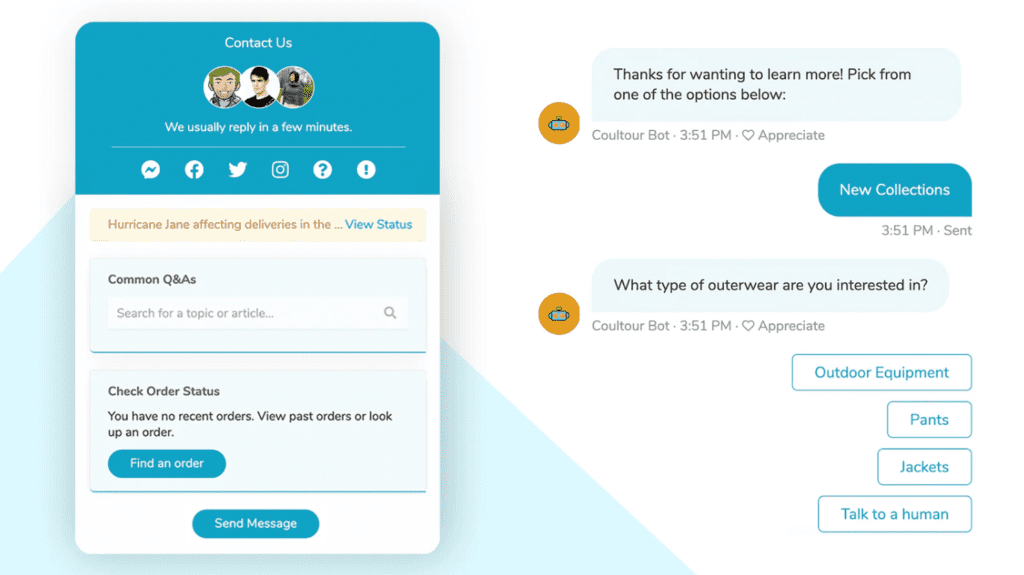
Best For: Growing Shopify stores needing unified support across multiple channels with sophisticated automation.
Core Strength: Re: amaze bridges the gap between lightweight tools and enterprise platforms—full features without overwhelming complexity.
Key Features:
Pricing: Starting at $29/month (basic), scales with features and user seats
Real-World Performance:
Mid-market stores report 50-70% first-contact resolution rates, with chatbot handling deflecting 30%+ of incoming tickets entirely.
Pros:
Cons:
Best For: High-growth Shopify brands needing enterprise-level automation, product tours, and behavioral targeting.
Core Strength: Intercom’s Fin AI Agent handles conversations with reasoning capability—understanding nuance and context beyond simple pattern matching.
Key Features:
Pricing:
Real-World Performance:
Enterprise stores report 60-75% automation rates with Fin AI handling everything from refund requests to subscription modifications. Support team satisfaction increases because AI handles repetitive work—agents focus on complex, interesting problems.
Pros:
Cons:
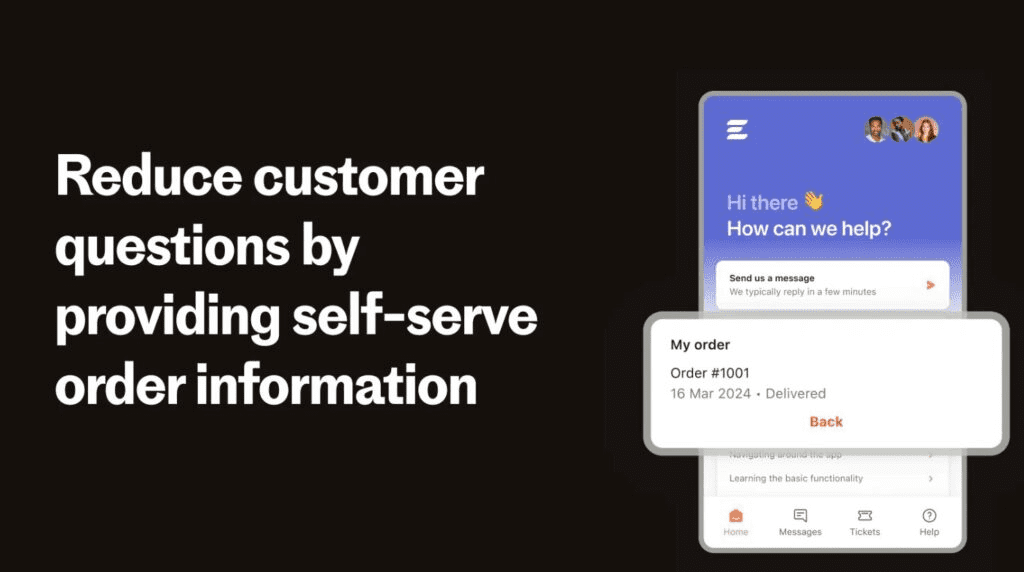
Best For: Shopify merchants prioritizing cost reduction through ticket deflection and self-service automation.
Core Strength: Richpanel’s AI-powered self-service widget prevents 40%+ of support tickets from ever reaching your team.
Key Features:
Pricing: Starting at $89/month
Real-World Performance:
Stores report a 40-50% reduction in total support tickets, with average resolution time dropping from 24+ hours to instant (for self-service queries).
Pros:
Cons:

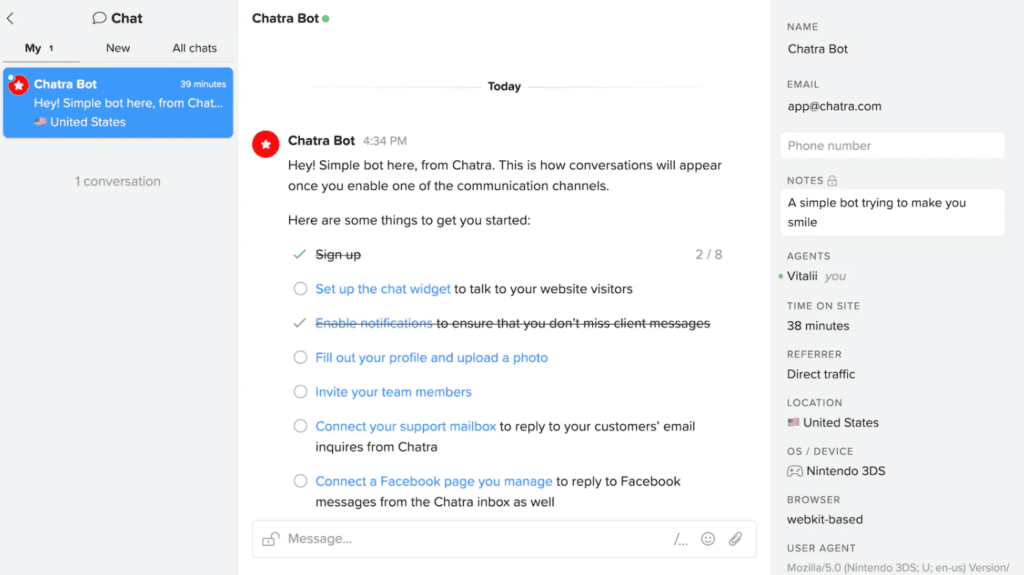
Best For: Shopify merchants seeking simple, affordable real-time chat without complexity.
Core Strength: Minimal, focused feature set means fast setup and predictable usability.
Key Features:
Pricing:
Real-World Performance:
Fast implementation (under 30 minutes), but limited automation means heavy reliance on agent availability.
Pros:
Cons:
Best For: Shopify merchants requiring sophisticated reasoning-based automation that handles complex support scenarios.
Core Strength: Steps AI uses advanced reasoning to understand product context, customer intent, and execute complex actions—moving beyond simple pattern matching.
Key Features:
Pricing: Custom pricing (enterprise-focused)
Real-World Performance:
Early adopters report 75-85% automation rates for support interactions, with the ability to handle issues that traditionally required manual intervention.
Pros:
Cons:
Solopreneurs & Early-Stage (under $100K annual revenue):
Growth Stage ($100K–$1M revenue, 2-5 team members):
Scaling Stores ($1M–$5M revenue, 5+ team members):
Enterprise & High-Growth ($5M+ revenue, 10+ team members):
Statistics without context are just numbers. Here’s what real Shopify merchants report implementing these tools:
According to Klarna’s publicly reported results, $40 million annual profit improvement from AI support automation. While your results scale with business size, the directional impact holds across all merchants.
Here’s a truth that changed e-commerce in 2026: content that appears in ChatGPT, Gemini, and Perplexity now drives qualified traffic. Merchants who optimize for these platforms gain visibility even when Google rankings stagnate.
ChatGPT: Uses Bing’s index (via SerpApi) combined with training data through April 2024. Content must rank well in Bing to be considered for ChatGPT inclusion.
Gemini: Leverages Google’s search index directly, integrating with Gmail, search history, and location data. Excellent SEO = inclusion in Gemini.
Perplexity: Maintains its own crawler (PerplexityBot) and custom index, prioritizing freshness, authority, and direct citations. Doesn’t strictly follow robots.txt.
Why it matters: Traditional stateless chatbots require customers to repeat information. Memory-rich AI in 2026 changes this, creating personalized experiences that feel genuinely intelligent.
Your angle: “Why Stateless Chatbots Are Killing Your Conversion Rate: The Memory-Rich AI Solution.”
Why it matters: Customers expect seamless support across WhatsApp, Instagram, email, chat, SMS—all unified. By 2026, omnichannel is table stakes, not a differentiator.
Your angle: “Omnichannel vs. Single-Channel Chatbots: Why Unified Support Drives 40% Higher Conversions.”
Why it matters: First-generation chatbots answered questions. 2026 chatbots process refunds, issue returns, and complete transactions autonomously.
Your angle: “From FAQ Bots to AI Agents: How Autonomous Automation Cuts Support Costs 50%.”
Why it matters: Ranking on ChatGPT, Gemini, and Perplexity now drives B2B and niche B2C traffic equivalent to top-3 Google rankings.
Your angle: “Getting Cited in ChatGPT, Gemini & Perplexity: The GEO Strategy Every SaaS Blog Needs.”
The chatbot revolution isn’t coming to ecommerce—it’s already here. But here’s what separates thriving merchants from those stuck in the past: they stopped viewing chatbots as support cost reduction and started seeing them as conversion engines.
The data is unambiguous. Klarna’s $40M profit improvement. H&M’s 70% response time reduction. The 87.2% of consumers rated chatbot interactions positively. These aren’t marketing claims—they’re benchmarks showing what’s possible when you implement thoughtfully.
But implementation matters more than platform choice.
The best chatbot is the one you’ll actually use and continuously improve. That might be the free Tidio plan for a solopreneur testing the waters, Gorgias for a team needing enterprise features, or Steps AI for a sophisticated operation handling complex product scenarios.
The framework presented here—understanding your business stage, knowing which category of tool solves your specific problem, and implementing with clear KPIs—works regardless of platform choice. Start with your constraint: budget, team size, or specific problem (abandoned carts, response time, support volume).
Q: Will a chatbot replace my support team?
A: No. Data from Klarna shows AI handles 60–75% of conversations, while 25–40% require human judgment, empathy, or creative problem-solving. The winning model is hybrid: AI handles volume and routine work, humans handle complex issues and relationship-building.
Q: Which chatbot integrates most seamlessly with Shopify?
A: Gorgias is purpose-built for Shopify and offers the deepest integrations (order lookup, inventory, customer data, native workflows). Re: Amaze is a close second for mid-market stores.
Q: What’s the typical ROI timeline?
A: Expect 3–6 months to reach positive ROI. Quick wins (abandoned cart recovery, order status automation) deliver value immediately. Larger impact (team cost reduction, conversion rate improvement) materializes by month 4–6.
Q: Can chatbots handle returns and refunds?
A: Yes. Advanced platforms (Gorgias, Re: amaze, Steps AI, Intercom) can initiate returns, process refunds, and update orders—all without human involvement. Success depends on clear, documented return policies.
Q: What if my products are complex or highly customized?
A: Simpler chatbots struggle with complex products. Invest in Steps AI, Intercom, or Gorgias with extensive custom training. These platforms learn your product nuances and can answer detailed questionsthat other tools would escalate.
Q: How much data do these platforms need?
A: Minimal initially. All platforms learn from FAQs, product data, and customer conversations over time. Best practice: start with clear documentation of the top 50–100 customer questions and your responses.
Q: Does a chatbot impact Google SEO?
A: Not directly. A chatbot doesn’t improve or harm rankings. However, implementing chatbots often improves Core Web Vitals (faster load times) and conversion rates (more sales = better business signals), which indirectly supports SEO.
Q: Which platform has the best mobile experience?
A: Tidio and Intercom excel on mobile. Both offer dedicated apps and responsive designs optimized for touch interfaces.