
- Features
Features



Managing inventory in modern e-commerce isn’t just about counting stock. It’s about orchestrating real-time visibility across multiple sales channels, predicting demand with artificial intelligence, and automating the decisions that directly impact your bottom line. The global e-commerce inventory management software market has exploded from USD 14.88 billion in 2024 to USD 16.16 billion in 2025, and is projected to reach USD 36.67 billion by 2035, growing at an 8.54% CAGR. This explosive growth reflects a fundamental truth: businesses that master inventory management win.
For Shopify merchants, the stakes are even higher. Your store might be selling on multiple channels—Amazon, eBay, TikTok Shop, your own website—but inventory lives nowhere. A customer buys from Amazon. You manually update Shopify. A stockout occurs on eBay. The complexity multiplies with every channel you add.
This is where Shopify inventory management apps become non-negotiable. The right tool doesn’t just prevent overselling—it transforms how you forecast demand, optimize stock levels, and scale without drowning in spreadsheets. But with hundreds of apps available, choosing the right one feels overwhelming.
E-Commerce Inventory Management Software Market Growth Projection (2024-2035)
In 2026, the best inventory management apps for Shopify have evolved dramatically. They now integrate artificial intelligence for demand forecasting, offer sub-minute real-time synchronization, and connect seamlessly with 50+ sales channels. This comprehensive guide walks you through the landscape, breaking down the leaders, comparing their features, and helping you make a data-driven decision.
Overselling erodes customer trust overnight. A customer purchases a product, receives a cancellation email, and you’ve lost not just the sale but the lifetime value of that customer. Understocking is equally costly—you leave money on the table, watch competitors capture your traffic, and damage your conversion metrics.
According to industry research, businesses implementing advanced inventory management systems reduce stockouts by up to 20% and lower excess inventory by 15%. For a mid-size ecommerce store with $1 million in annual revenue, this translates to $40,000–$150,000 in recovered profit annually.
Shopify merchants selling on Amazon, eBay, or TikTok Shop face a new challenge: synchronizing inventory in real-time across disconnected platforms. A sale on Amazon needs to instantly update your Shopify store to prevent overselling on other channels. Without automation, this manual process introduces errors that compound daily.
Real-time inventory sync solves this. When a customer purchases on one platform, the inventory level updates everywhere simultaneously. The best solutions, like Syncio and Prediko, use API-driven synchronization that operates sub-minute, meaning you have near-instantaneous accuracy across all channels.
Traditional inventory management relies on historical averages. AI-driven forecasting goes deeper—analyzing seasonality, trends, external events, and customer behavior patterns to predict demand weeks in advance. Prediko’s AI algorithms, for example, analyze over 43,000 SKUs simultaneously, improving product availability by 6.7% while freeing up working capital.
In 2026, AI forecasting isn’t a luxury—it’s a necessity. Brands that predict demand accurately build stronger cash flow, reduce markdowns, and respond faster to market shifts.
Before diving into specific apps, understand what separates premium solutions from basic tools:
The speed of sync directly impacts your business. Slow sync (hours or days) creates inventory accuracy gaps. Real-time sync (seconds to minutes) ensures accuracy across all channels. Look for apps offering:
AI forecasting isn’t about prediction—it’s about automation. The best apps use machine learning to:
Prediko stands out here with 5.0/5 star ratings across 150+ Shopify reviews. Users consistently praise the forecast accuracy and ease of purchasing decisions.
Manual PO creation is time-consuming and error-prone. Advanced apps like Prediko and Katana automate the entire workflow:
You need to see your inventory data in real-time dashboards. Essential metrics include:
In 2026, mobile inventory management is table stakes. Look for apps with:
Your inventory app must integrate seamlessly with your existing tech stack:
Top 8 Shopify Inventory Management Apps – Detailed Feature & Pricing Comparison 2026
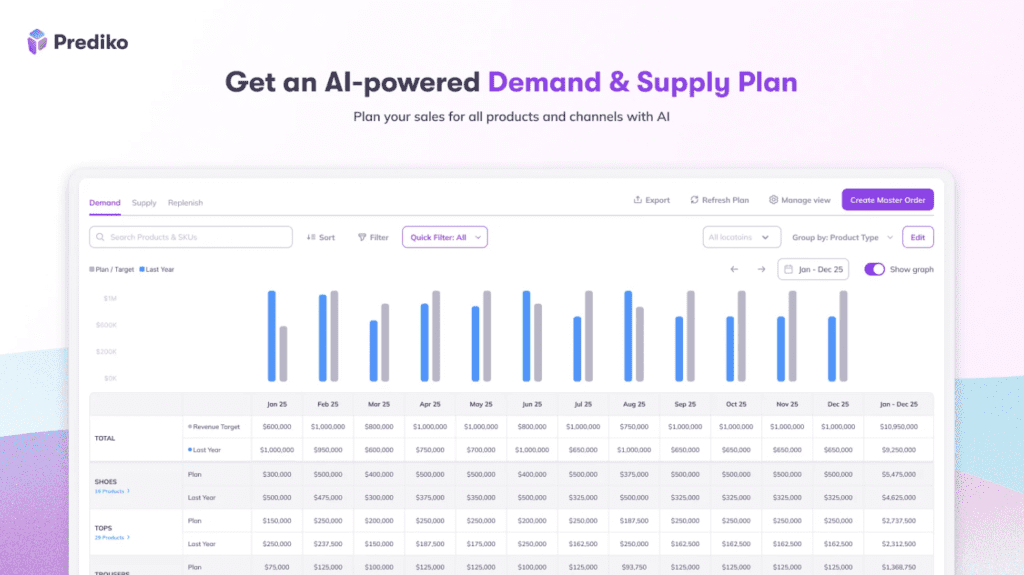
Best For: D2C brands, multi-location stores, demand planning
Overview:
Prediko is the fastest-growing AI inventory app on Shopify. With a 5.0/5 star rating from 150+ merchants, it represents a new generation of inventory management focused on predictive automation rather than reactive tracking.
Key Features:
Pricing: Free tier; Premium plans from $29–$99/month
Why It Stands Out:
Merchants consistently highlight the exceptional customer support (10/10 ratings) and the AI chat help feature that answers questions instantly. One user noted: “Prediko has been a game-changer for our inventory planning. The platform makes forecasting and production planning super clear and actionable.”
Integration: ShipHero, Shopify native, raw materials tracking
Rating: 5.0/5 ⭐
Best For: DTC brands with in-house manufacturing, made-to-order businesses
Overview:
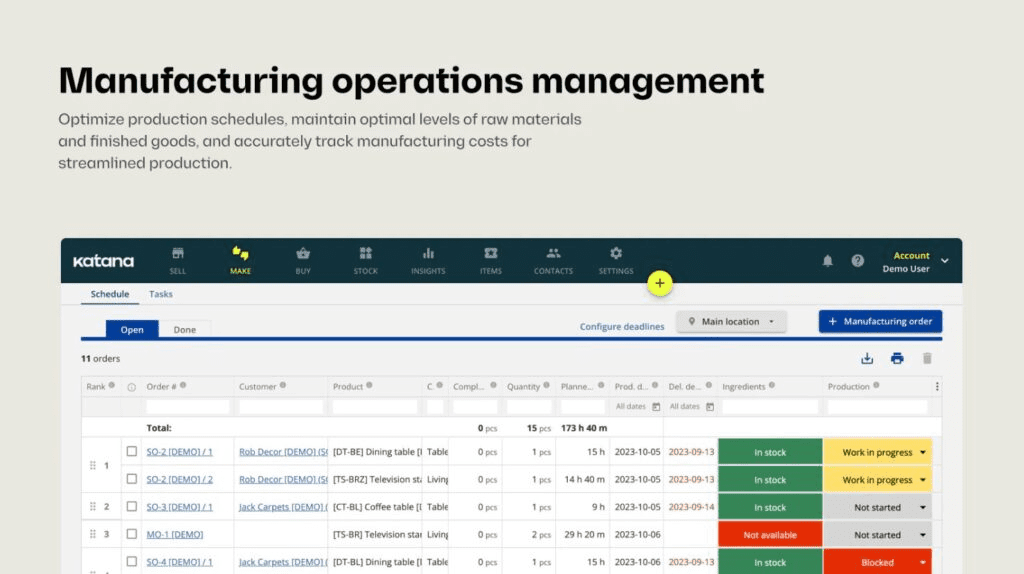
Katana merges inventory management with production planning. It’s designed for brands that manufacture or assemble products, offering real-time visibility into both stock and production workflows.
Key Features:
Pricing: Plans start at $399/month
Why It Stands Out:
For manufacturers and D2C brands assembling products, Katana eliminates the gap between inventory and production. You see material levels, understand production capacity, and adjust manufacturing schedules based on demand forecasts—all in one system.
Rating: 4.8/5 ⭐
Best For: High-volume sellers, multi-warehouse operations, 3PL integration
Overview:
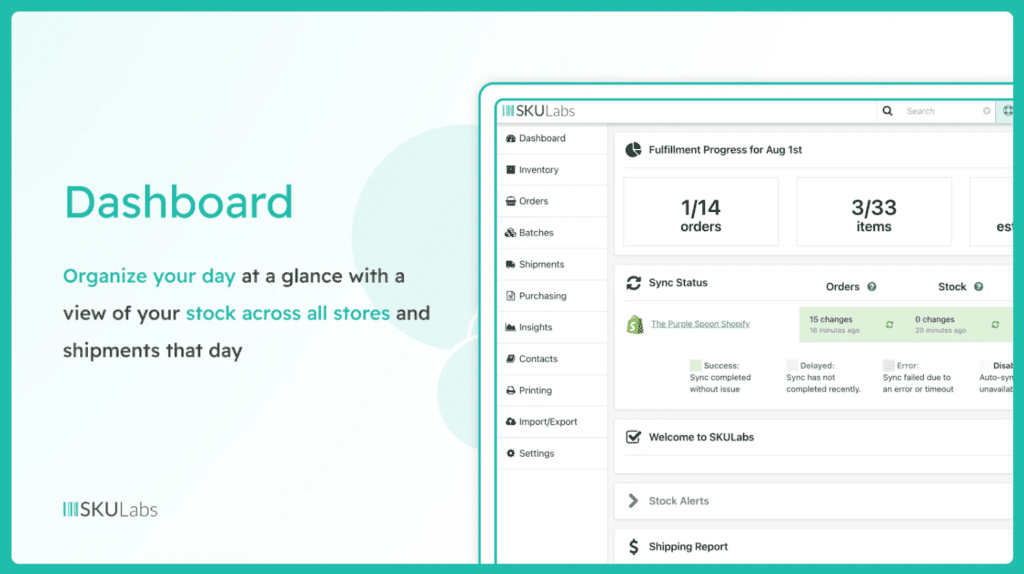
SKULabs is warehouse-grade inventory management paired with shipping automation. It’s built for brands managing thousands of SKUs across multiple fulfillment centers.
Key Features:
Pricing: Custom pricing model
Why It Stands Out:
SKULabs combines inventory management with fulfillment operations. If you’re operating a warehouse or managing 3PLs, the integrated shipping and inventory visibility is invaluable.
Rating: 4.7/5 ⭐ (152 reviews)
Best For: Shopify Plus merchants, multi-store operations, global expansion
Overview:
Syncio specializes in synchronizing inventory across multiple Shopify stores and external platforms. It’s built for brands managing distinct storefronts or international markets.
Key Features:
Pricing: Custom pricing (contact for quote)
Why It Stands Out:
For enterprises managing 5+ Shopify stores, Syncio’s centralized inventory orchestration prevents the chaos of manual updates. One merchant noted that Syncio’s real-time updates have reduced overselling to nearly zero.
Rating: 4.7/5 ⭐
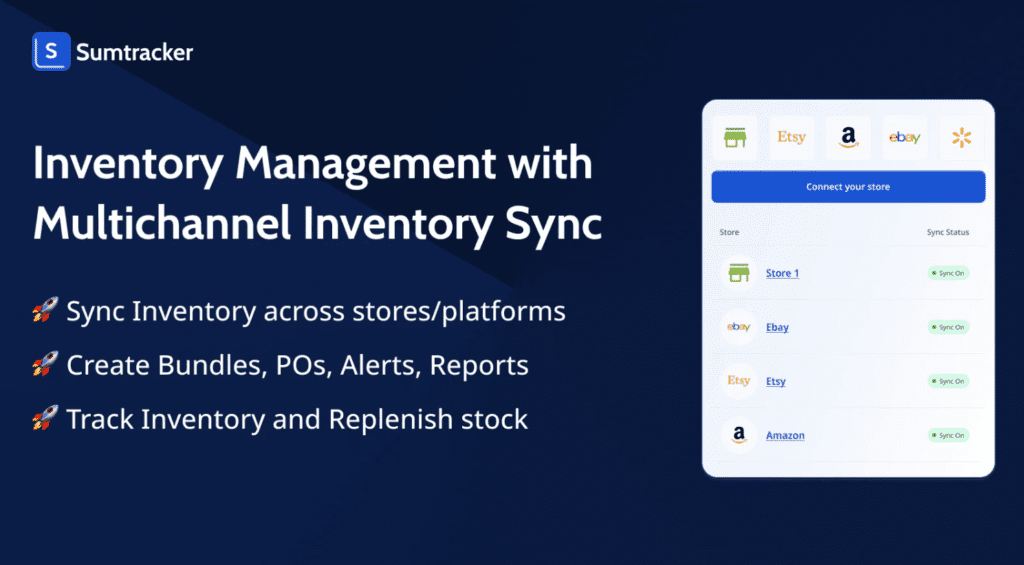
Best For: Retailers with product bundles, multi-channel sellers (Amazon, Etsy, Walmart)
Overview:
Sumtracker handles the complexity of selling products, bundles, and kits across multiple channels. Its bundle-specific features are unmatched in the Shopify ecosystem.
Key Features:
Pricing: From $30–$99/month, depending on channels and SKUs
Why It Stands Out:
If you offer product bundles or kits, Sumtracker’s intelligent bundle management is essential. When a bundle sells, it automatically deducts component quantities from inventory across all channels.
Rating: 4.6/5 ⭐
Best For: Small to mid-size multi-channel retailers
Overview:
Stock Sync focuses on pure, reliable real-time synchronization without unnecessary complexity. It’s ideal for sellers on Shopify, Amazon, and eBay who need speed without complexity.
Key Features:
Pricing: From $29.95 AUD/month
Why It Stands Out:
Stock Sync’s simplicity is its strength. If you just need reliable, fast inventory synchronization without demand forecasting or advanced automation, it’s a solid, cost-effective choice.
Rating: 4.6/5 ⭐
Best For: Data-driven merchants, multi-location optimization
Overview:
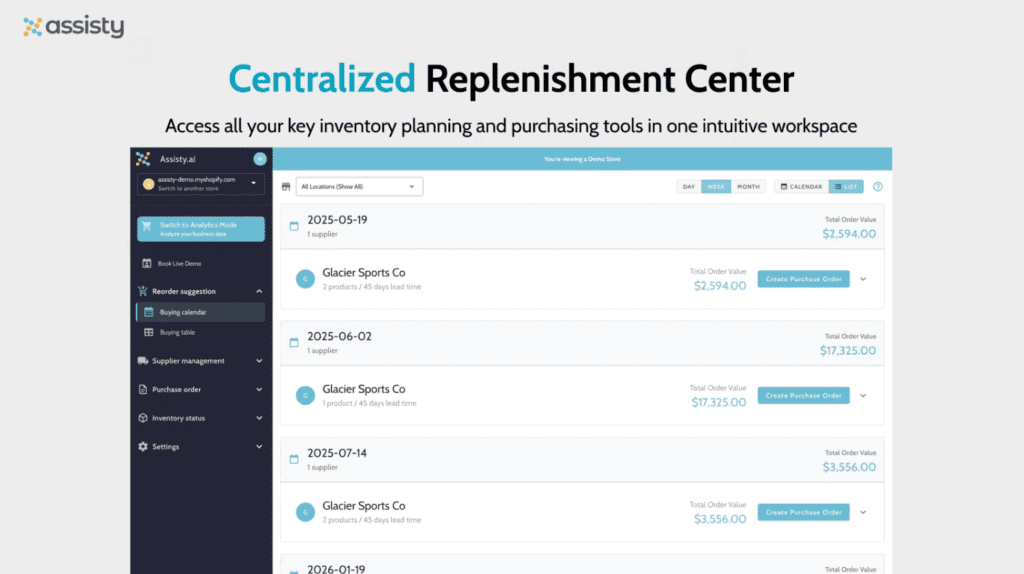
Assisty positions itself as “Shopify inventory intelligence software.” It emphasizes analytics, reporting, and data-driven inventory decisions.
Key Features:
Pricing: Free plan available; Premium from $39/month
Why It Stands Out:
Assisty appeals to merchants who live in spreadsheets and dashboards. The advanced reporting and custom filters let you extract specific insights that drive inventory optimization decisions.
Rating: 4.8/5 ⭐
Best For: SMEs, budget-conscious multi-channel sellers, Zoho ecosystem users
Overview:
Zoho Inventory is a cloud-based inventory platform with 900+ integrations, including CRM, accounting, and email marketing. It’s the most integrated solution for complete business management.
Key Features:
Pricing: From $39–$139/month
Why It Stands Out:
If you’re already using Zoho CRM or Zoho Books, Zoho Inventory integrates seamlessly. The ecosystem approach means data flows between all your business systems without manual entry. However, the interface can have a steeper learning curve.
Rating: 4.6/5 ⭐
Best For: Sellers with product bundles, multi-packs, and kits
Overview:
Bundles.app is a focused solution for one specific problem: managing inventory for product bundles across Shopify and multiple sales channels.
Key Features:
Pricing: From $14/month (Shopify stores); scaling to $199/month for Shopify Plus
Why It Stands Out:
This app solves a narrow problem exceptionally well. If 30%+ of your revenue comes from bundles, the specialized focus on bundle inventory logic is worth the dedicated tool.
Rating: 4.9/5 ⭐

Best For: Multi-channel sellers who want to avoid monthly app fees, and order automation focus
Overview:
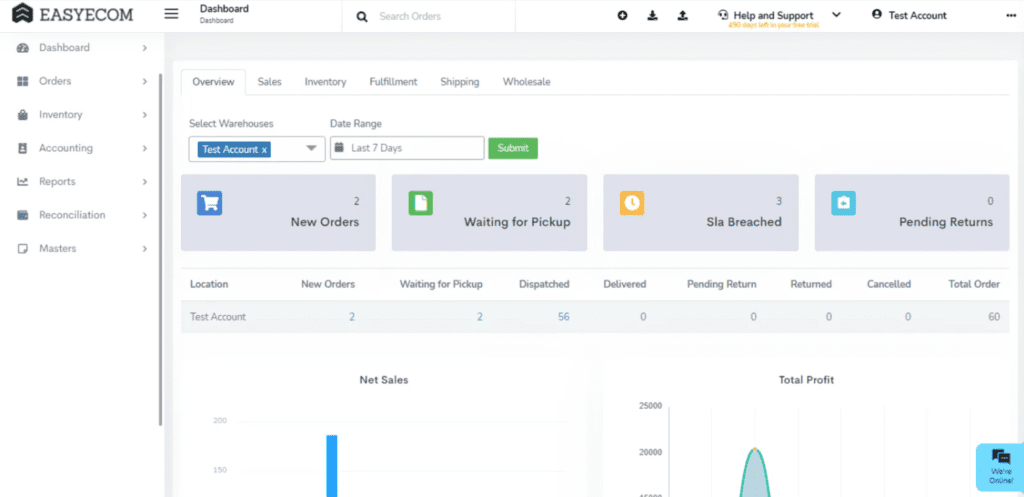
EasyEcom uses a per-order pricing model instead of monthly subscriptions. It combines inventory sync with comprehensive order and invoice automation.
Key Features:
Pricing: Free installation; $0.49 per order processed
Why It Stands Out:
For low-volume stores (under 50 orders/month), EasyEcom’s per-order pricing is more economical than fixed subscriptions. The all-in-one order and inventory management eliminates tool sprawl.
Rating: 4.5/5 ⭐
| # | App Name | Best For | Core Strength | Key Features | Pricing | Rating |
| 1 | Prediko | D2C brands, multi-location stores | AI demand forecasting & planning | AI forecasts, smart reorders, PO automation, inventory health dashboard, and advanced reports | Free plan; $29–$99/month | ⭐ 5.0/5 |
| 2 | Katana | Manufacturers, made-to-order brands | Inventory + production planning | BOMs, production scheduling, raw material tracking, shop floor controls | From $399/month | ⭐ 4.8/5 |
| 3 | SKULabs | High-volume, warehouse sellers | Inventory + fulfillment automation | Multi-warehouse tracking, barcode scanning, pick-pack-ship, shipping labels | Custom pricing | ⭐ 4.7/5 |
| 4 | Syncio | Shopify Plus, multi-store brands | Multi-store inventory sync | Real-time store sync, stock transfers, order routing, sync rules | Custom pricing | ⭐ 4.7/5 |
| 5 | Sumtracker | Bundle sellers, marketplaces | Bundle & kit inventory | Bundle automation, multi-channel sync, COGS, forecasting, analytics | $30–$99/month | ⭐ 4.6/5 |
| 6 | Stock Sync | SMBs, simple multi-channel needs | Fast & reliable sync | Shopify, Amazon, eBay sync, bulk imports, sync rules | From $29.95 AUD/month | ⭐ 4.6/5 |
| 7 | Assisty | Data-driven merchants | Inventory analytics & reporting | SKU health scoring, dashboards, alerts, and custom reports | Free plan; from $39/month | ⭐ 4.8/5 |
| 8 | Zoho Inventory | SMEs, Zoho users | All-in-one ecosystem | Barcode tracking, batch tracking, CRM & accounting integration | $39–$139/month | ⭐ 4.6/5 |
| 9 | Bundles.app | Bundle-heavy stores | Dedicated bundle management | Real-time bundle sync, component deduction, bundle builder | $14–$199/month | ⭐ 4.9/5 |
| 10 | EasyEcom | Low-volume & cost-sensitive sellers | Per-order pricing model | Inventory sync, invoicing, PO automation, barcode scanning | $0.49/order | ⭐ 4.5/5 |
In 2026, AI has moved from “nice-to-have” to “must-have” in inventory management. Here’s why:
Traditional Forecasting relies on historical averages, seasonal patterns, and manual adjustments. It’s slow and reactive.
AI-Powered Forecasting analyzes dozens of variables simultaneously—historical sales, seasonality, promotional calendar, customer segments, external events, even weather patterns—to generate probabilistic forecasts.
The Impact: Brands using AI forecasting reduce stockouts by 20–30% and cut excess inventory by 15–25%. For a $5 million revenue store, this means $50,000–$100,000 in recaptured profit annually.
Scenario Planning: Top-tier apps like Prediko and Katana now generate three forecast versions—baseline, optimistic, and conservative—letting you prepare for multiple futures.
Anomaly Detection: AI flags unusual demand patterns (a product suddenly selling 10x faster) and alerts you automatically, preventing stockouts from surprise demand spikes.
Raw Material Forecasting: For manufacturers, AI predicts material needs weeks in advance, streamlining supplier relationships and production scheduling.
Demand Aggregation: AI can forecast at multiple levels simultaneously—individual SKU, product category, location, and sales channel—providing granular and big-picture views.
You’re reading this blog because you’re searching for Shopify inventory solutions. But in 2026, you might also ask ChatGPT, Gemini, or Perplexity the same question. And increasingly, they return citations from authoritative blogs.
Google Discover traffic can drive 3–10x more organic sessions than traditional search. Similarly, being cited in ChatGPT or Perplexity answers exposes your brand to decision-makers actively researching solutions.
1. Publish High-Quality, Answer-Focused Content
AI models like ChatGPT, Gemini, and Perplexity prioritize content that directly answers specific questions. Structure your content with clear question-answer patterns:
2. Implement Structured Data (Schema Markup)
Schema markup tells AI models what your content is about. Use:
3. Ensure Your Site is Mobile-Optimized and Fast
AI crawlers (Perplexity’s PerplexityBot, Googlebot for Gemini) favor fast, mobile-friendly sites. Core Web Vitals matter.
4. Maintain Fresh, Authoritative Content
Perplexity prioritizes recent content. Add a “Last Updated” date to your blog and refresh content quarterly.
5. Build Topical Authority
AI models recognize when a site has deep expertise in a specific domain. The blog you’re reading is part of a broader content ecosystem around ecommerce, Shopify optimization, and inventory management. Each piece links to related articles, building topical depth.
Google Discover shows users content matched to their interests and browsing history. For e-commerce blogs:
Brands implementing these strategies have seen 2.2 million+ organic sessions from Discover over 6 months.
Apps like Tightly and SkuNexus now allocate inventory to sales channels based on customer segments and channel-specific demand patterns. Instead of distributing 50 units equally across channels, AI allocates 20 to TikTok, 25 to Amazon, and 5 to your website based on historical conversion and margin data.
Progressive brands are tracking carbon footprint by SKU and supply chain leg. Inventory apps are beginning to integrate ESG (Environmental, Social, Governance) reporting, helping brands meet sustainability commitments.
Advanced apps now factor supplier reliability, geopolitical risk, and shipping delays into inventory planning. If a supplier shows increasing late deliveries, the system recommends higher safety stock preemptively.
Mobile inventory apps increasingly support voice commands: “Prediko, what SKUs are at risk of stockout this week?” AI responses provide instant insights without manual reporting.
Inventory apps are merging with fulfillment tools to optimize which warehouse ships which order. If you have inventory in 3 locations, the system automatically routes orders to minimize shipping cost and delivery time.
Shopify Inventory Management App Selection Decision Framework
Use the decision framework above to navigate your selection:
The inventory management landscape in 2026 is radically different from 2020. AI forecasting, real-time multi-channel sync, and advanced analytics are no longer differentiators—they’re baseline expectations.
The question is: Which tool empowers your specific business model?
If you’re a DTC brand seeking demand forecasting excellence, Prediko is the clear winner. If you’re manufacturing products, Katana merges inventory and production seamlessly. For multi-channel retailers needing pure synchronization reliability, Stock Sync or Syncio are your allies. And if you want the broadest integration ecosystem with one platform, Zoho Inventory is hard to beat.
From my experience building ecommerce brands: The cost of choosing wrong is high—overselling ruins customer relationships, while understocking leaves money on the table. But the cost of delay is higher. Every month you manually manage inventory in spreadsheets, you’re leaving profit on the table.
Pick an app from this guide, commit to 90 days of focused implementation, and measure the impact: Did stockouts decrease? Is working capital more efficient? Are your purchase orders more accurate? These metrics will prove the ROI in weeks, not months.
The inventory management revolution isn’t coming to Shopify in 2026—it’s already here. The winners are those who adopt it today.
Real-time sync updates inventory continuously throughout the day, typically within seconds to minutes of a sale. Batch sync updates at scheduled intervals (daily or every few hours), creating gaps where overselling is possible.
For multi-channel sellers, real-time is essential. The cost of overselling—customer dissatisfaction, refunds, reputation damage—vastly outweighs the cost of a premium app offering real-time sync.
For stores with under 500 SKUs and one or two sales channels, Stock Sync or Assisty are ideal. Both offer free or very low-cost plans ($14–$29/month) with core features.
As you scale to multiple channels or add forecasting needs, upgrade to Prediko (free plan available, upgrade to $99/month) or Sumtracker ($30+/month).
Technically, yes, but it creates complexity and potential sync conflicts. We recommend choosing one primary app. If you need specialized functionality (e.g., bundle management), use Bundles.app as a secondary tool alongside your primary inventory system.
Yes. Most enterprise apps (Katana, SKULabs, Cin7) integrate with QuickBooks, Xero, and NetSuite. Check the specific app’s integration list before committing. Zoho Inventory has the most extensive integrations (900+).
Industry data shows that businesses implementing AI inventory optimization reduce:
For a $2 million annual revenue store with 30% margins, this translates to $30,000–$80,000 in annual savings.
Apps supporting all three: Stock Sync ($30/month), Sumtracker ($30+/month), Syncio (custom pricing), Zoho Inventory ($39+/month).
Choose based on secondary features: If you have bundles, pick Sumtracker. If you need analytics, choose Assisty. If you want AI forecasting, go with Prediko.