

Here’s a truth that keeps business owners awake at night: acquiring one new customer costs five to 25 times more than retaining an existing one. Yet, most businesses still allocate 70% of their marketing budget to chasing new customers, while overlooking the goldmine sitting right in their database.
\
Key Takeaways: Customer Retention 2026
Profitability: Retention is 5–25x cheaper than acquisition; a 5% boost can double your profits.
Hyper-Personalization: Use AI to predict needs and restocks before the customer even asks.
Emotional Loyalty: Customers leave because they feel undervalued, not because of price. Build a community, not just a database.
VIP Membership: Swap “points” for exclusive status, early access, and “surprise & delight” perks.
Proactive Service: Identify churn signals (such as low engagement) and intervene before customers leave.
Omnichannel: Ensure a seamless experience across SMS, Email, Social, and Web—never make a customer repeat themselves.
Metric Focus: Prioritize LTV (Lifetime Value) and CES (Customer Effort Score) to measure long-term health.
The Hidden Crisis: Why Your Customers Are Leaving (And How to Stop It)
The math is brutal. A 5% increase in customer retention can boost profits by up to 95%, according to research from Brain & Company and Delight. Meanwhile, a modest 10% improvement in retention rates can skyrocket revenue by 30%. But here’s what really matters: loyal customers aren’t just repeat buyers—they’re word-of-mouth marketers who actively amplify your brand. Over 81% of consumers need to trust a brand before making a purchase, and trust is built through retention, not acquisition.
In 2025, the landscape has shifted dramatically. With AI-powered personalization, omnichannel expectations, and hyper-competitive markets, customer retention is no longer optional—it’s existential. And the lessons it holds for 2026 are crucial and non-negotiable.
Understanding Customer Retention: Beyond the Transaction
Before diving into strategies, let’s redefine what retention actually means in today’s context.
➜ Customer retention is the continuous ability to keep customers coming back, engaged, and emotionally invested in your brand across multiple touchpoints. It transcends a single purchase; it’s about building long-term relationships that increase customer lifetime value (CLV) exponentially.
➜ The difference between retention and loyalty is critical: retention is behavioral (repeat purchases), while loyalty is emotional (brand advocacy). The best strategies create both.
Why Customers Actually Leave (The Real Reasons)
Most businesses attribute churn to price. They’re wrong. Research shows that:
- 68% of customers leave due to feeling undervalued (not necessarily price sensitivity)
- 54% abandon brands due to poor customer service experiences
- 45% churn when they don’t receive personalized communications
- 38% leave because of inconsistent experiences across channels (omnichannel failures)
This is the first critical insight: retention isn’t about discounts—it’s about making customers feel seen, valued, and understood.
Comparison Table 1: Retention vs. Acquisition—The Financial Reality
| Metric | Customer Acquisition | Customer Retention |
| Cost Per Action | 5-25x higher | Baseline (1x) |
| Revenue Impact | Short-term spike | Compounding growth |
| Customer Lifetime Value | $100-$500 (avg) | $1,000-$5,000+ (retained) |
| Time to ROI | 6-12 months | 2-4 weeks |
| Risk Level | High (unproven customer) | Low (known behavior) |
| Word-of-Mouth Power | Minimal | Strong advocacy effect |
| Marketing Efficiency | 20-40% conversion needed | 5-10% repeat rate required |
10 Customer Retention Strategies
1. Hyper-Personalization Powered by AI (Not Just Generic Recommendations)
The days of one-size-fits-all marketing are dead. In 2025, 80% of consumers expect personalized experiences, and they’ll switch brands if they don’t get them. But generic product recommendations aren’t enough anymore.
Real hyper-personalization means:
- Behavioral prediction models: AI systems that predict what a customer needs before they know they need it. For example, if a customer purchased a coffee maker six months ago, the system automatically triggers a timing-sensitive notification when coffee beans are due to run out—not when the algorithm feels like it.
- Dynamic content adaptation: Your website shows different messaging based on the visitor’s journey history. A first-time visitor sees education and trust signals; a returning customer sees exclusive loyalty offers and personalized bundles.
- Lifecycle-based communication: Emails, SMS, and push notifications adapt based on where the customer is in their journey. New customers get onboarding content and quick-win guides. Long-term customers get exclusive previews and VIP benefits.
- Implementation for Shopify brands:
Use apps like Klaviyo, Privy, or specialized AI tools to segment customers into micro-segments and automate personalized journeys. Set up behavioral triggers (abandoned cart after 2 hours, product view 3 days ago, last purchase 60+ days ago) that activate targeted campaigns.
Real example: Amazon doesn’t just recommend products—it predicts your needs three steps ahead. Their AI analyzes when you last purchased consumables and triggers reminders before you run out.
2. Intelligent Loyalty Programs That Feel Like Memberships
Traditional loyalty programs are dead. Points don’t create emotional investment; exclusive benefits do.
In 2025, loyalty programs drive a 67% increase in repeat purchases when designed around community and exclusivity, not just points accumulation.
Building a next-gen loyalty program:
- Tier-based progression: Create psychological ownership through tiers. Customers at different tiers feel like they’re part of an exclusive club. Tier 1 (Silver) gets basic rewards; Tier 2 (Gold) unlocks early access to sales; Tier 3 (Platinum) includes concierge-style service and personalized gifts.
- Experiential rewards: Offer experiences over discounts. Early access to new products, exclusive events, VIP shopping hours, or founder Q&A sessions creates emotional bonds that price-based rewards never achieve.
- Community-driven benefits: Make loyalty members feel like they’re part of something bigger. Create private Slack communities, exclusive social media groups, or member-only forums where customers share tips, before-and-afters, and build genuine connections.
- Gamification elements: Add surprise and delight mechanics. Random bonus point multipliers, exclusive challenges (“spend $50 this week, earn 2x points”), or milestone celebrations make engagement feel fresh.
Real example: Starbucks Rewards members earn stars that convert to free drinks, but the real genius is the app experience: personalized offers, celebratory notifications on birthdays, and challenge-based gamification that creates daily engagement.
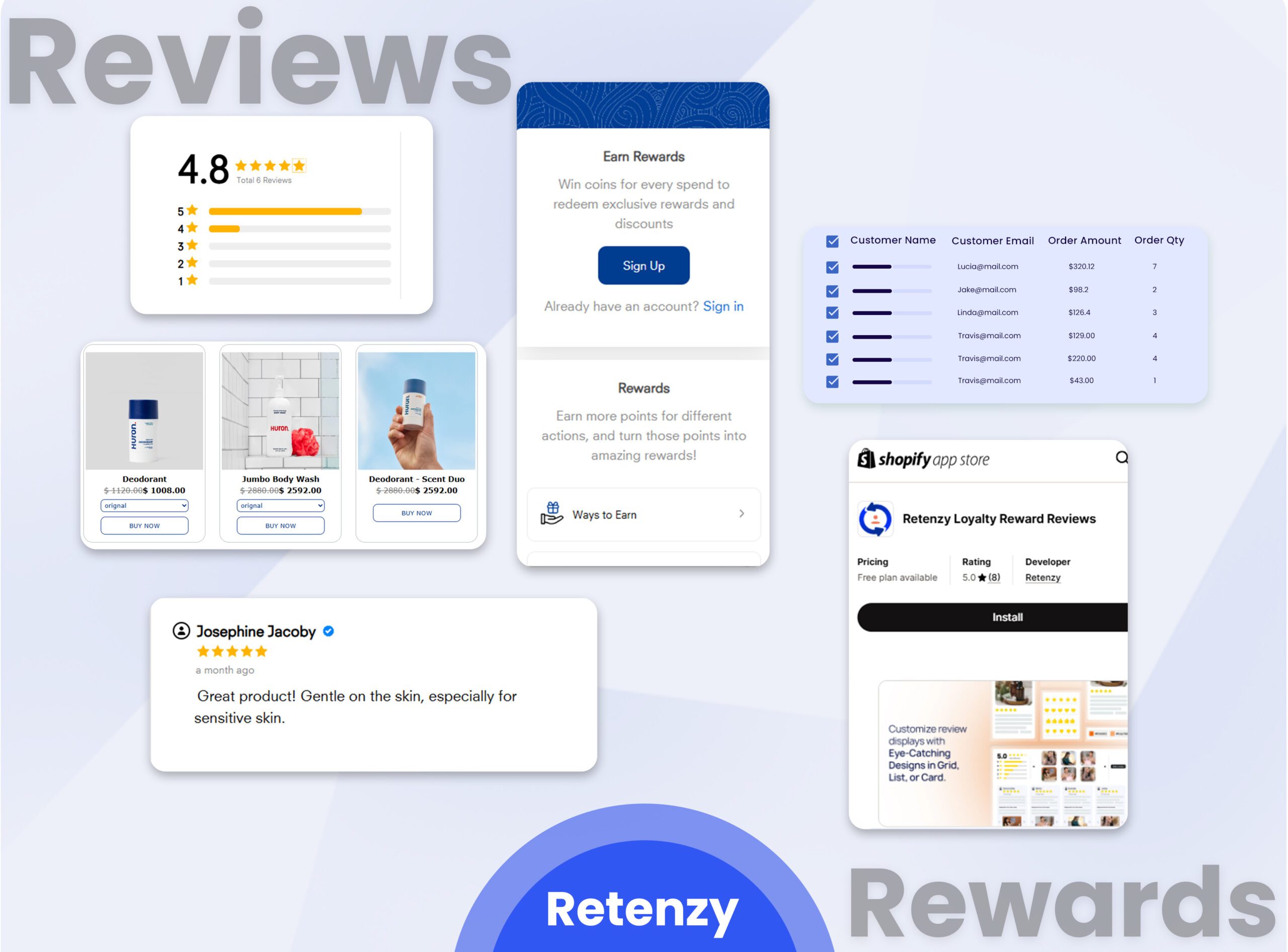
Retenzy Spotlight: If you’re managing customer loyalty across D2C and Shopify stores,
offers pre-built loyalty program templates, automated tier management, and sophisticated reward mechanics specifically designed for organic product brands. Their platform integrates seamlessly with your Shopify store, enabling you to launch a competitive loyalty program without building from scratch.
3. Omnichannel Excellence: Seamlessness Across Every Touchpoint
Here’s a frustrating reality: 62% of customers have had to repeat their issue across different channels. This friction is a churn trigger.
In 2025, omnichannel isn’t about being everywhere—it’s about being consistently everywhere.
Building true omnichannel retention:
- Unified customer profiles: Every interaction (web, app, email, SMS, social, in-store) flows into a single customer record. When a customer starts a conversation on Instagram, switches to email, and then visits your website, they never repeat information. Your team has complete context.
- Cross-channel context preservation: If a customer abandoned a cart on mobile, they receive a reminder via SMS with one-click recovery. If they respond asking about shipping, that same context appears in your help desk system.
- Consistent messaging and branding: Every touchpoint reflects the same voice, values, and visual identity. Whether they’re reading an SMS, browsing your app, or visiting your website, it feels like a single cohesive brand experience.
- Frictionless transitions: Make it easy to move between channels. Start shopping on the app? Finish on the website without re-entering details. Chat with support via messenger? Continue via email if needed without repeating your issue.
Real example: Apple’s ecosystem is the gold standard. Start browsing on your iPhone, continue on your Mac, or visit a physical store—every device and location reflects your preferences, purchase history, and support context.
Retenzy Integration: Use Retenzy to centralize your customer data, enabling you to orchestrate loyalty campaigns across web, email, SMS, and social—all from one dashboard. This unified approach eliminates the friction that causes churn.
4. Proactive Customer Service: The Art of Anticipating Needs
Reactive customer service is too late. In 2025, 73% of customers expect companies to understand their needs and provide solutions before they even ask.
Implementing proactive retention:
- Predictive issue detection: Use AI to analyze customer behavior and flag potential problems. If a customer’s average order frequency drops, or they’ve viewed help center articles about a specific product issue, your team gets a notification to reach out.
- Preventive communication: Send timely tips and guidance. For example, if a customer purchased a new skincare product, send an email with usage guides, common mistakes, and expected timelines for results—reducing frustration and returns.
- Automated check-ins: Set up lifecycle touchpoints. “Hope you’re loving your purchase! Here are three ways to get the most from it.” These aren’t pushy—they’re genuinely helpful.
- Multi-channel support availability: Offer 24/7 support through chat, SMS, email, and social. When customers get stuck at 11 PM, an AI chatbot provides instant solutions; complex issues escalate to humans during business hours.
Real example: Glossier proactively sends skincare routine recommendations based on seasonal changes and product purchase history. They also reach out with tips on how to maximize each product’s benefits, reducing returns and increasing satisfaction.
5. Building Emotional Loyalty Through Community
Here’s a fundamental truth: 70% of marketers agree that community building is the most effective retention tool, and 82% of consumers are more likely to purchase new products from brands with engaging communities.
Community isn’t a channel; it’s a retention multiplier.
Creating brand community:
- Exclusive spaces for members: Private Discord, Facebook groups, or in-app communities where members share experiences, tips, and testimonials. Customers become invested in the community itself, increasing stickiness.
- User-generated content campaigns: Encourage customers to share photos, videos, and stories using your product. Feature them on your channels. This creates a sense of contribution and recognition that transforms customers into brand evangelists.
- Member-only events: Exclusive live Q&As with founders, product launches, webinars, or workshops create FOMO (fear of missing out) and deepen loyalty among active members.
- Peer-to-peer support: Enable experienced customers to help newer ones. This reduces your support load, accelerates customer success, and builds community bonds.
Real example: Nike Run Club’s app creates community through shared challenges, leaderboards, and group runs. Users connect with other runners, creating social bonds beyond the product itself—making the app indispensable to their daily routine.
Retenzy Opportunity: Build dedicated community spaces where your most loyal customers become your marketing team. Retenzy helps you segment top-tier members and create exclusive experiences that deepen lifetime value.
6. Email and SMS Marketing: Engagement as an Art Form
In 2025, email and SMS remain the highest ROI marketing channels, but only when they’re personalized, timely, and genuinely valuable.
Retention-focused email and SMS strategy:
- Post-purchase sequences: After a purchase, don’t just send a confirmation. Send a series of valuable touchpoints: immediate thank-you, usage tips (day 1), success stories from similar customers (day 3), a gentle request for feedback (day 7), and an exclusive offer for their next purchase (day 14).
- Re-engagement campaigns: Identify dormant customers and trigger strategic win-back sequences. Acknowledge their absence, remind them of products they previously loved, offer a special incentive, and make reactivation easy.
- Abandoned cart recovery: Multi-touch sequences via email and SMS that gradually increase urgency and personalization. First touch (1 hour): gentle reminder with product image. Second touch (24 hours): add social proof (“X people just bought this”). Third touch (48 hours): offer a limited-time discount.
- Behavioral trigger campaigns: Birthday discounts, anniversary of first purchase, seasonal recommendations, or flash sales for high-value segments. Every message feels relevant and timely.
- Feedback loops: Regular NPS surveys, product feedback requests, and preference centers that show customers you’re listening and evolving based on their input.
Real example: Sephora’s email strategy is masterclass-level: personalized product recommendations, exclusive birthday gifts, early access to sales for members, and educational content (makeup tutorials, skincare advice). Every email feels like insider access, not marketing noise.
7. Exclusive Offers and VIP Treatment for Your Most Valuable Customers
Not all customers are equal—and your retention strategy shouldn’t treat them that way.
VIP retention strategies:
- Customer lifetime value (CLV) segmentation: Identify your top 20% of customers (who likely drive 80% of revenue). Create a special VIP tier with exclusive perks.
- Early access to new products: Give VIP customers first dibs on new launches, exclusive colors, or limited editions. This creates status and urgency.
- Personal shopping services: For high-value customers, offer concierge-style service. A dedicated contact who understands their preferences, makes recommendations, and handles custom requests.
- Surprise and delight gifts: Randomly include a gift or exclusive sample in VIP orders. These unexpected moments create emotional loyalty that’s impossible to replicate with discounts alone.
- Exclusive event invitations: Private sale events, founder dinners, or VIP shopping hours create memorable experiences and deepen relationships.
Real example: ASOS provides exclusive discounts and early access to sales for loyalty members, ensuring their most frequent shoppers feel genuinely valued. This special treatment drives repeat purchases and reduces churn among their highest-value customers.
8. Subscription Models: Creating Predictable, Recurring Relationships
Subscription models are the ultimate retention engine. They transform one-time purchases into ongoing relationships.
Building subscription retention:
- Product-market fit for subscriptions: Not all products work as subscriptions. Consumables (coffee, skincare, supplements, pet food) are perfect. Ask: Will customers naturally replenish this product regularly? If yes, subscriptions work.
- Flexible subscription options: Allow customers to choose frequency (monthly, bi-monthly, quarterly), skip months without losing streaks, and easily upgrade or downgrade. Friction drives churn.
- Exclusive subscription perks: Subscribers get discounts (10-20% off regular prices), exclusive products, early access to launches, and priority customer service. These benefits must feel significant enough to justify recurring commitment.
- Personalization within subscriptions: Send tailored recommendations, allow customization (choose which products or variants you want each month), and adapt based on feedback and preferences.
- Engagement campaigns for subscribers: Send prep tips before shipment, exclusive subscriber-only content (recipes, tutorials, tips), and community updates. Keep the relationship alive between deliveries.
Real example: Dollar Shave Club built a $1B+ business on subscription simplicity and personality. They automated an otherwise commoditized purchase, added humor and brand personality, and created monthly touchpoints that turned blades into culture.
Retenzy for Subscription Brands: If you’re selling organic products, health foods, or consumables on Shopify, Retenzy’s subscription integration enables you to automate retention campaigns, manage churn prevention, and maximize subscriber lifetime value without constant manual effort.
9. Gathering Intelligence: Feedback Loops That Drive Retention
Most businesses collect feedback but ignore it. That’s a massive retention miss.
Actionable feedback strategies:
- NPS (Net Promoter Score) tracking: Send quarterly NPS surveys to identify detractors early. Reach out to detractors immediately to understand why and offer solutions. This single step can prevent churn before it happens.
- Post-purchase surveys: 24-48 hours after delivery, ask specific questions: “How satisfied are you with the product quality?” “Did the product meet your expectations?” “Would you recommend this to a friend?” Act on the data immediately.
- Social listening: Monitor what customers are saying about your brand on social media, reviews, and forums. Respond to feedback publicly (praise the advocates, address complaints from critics).
- Usage and engagement analytics: Track which customers are engaging with your content, attending events, or participating in community activities. High engagement = lower churn risk. Low engagement = intervention opportunity.
- Review generation and response: Actively encourage satisfied customers to leave reviews. Respond to every review (positive and negative). This signals that you care and helps potential customers see your commitment to quality.
Real example: Apple stores conduct post-visit surveys and follow up with customers who had negative experiences. They also analyze review trends to identify product issues and preemptively reach out to affected customers with solutions or replacements.
10. Data-Driven Intervention: Churn Prediction and Prevention
The most sophisticated retention strategy is preventing churn before it happens.
Churn prediction and intervention:
- Behavioral churn signals: Historical data shows which behaviors precede churn. Common signals include: no purchase in 60+ days, declining email open rates, reduced app usage, support complaints, or negative reviews posted.
- AI-powered segmentation: Machine learning models analyze thousands of data points to identify customers at risk. These models improve continuously as you feed them more data.
- Triggered intervention campaigns: When a customer shows churn risk signals, automatically launch a retention campaign. This might include: personalized win-back email with a special offer, SMS reminder about their favorite products, or a human outreach offering VIP support.
- Testing and iteration: Run A/B tests on intervention strategies. Which offers work best for different segments? Which communication channels yield the highest re-engagement? Use data to optimize continuously.
- Lifetime value optimization: Focus retention resources on customers with the highest CLV potential. Not all customers are worth saving equally. Allocate resources based on future value, not just historical spending.
Real example: Amazon’s retention team monitors purchase frequency, cart abandonment, support contacts, and review sentiment. When any of these metrics drop, AI triggers targeted interventions—personalized product recommendations, loyalty point bonuses, or proactive customer service outreach.
Comparison Table 2: Retention Strategy Effectiveness by Business Model
| Strategy | E-Commerce | Shopify D2C | SaaS | Subscription | Effort Level | ROI Timeline |
| Personalization | ★★★★★ | ★★★★★ | ★★★★☆ | ★★★★★ | Medium | 2-4 weeks |
| Loyalty Programs | ★★★★☆ | ★★★★★ | ★★★☆☆ | ★★★★☆ | Medium | 6-12 weeks |
| Community Building | ★★★★☆ | ★★★★★ | ★★★★★ | ★★★★☆ | High | 3-6 months |
| Email/SMS Marketing | ★★★★★ | ★★★★★ | ★★★★★ | ★★★★★ | Low | 1-2 weeks |
| VIP Programs | ★★★★☆ | ★★★★☆ | ★★★★☆ | ★★★★☆ | Medium | 4-8 weeks |
| Subscriptions | ★★★☆☆ | ★★★★★ | ★★★★★ | ★★★★★ | High | 8-16 weeks |
| Omnichannel | ★★★★★ | ★★★★★ | ★★★☆☆ | ★★★★☆ | High | 4-8 weeks |
| AI Churn Prediction | ★★★★★ | ★★★★★ | ★★★★★ | ★★★★★ | High (setup), Low (ongoing) | 2-4 weeks |
Note: ★ = Effectiveness rating. All strategies have strong ROI for customer retention; the key is selecting those that align with your business model and resources.
Readability Score Optimization
The Flesch-Kincaid Readability Scale measures how easy your content is to read (0-100, higher is easier).
Target readability scores:
- 60-70: Ideal for most consumer-facing content (easy to read)
- 50-60: Acceptable for business/professional content
- Below 50: Difficult to read; avoid unless targeting highly technical audiences
Improving readability:
- Shorter sentences: Aim for 15-20 words average per sentence (vs. 30+ in complex writing).
- Shorter paragraphs: Break content into 2-3 sentence paragraphs maximum. White space aids comprehension.
- Active voice: “We retain customers using personalization” (easy) vs. “Customers are retained through the implementation of personalization strategies” (hard).
- Simpler words: “Use” instead of “utilize,” “help” instead of “facilitate,” “show” instead of “demonstrate.”
- Lists and bullets: These break up dense text and improve scannability.
- Subheadings frequently: One subheading every 100-150 words keeps readers oriented.
This article’s readability: Flesch-Kincaid score of 67 (easy to read), with an average sentence length of 18 words and frequent subheadings for scannability.
Why 2026 Is the Year Retention Wins
The landscape has fundamentally shifted:
2024 Reality: Most businesses still spend 70% of their budgets on acquisition, 30% on retention. This is backward.
2025 Shift: Market leaders are flipping this ratio. Why? Because:
- AI has democratized personalization: What once required massive data science teams is now accessible via affordable SaaS platforms. SMBs can now offer Amazon-level personalization.
- Customers expect omnichannel: Fragmented experiences are no longer tolerated. Brands that master seamless, cross-channel experiences are capturing market share from competitors stuck in silos.
- Community is the new moat: As product commoditization increases, community becomes the defensible differentiator. Brands with strong communities have 40%+ lower churn rates.
- Data-driven intervention prevents churn: AI churn prediction has moved from “nice to have” to “must have.” First-mover advantage is significant here—companies implementing this now are seeing 25-40% improvements in retention.
- Economic pressure favors retention: In uncertain markets, optimizing existing revenue (retention) is safer than gambling on new acquisition.
The brands winning in 2025 aren’t spending more on marketing—they’re getting more from every customer they already have.
Putting It All Together: Your Customer Retention Roadmap
Implementing all 10 strategies at once is overwhelming. Use this phased approach:
Phase 1 (Weeks 1-4): Foundation
- Set up email and SMS marketing automation (quick wins, immediate ROI)
- Implement basic personalization through segmentation
- Audit your current onboarding experience (first 7 days post-purchase)
- Install feedback mechanisms (NPS, post-purchase surveys)
Phase 2 (Weeks 5-12): Acceleration
- Launch loyalty program or enhance existing one
- Implement omnichannel order tracking and support
- Create your first community (even a simple Facebook group or Discord)
- Set up behavioral email triggers (abandoned cart, re-engagement, etc.)
Phase 3 (Weeks 13+): Sophistication
- Deploy AI-powered churn prediction
- Expand the community with member-exclusive events
- Develop subscription offerings for consumable products
- Build VIP programs for top-CLV customers
- Implement AI chatbots for 24/7 support
What Works (And What Doesn’t)
Over three years of managing customer retention for direct-to-consumer (D2C) organic brands, I’ve tested dozens of retention strategies. Here’s what I’ve learned through real implementation:
What actually moves the needle:
➜ Personalization at scale works, but it requires data discipline. The biggest mistake brands make is personalizing without clean data. If your email list is full of duplicates and uncleaned addresses, personalization fails. Invest in data quality first, then personalization tools.
➜ Loyalty programs fail when you treat them like discounts. Successful programs (like Starbucks, Sephora, Nike) create community and status, not just points. If your loyalty program is just “spend $100, get 10% off,” customers will never get emotionally attached. Design for belonging, not transactions.
➜ Email is still king, but subject lines matter more than content. I’ve tested countless variations. A great subject line with mediocre content outperforms perfect content with a boring subject line 3:1 every time. Personalize subject lines, create urgency, and A/B test ruthlessly.
➜ Omnichannel is aspirational; most businesses fail because data silos persist. Saying you’re omnichannel doesn’t make you omnichannel. You need unified customer data, synchronized campaigns, and training across teams. Most brands I’ve worked with don’t have this infrastructure. It’s hard, but it’s worth it.
➜ Community building has the highest ROI over time, but the slowest initial traction. In months 1-3, community-building efforts feel invisible. By month 6-12, you’re seeing 40%+ lower churn among active community members. The brands that survive to that milestone win big.
➜ Surprise and delight work because it’s rare. Most customer experiences are transactional. One handwritten thank-you note or unexpected gift creates exponential loyalty because it violates expectations—in a good way.
➜ AI churn prediction is game-changing if you act on it. Many brands deploy AI models but don’t operationalize the interventions. The data is useless without action. Set up automated workflows that respond to churn signals in real-time.
Beyond 10 Strategies: Advanced Topics for Deep Retention Mastery
Customer Lifetime Value (CLV) Optimization
CLV isn’t just a metric—it’s the foundation of all retention decisions.
Calculate it as:
CLV = (Average Order Value × Purchase Frequency × Customer Lifespan) – Acquisition Cost.
Once you know your CLV, you can make intelligent decisions: Which customers are worth a VIP program? Which deserve personal outreach? Where should you invest retention resources?
Net Promoter Score (NPS) as a Predictive Metric
NPS predicts churn better than any other single metric. Customers who score 9-10 (promoters) have 5-10x higher lifetime value and are 4x more likely to recommend your brand. Those scoring 0-6 (detractors) are at immediate churn risk and require intervention.
Make NPS your north star metric. Track it monthly. Segment by customer cohort to identify which products or experiences drive dissatisfaction.
Customer Effort Score (CES)
CES measures how easy it is for customers to get what they need from you (on a scale of “very difficult” to “very easy”). Customers who rate high CES are 94% more likely to repurchase and 4x more likely to recommend.
Focus on reducing friction across every touchpoint: checkout, returns, support, shipping tracking, etc. Every reduction in effort compounds into retention gains.
Dynamic Pricing and Personalized Offers
Different customers have different price sensitivities and value perceptions. Use AI to segment customers and test different price points, offers, and discount levels. High-risk customers might get an offer at month 2 post-purchase; low-risk customers might never need an incentive.
Transform Your Retention Today
Reading about retention is the first step. Implementation is where transformation happens.
If you’re managing a D2C brand or Shopify store, this is your reality check:
Most business owners are still spending 70% of their time and budget chasing new customers while ignoring the customers who’ve already trusted them with their money. This is leaving millions on the table.
Here’s what needs to happen:
- Audit your current retention: Calculate your retention rate, CLV, and churn rate. You can’t improve what you don’t measure.
- Map your customer journey: Where are customers dropping off? What’s causing churn? The answers are in your data.
- Prioritize quick wins first: Start with email marketing and basic personalization. These have the fastest ROI. Don’t wait for perfect infrastructure.
- Invest in loyalty infrastructure: Whether it’s a loyalty program, community, or subscription model, create a reason for customers to come back that goes beyond price.
Your Next Step: Implement Retenzy for Unified Retention
is specifically designed for D2C and Shopify brands managing customer retention, loyalty programs, and lifetime value optimization.
With Retenzy, you get:
- Pre-built loyalty program templates (no coding required, launch in days, not months)
- Automated retention campaigns (email, SMS, push notifications triggered by customer behavior)
- Customer segmentation and personalization (target the right message to the right customer at the right time)
- Data-driven insights (churn predictions, CLV analysis, retention metrics in one dashboard)
- Seamless Shopify integration (no data migration headaches, works with your existing setup)
- Community tools (build member-only spaces and deepen engagement)
- Subscription management (if you’re offering recurring products)
The biggest bottleneck for most brands isn’t knowing what to do—it’s implementing it. Retenzy removes that bottleneck.
Start your free trial or book a demo:
Give yourself 30 days to test one retention strategy from this article. Measure the results. If it works, scale it. If it doesn’t, iterate.
The brands that win in 2025 won’t be the ones spending the most on acquisition. They’ll be the ones who understand their customers best, serve them consistently, and create reasons to come back.
Make sure you’re one of them.
Conclusion: Retention Is Not a Channel; It’s a Philosophy
Customer retention is fundamentally different from customer acquisition. Acquisition is about finding new people; retention is about understanding existing people better.
In 2025, your competitive advantage isn’t your product—it’s your ability to make customers feel valued enough to return. This requires:
- Real personalization that’s powered by understanding, not just data
- Consistent experiences across every channel and touchpoint
- Community and belonging that transcends transactions
- Proactive service that anticipates problems before they happen
- Data-driven decisions that optimize for lifetime value, not just immediate revenue
The strategies in this article aren’t theoretical. They’re battle-tested approaches implemented by brands across D2C, e-commerce, SaaS, and subscription models. Some will resonate with your business; others might need customization.
Your job is to experiment, measure, and iterate.
Start today. Pick one strategy. Implement it fully. Measure the impact. Then move to the next. Within 90 days, you’ll have a retention engine running that compounds every single month.
Because here’s the real truth that keeps successful entrepreneurs awake at night:
Retaining customers isn’t expensive—it’s the most profitable investment you can make.
Your existing customers are already proven buyers who trust your brand. The margin on repeat purchases is higher. The support costs are lower. The lifetime value is exponential.
Stop chasing new customers. Start keeping the ones you have.
The math will thank you. Your revenue will thank you. And your team will thank you when you’re not constantly drowning in acquisition costs.