8 Best Shopify Translation Apps for Multilingual E-Commerce in 2026
The global e-commerce landscape has fundamentally shifted. In 2026, 98% of e-commerce brands expect international order volume growth, with 42.5% targeting 21-30% of total revenue from international markets. Yet a critical barrier persists: 60% of online shoppers actively avoid purchasing from English-only websites.
For Shopify merchants, the solution isn’t complicated. Implementing multilingual support through the right translation app can deliver a 10-20x return on investment – translating to $90,000+ in additional annual revenue for mid-sized stores. This comprehensive guide walks you through the top Shopify translation apps of 2026, their real-world ROI, and how to choose the right solution for your D2C brand.
Why Multilingual Translation Matters: The 2026 E-Commerce Reality
The Business Case
Translation isn’t a luxury feature – it’s operational infrastructure. Consider this: When the French skincare brand Polaar added multiple languages through translation tools, they doubled their US website traffic while saving hundreds of hours. A German electronics retailer reduced cross-border return rates by 22% simply by enabling pre-purchase customer support in native languages.
The numbers speak clearly:
20-40% increase in international traffic post-translation
15-30% improvement in conversion rates for non-English markets
50-75% reduction in customer support costs with multilingual chat
86% higher conversion rates from localized campaigns vs. English-only campaigns
The Language Barrier Is Real
According to research from 2025-2026, international customers prioritize two things when deciding to purchase: language availability and local currency display. When a store speaks your language, checkout feels safe, product descriptions feel trustworthy, and the entire experience feels personal.
This matters for customer retention, not just initial sales. Multilingual support reduces cart abandonment by connecting checkout processes, support interactions, and product clarity to customer expectations in each region.
Key Takeaways for 2026
Translation is Infrastructure, Not a Feature: In 2026, 60% of shoppers avoid English-only sites. Multilingual support is no longer an “extra” – it is the baseline for international survival.
The 10-20x ROI Potential: Mid-sized stores can expect $90,000+ in additional annual revenue by implementing the right translation strategy, often breaking even within 1–3 months.
Choose Based on Brand Authority:
Use AI/Automated (Weglot, Transcy) for speed and massive inventories.
Use Manual/Human (Langify) for luxury, medical (YMYL), or high-AOV brands where nuances matter.
Use Hybrid (ConveyThis, LangShop) to balance speed with quality.
SEO is the Silent Revenue Driver: Translation isn’t just for the user; it’s for Google. Apps that use subdomains and hreflang tags (like Weglot) provide a significant advantage in ranking for local keywords.
Don’t forget the “Hidden” Content: Success in 2026 requires translating third-party apps (reviews, tracking pages, and chat). Tools like T Lab are essential for stores with complex tech stacks to avoid “immersion breaking” English content.
The Current Shopify Translation App Landscape (2025-2026)
Market Overview
The Shopify translation app ecosystem has matured significantly. What once seemed like a “nice-to-have” is now table stakes for brands targeting growth in Latin America, Southeast Asia, and Europe.
The 2026 priorities for global e-commerce leaders are clear:
Delivery speed and reliability (50%)
Market expansion (41%)
Reduced shipping costs (40%)
Localization: language, currency, checkout (35%)
Translation apps enable the critical fourth element – and directly support the first three by improving customer retention and reducing support friction.
App Selection Criteria for 2026
When evaluating Shopify translation apps, merchants should prioritize:
Language coverage (100+ languages vs. 250+)
Translation quality (AI, hybrid, or human-curated models)
SEO implementation (hreflang tags, URL structure, metadata translation)
Multilingual SEO support (separate domains, subfolders, or subdomains)
Currency and localization (payment methods, local pricing)
Pricing scalability (word-count-based vs. fixed tiers)
Customer support (response time, knowledge base)
Detailed Comparison: Top Shopify Translation Apps for 2026
1. Transcy: AI Translation + Currency Conversion (Best Overall)
Best For: Merchants seeking an all-in-one solution with automatic translation, currency conversion, and location-based customer routing.
How It Works
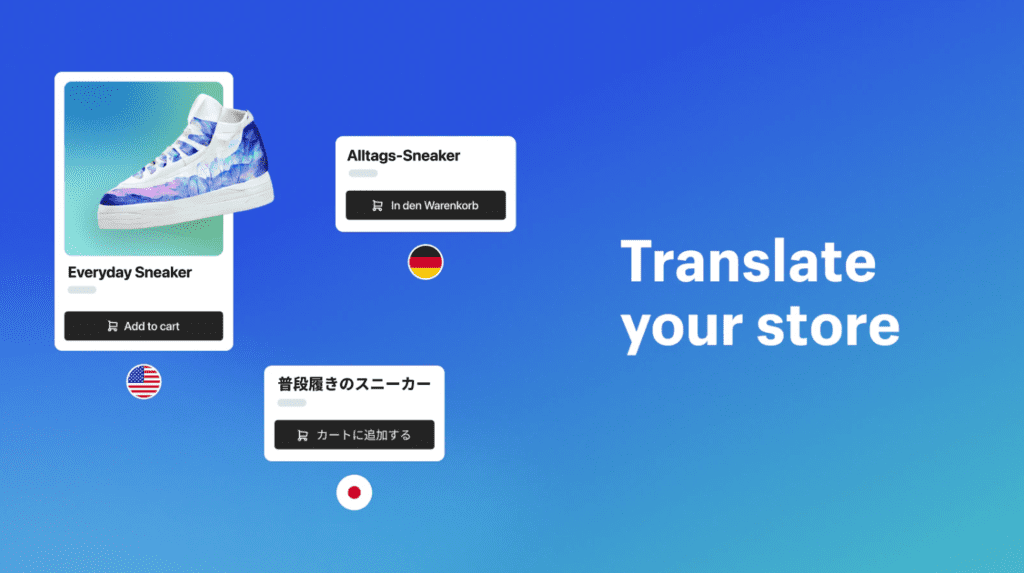
Transcy combines AI-powered automatic translations with currency conversion and geolocation detection. The app auto-detects visitor location, automatically serves content in their preferred language, and displays prices in their local currency. Its dashboard consolidates all multilingual content management, allowing manual refinement of translations for accuracy.
Key Features
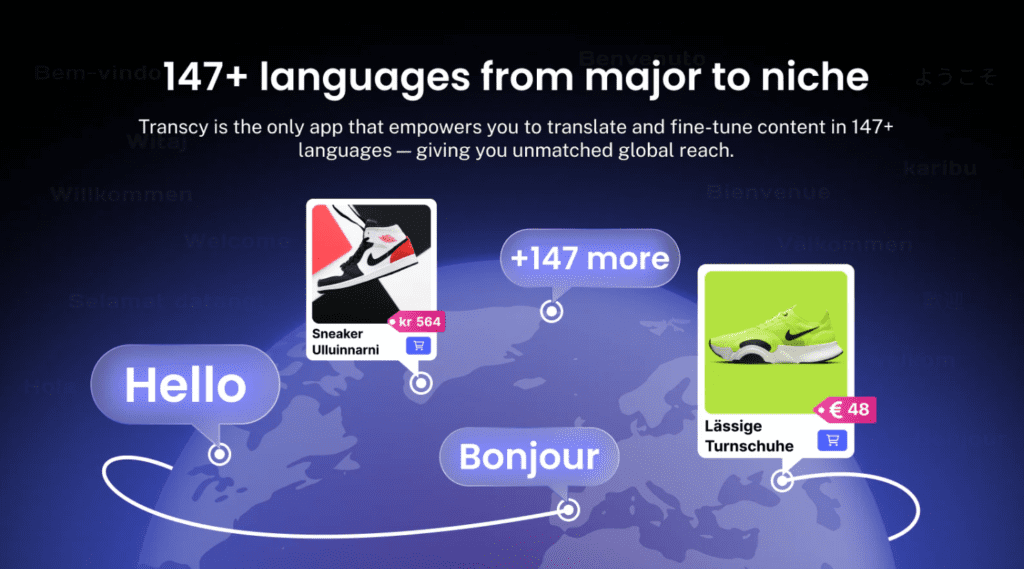
Translates into 148+ languages and 168+ currencies
Auto-detects new product additions and translates them automatically
Image translation capability
Integrates seamlessly with Shopify Markets
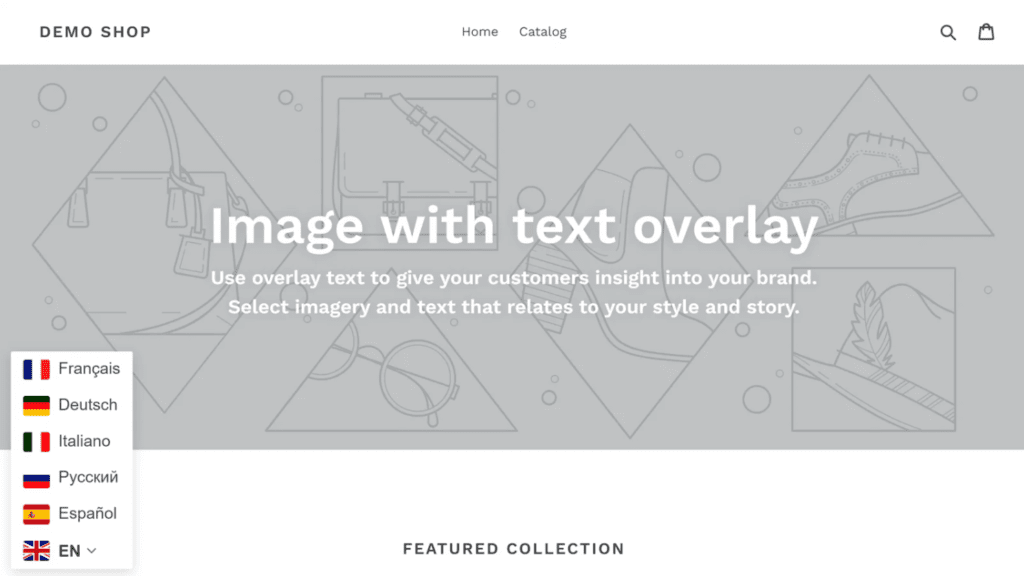
Mobile-optimized language switcher
SEO-friendly URL structure
EDITABLE translation fields (not locked after auto-translation)
Growth plan: $11.90/month (most popular for expanding stores)
Premium: $59.90/month (enterprise support + unlimited translations)
Real-World ROI
A mid-size cosmetics retailer using Transcy reported:
28% increase in international traffic within 90 days
19% improvement in conversion rates for Spanish-language visitors
$67,000 additional annual revenue from localized markets
Approximately 12x ROI within 6 months
Why Choose Transcy
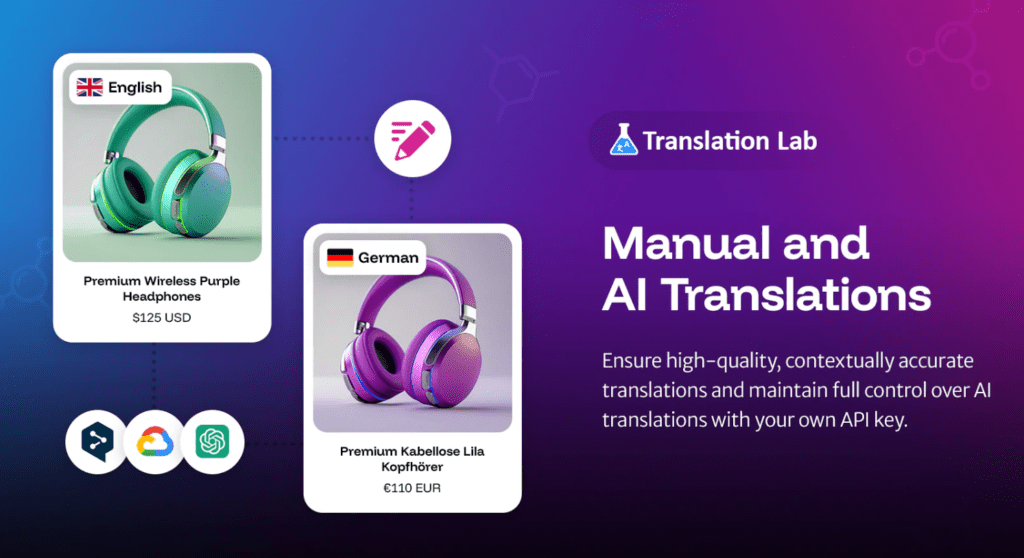
Transcy’s biggest advantage is flexibility. Unlike apps that lock translations after initial automation, Transcy allows unlimited manual editing. This means you can start with AI translation for speed, then refine critical product descriptions for brand voice and accuracy.
2. Weglot: Fastest Setup + SEO Optimization (Best for Speed)
Best For: Merchants who need rapid, plug-and-play translation with strong SEO fundamentals.
How It Works
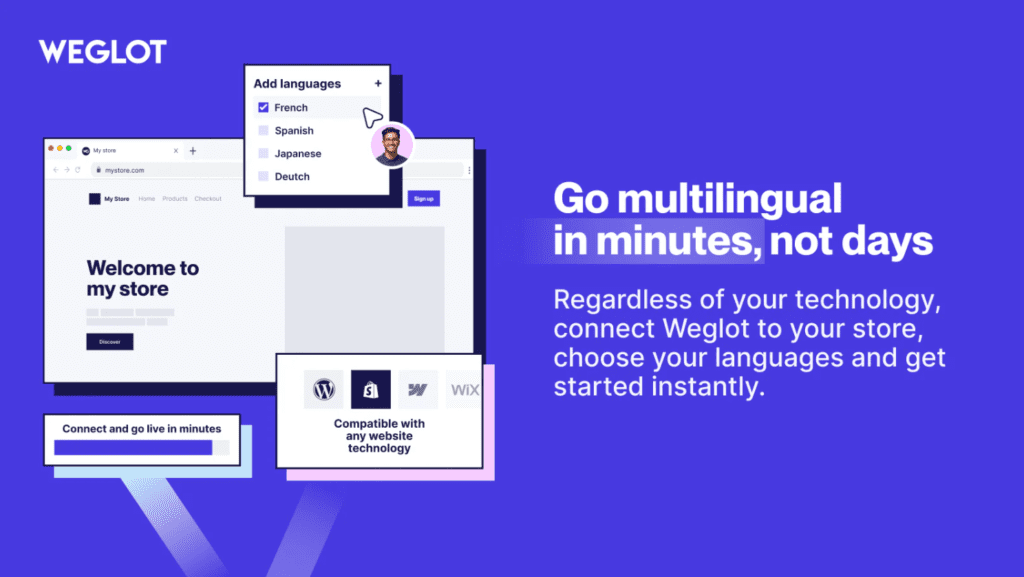
Weglot provides instant, no-code translation using Google Translate technology enhanced by machine learning. It automatically detects visitors’ language and serves translated content immediately. The app manages hreflang tags, creates separate SEO-friendly subdomains for each language, and maintains Google Search Console compatibility.
Key Features
Automatic translation into 100+ languages
Separate subdomains for each language (excellent for SEO)
Automatic hreflang tag management
One-click setup (typically live within minutes)
Language switcher widget customization
Unlimited manual translation refinement
Mobile-responsive by default
Compatible with all Shopify themes
Pricing (2026)
Free plan: For small sites (limited monthly translations)
Starter: $17/month
Business: $49/month
Enterprise: $79+/month
Real-World Performance
A UK fashion e-commerce store implemented Weglot across French, German, and Spanish markets:
Ranked for 180+ new long-tail keywords in German within 4 months
The German market represented 31% of monthly revenue by month 6
Setup time: Under 2 hours
Ongoing maintenance: 30 minutes per month
Why Choose Weglot
Weglot’s SEO architecture is superior for stores targeting search visibility. The separate subdomain approach (rather than subfolder or query parameter) signals to Google that each language version is a distinct, authoritative content resource. This is particularly valuable for competitive keywords in secondary markets.
3. Langify: Manual Translation Precision (Best for Brand Control)
Best For: Merchants who prioritize translation accuracy, brand voice consistency, and don’t need automatic translation.
How It Works
Langify is built for teams that want complete control over every word. It provides a side-by-side editor within the Shopify admin, allowing manual translation of all store content. There’s no automatic translation feature – this is intentional design for brands like luxury, wellness, and high-value niche products where a single mistranslation could damage credibility.
Key Features
Unlimited manual translations
Side-by-side editor in Shopify admin
Support for right-to-left languages (Arabic, Hebrew, Urdu)
SEO-optimized with unique URLs per language
Supports up to 10 languages (scalable)
No automatic translation (control + accuracy)
Team collaboration and translation workflows
7-day free trial, no credit card required
Pricing (2026)
Free plan: 1 language, manual only
Growth: $17.50/month (up to 3 languages)
Professional: $35/month (up to 5 languages)
Premium: $65/month (up to 10 languages + advanced support)
Real-World Case Study
A premium organic skincare D2C brand (high AOV, YMYL sensitive) switched to Langify:
Reduced translation errors to near-zero (manual QA process)
Built a 3-month content translation roadmap with a cultural consultant
Conversion rate in primary European market: 3.2% (vs. 1.8% on auto-translated sites)
Revenue per session: 2.4x higher in manually translated markets
Additional revenue: $156,000 annually from European markets
Why Choose Langify
If your brand sells premium, YMYL (Your Money Your Life), or culturally sensitive products, Langify’s manual-only approach is worth the slightly higher cost. The conversion lift in high-value segments often exceeds the price difference versus cheaper automated solutions.
4. LangShop AI: Maximum Language Coverage (Best for Scale)
Best For: Merchants expanding to 50+ international markets simultaneously.
How It Works
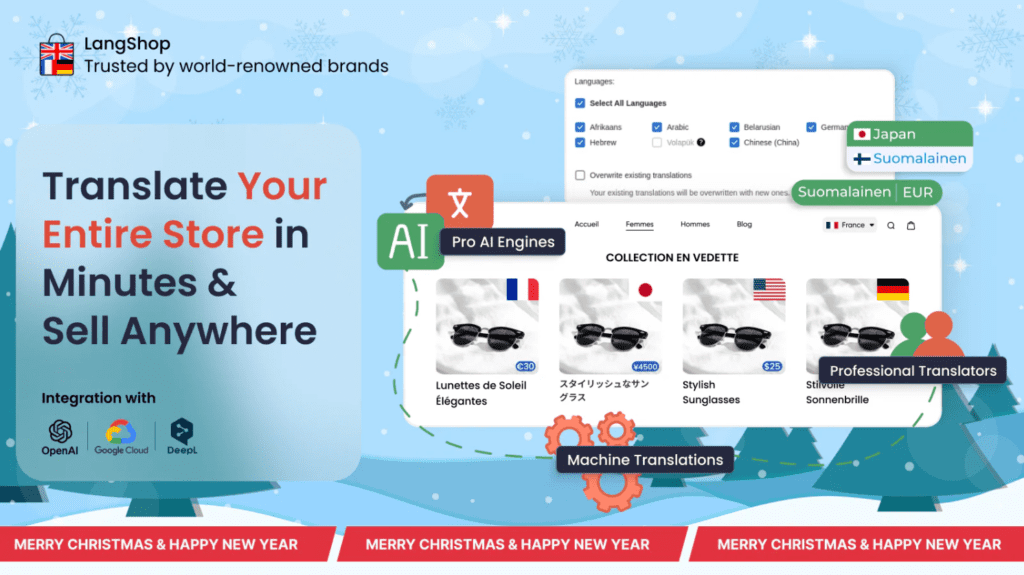
LangShop is the language breadth champion, offering 247 languages – more than any competitor. It provides three translation tiers: automated (Google, DeepL, GPT-4), manual editing, or professional translation services managed through the app.
Key Features
247 languages (broadest coverage)
Multiple translation engines: Google Translate, DeepL, GPT-4
Professional translation service integration (managed through app)
Auto-translates newly added products
Multi-currency support
Image text translation
Third-party app translation
Bulk translation operations
SEO optimization per language
Pricing (2026)
Free trial: 7-day, full-feature access
Starter: $10/month (50,000 words/month)
Growth: $25/month (250,000 words/month)
Professional: $60/month (unlimited + professional translation credits)
Real-World Implementation
An Indian D2C brand selling organic seeds and wellness products used LangShop to launch in 18 languages across 6 continents:
Covered 247-language reach but actively marketed in 18 priority languages
Automated initial translations, then manually refined the top 6 languages
Integrated professional translation for legal/compliance content
Month 1: 14% of traffic from non-English sources
Month 6: 34% of monthly revenue from international markets
Why Choose LangShop
LangShop is best for brands with genuinely global ambitions. While you won’t need all 247 languages, the breadth allows you to expand faster without re-evaluating tools as you enter new markets.
Best For: Brands starting their multilingual journey with budget constraints.
How It Works
This is Shopify’s native multilingual app, integrated directly into the Shopify admin. It provides automatic translation into 2 languages at no cost, with unlimited manual translation refinement. It uses Google Translate for automation and integrates with Shopify Markets for localized pricing and currency.
Key Features
2 free automatic translations into any language
Unlimited manual translation editing
Side-by-side editor in Shopify admin
Integration with Shopify Markets
Automatic hreflang tag generation
Mobile-optimized by default
Native Shopify support
Pricing (2026)
Completely free (no paid tier)
Realistic Limitations
Limited to 2 auto-translated languages (additional languages require manual setup)
AI translation quality mirrors Google Translate (acceptable but not premium)
No advanced features like image translation or third-party app support
Scaling beyond 2 languages requires manual translation of all new content
Best Use Cases
Testing market fit in 1-2 priority languages before investing in premium apps.
Small stores with <5,000 products
Brands with simple product catalogs (limited descriptions)
POC (proof of concept) phase for international expansion
Why Consider This
If your immediate goal is testing demand in a single language market – say, Spanish for a US-based store – Shopify’s built-in tool is sufficient. The ROI becomes negative only if you’re paying for a premium app when you could validate the market first with the free option.
Best for: Startups and small businesses with limited budgets.
How It Works
GTranslate leverages Google’s translation infrastructure to provide automatic translation into 100+ languages. It’s the budget option but carries quality tradeoffs that become apparent at scale.
Key Features
100+ languages
Automatic translation powered by Google Translate
Free plan available
Basic language switcher
Mobile-responsive
Pricing (2026)
Free: Basic translation (word limits)
Starter: $9.99/month
Growth: $19.99/month
When NOT to Use GTranslate
For premium or YMYL brands (translation quality insufficient)
If targeting competitive keywords (weak SEO implementation)
If you need a third-party app translation
For stores selling in regulated industries (fintech, health products)
7. T Lab AI Language Translate: Technical Depth + Third-Party Support
Best For: Merchants with complex Shopify setups using multiple third-party review, tab, and app integrations.
How It Works
T Lab specializes in translating not just your store, but also the apps you’ve installed. It can translate 200+ external apps (reviews, Q&A tabs, comparison tools, etc.), text within images, and even auto-generate alt text for images in multiple languages.
Key Features
130+ languages
Autopilot AI auto-translates new and updated content
Third-party app translation (200+ apps supported)
Image text translation and OCR
Multi-currency support
SEO metadata translation
Manual editing capability
Pricing (2026)
Free trial: 7 days
Starter: $12/month
Growth: $29/month (most popular)
Professional: $59/month
When to Choose T Lab
Your store uses 4+ third-party apps (reviews, tabs, comparison widgets) and you need all of them translated. Without T Lab’s third-party coverage, customer reviews in English break the immersion of an otherwise perfectly translated store.
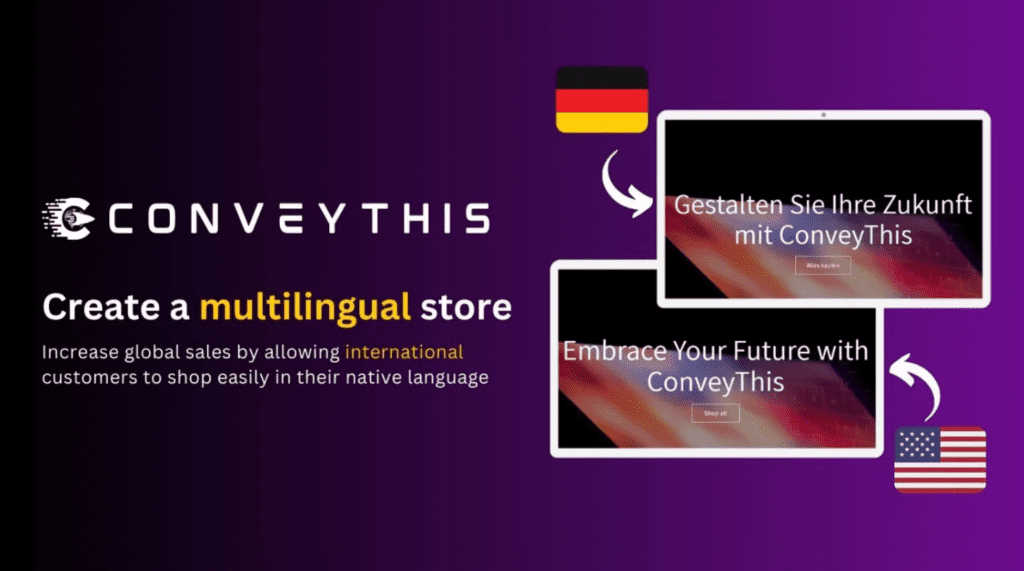
8. ConveyThis: AI + Human Hybrid (Best for Quality at Scale)
Best For: Merchants seeking AI speed with human-curated refinement.
How It Works
ConveyThis combines automatic AI translation with optional human editing. It’s designed for stores that want to launch quickly but maintain quality control over time. The workflow: deploy AI translation immediately, then queue high-impact content (product descriptions, homepage copy) for human refinement.
Key Features
100+ languages
Automatic AI translation
Human translation marketplace built-in
Separate subdomains per language (good SEO)
Visual page builder for layout customization
Mobile-optimized switcher
Hreflang tag management
Pricing (2026)
Free: Basic setup
Business: $11.99/month
Advanced: $29.99/month (includes human translation credits)
Gather customer feedback on translations (surveys, chat logs)
Refine highest-impact pages based on performance data
Plan next language rollout
Real-World Case Studies: Shopify Stores That Got Multilingual Right
Case Study 1: Indian D2C Wellness Brand
Store Profile: Organic seeds, superfoods, wellness products (YMYL/health-sensitive)
Challenge: Started with English + Hindi. Expansion to 8 markets within 12 months.
Solution: Langify for precise translations + cultural consultant for localization
Results After 6 Months:
German market: 12% of revenue
UK/Canada (French-speaking): 8% of revenue
Japan: 4% of revenue
Total international: 31% of revenue
Conversion rate in German: 2.8% (vs. 1.6% in English)
Customer retention rate: 8% higher in manually translated markets
Key Lesson: For YMYL products, the precision cost of Langify paid for itself in reduced returns and customer support issues.
Case Study 2: European Fashion Retailer
Store Profile: Mid-luxury fashion, high inventory turnover, competitive market
Challenge: Ranking for fashion keywords in 6 European languages against established local competitors
Solution: Weglot for SEO-optimized subdomain structure + Pinterest strategy in local languages
Results After 12 Months:
French: Ranked #1-3 for 45+ high-intent keywords
German: Ranked #2-5 for 38+ keywords
Spanish: 23% of monthly revenue from Spanish-language visitors
Organic traffic from translated languages: 2.3x increase
Blog traffic contributing 12% of the overall international sales
Key Lesson: Translation app + strategic SEO + local market research multiplies impact.
Case Study 3: B2B SaaS Shopify Integration
Store Profile: Shopify app marketplace, targeting agencies in LATAM
Challenge: Needed 6+ app integrations translated, including review apps and support chat
Solution: T Lab for third-party app translation + Transcy for currency conversion
Results After 90 Days:
LATAM traffic: 18% of total (up from 2%)
Spanish-language app store page conversions: 31% (vs. 8% English average)
Customer support inquiries in Spanish: Reduced by 40% due to localized docs
Revenue from Spanish-speaking regions: $230K in first 3 months
Key Lesson: Third-party app translation was the forgotten lever – it’s why T Lab was critical here.
Why Multilingual Translation Apps Matter Now (2026)
The Hook: “98% of e-commerce brands expect international growth in 2026, yet 89% of businesses still don’t optimize for multilingual SEO. Brands that do will capture 2-3x more international revenue.”
Visual Quality: Include original, high-resolution images (not stock photos)
Mobile Optimization: Responsive design, fast load times
Follow Buttons: Enable users to follow your store in Discover
Actionable Steps
Track Discover Performance in Google Search Console (Discover Performance report)
Publish multilingual buying guides timed to seasonal changes
Create localized comparison content (“Best translation apps for Spanish sellers” vs. generic list)
Use descriptive headlines that don’t sensationalize
Build multiple RSS feeds (one per language, one per product category)
2026 International E-Commerce Tailwinds
Why This Article Matters Today:
98% of brands expect international order growth in 2026 (Passport 2026 Global E-Commerce Outlook)
Latin America is growing 12.2% YoY, and Southeast Asia is emerging as a production hub
35% of e-commerce leaders prioritize localization as a top strategic initiative
Multilingual support reduces cart abandonment by 25-40% on average
AI translation quality reaching 95% accuracy for major language pairs (2025 benchmark)
Translation isn’t optional anymore. It’s the operational backbone of international revenue.
Conclusion
What Actually Works:
Start with your highest-opportunity market. Look at your analytics – which countries send traffic but generate low conversions? That’s your first target.
Match your translation approach to your brand positioning. Premium = manual or hybrid. Growth-stage = automatic with spot refinement. Budget = free or cheapest option.
Measure everything. Set up Google Search Console tracking by language. Monitor bounce rates, session duration, and conversion rates per language. Bad translation quality shows up in data before it damages revenue.
Plan for ongoing maintenance. Translation isn’t a one-time project. New products, seasonal campaigns, and market feedback require continuous refinement.
Combine translation with multilingual marketing. Localizing checkout and product pages means nothing without localized customer acquisition. Plan paid search, social, and content strategies for each market simultaneously.
Your Next Step:
If you’re reading this and you’re still English-only, your international competitors are already ahead. The question isn’t whether to translate – it’s which app to choose.
Start with your priority market. Implement within 2 weeks. Track metrics for 90 days. Then expand. That’s the formula that works.
Final Thoughts: Multilingual Is Your Competitive Advantage
In 2025-2026, speaking your customers’ languages isn’t a competitive advantage – it’s a table-stakes requirement. The real advantage is implementing it thoughtfully.
The brands winning international markets aren’t necessarily the ones with the biggest budgets. They’re the ones who translated fast, measured results carefully, and refined continuously. They understood that translation is infrastructure, not a one-time project.
Your multilingual store is waiting. The question is: which translation app will get you there?