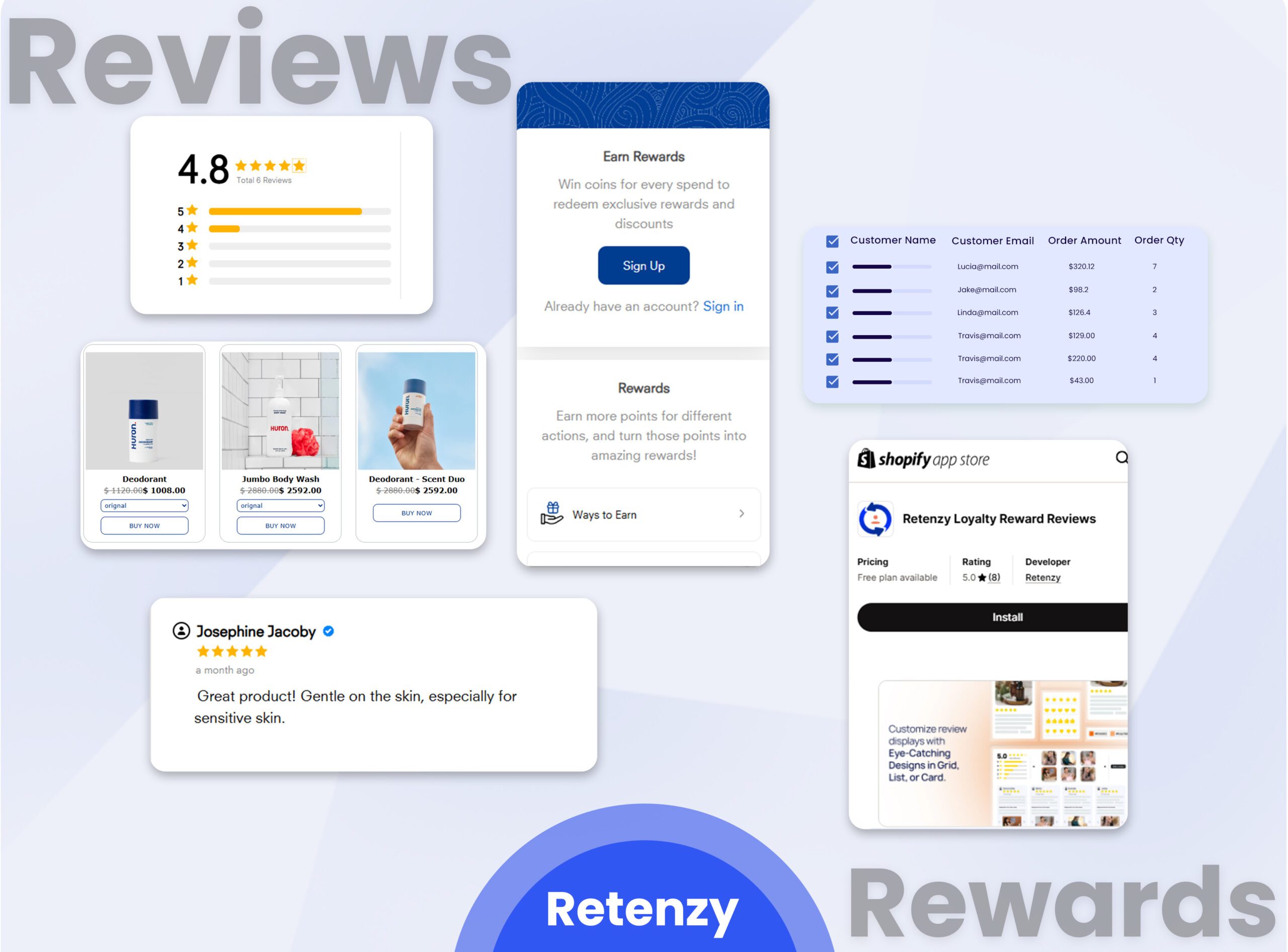



In 2026, customer reviews have evolved beyond testimonials—they’re now emotional loyalty drivers and AI-powered conversion catalysts. Businesses collecting 25+ reviews see a staggering 108% revenue increase, while those responding strategically to feedback unlock 62% higher customer lifetime value. This comprehensive guide reveals how to architect reviews into your core sales strategy and ensure your content gets discovered by AI platforms that now drive significant traffic alongside traditional search.
Why Reviews Matter Now More Than Ever
The e-commerce landscape has shifted dramatically. Customer acquisition costs have never been higher, yet conversion rates remain stagnant for many brands. What’s changed? Consumers have become data-driven skeptics—they no longer trust brand claims. They trust other customers.
The 2026 Paradigm Shift
In 2025-2026, the focus has shifted from acquisition to retention. Loyalty programs are resurging, but with a critical twist: emotional loyalty—rewarding customers beyond transactions through community engagement, survey participation, and review incentives—is now recognized as a revenue multiplier.
Here’s why this matters for your sales strategy: A customer who leaves a review isn’t just providing feedback. They’re:
- Creating authentic social proof that converts strangers into buyers
- Building emotional attachment to your brand
- Enabling AI chatbots to understand your business better
- Strengthening your content’s ranking potential across Google, Discover, and AI platforms
The brands dominating 2026 aren’t just collecting reviews—they’re orchestrating them as part of an integrated loyalty ecosystem.
Part 1: Understanding the Sales Impact of Customer Reviews
The Conversion Rate Revolution
The connection between reviews and sales is no longer theoretical. It’s measurable, repeatable, and scalable.
Key Conversion Impact Metrics:
| Metric | Impact | Business Implication |
| Products with 5+ reviews | 270% higher purchase likelihood | Review volume directly predicts sales velocity |
| 9+ reviews collected | 52% revenue increase average | Threshold for meaningful competitive advantage |
| 25+ reviews collected | 108% revenue increase average | Exponential returns from sustained collection |
| Real-time social proof notifications | 98% conversion boost | Dynamic review displays outperform static content |
| Video testimonials vs. text-only | 80% higher conversion rate | Media format dramatically impacts effectiveness |
| Revenue increase per customer (systematic social proof) | 62% lifetime value increase | An integrated approach multiplies returns |
Why Customer Reviews Convert Better Than Advertisements
92% of consumers trust customer reviews as much as personal recommendations.
Think about that statistic: Your customers’ voices carry equal weight to someone’s closest confidants. This is the phenomenon of social proof in its most powerful form.
The psychology is straightforward:
- Authenticity beats marketing language. Customers know brands will say anything to make a sale. Other customers? They have no incentive to lie.
- Uncertainty reduction. When evaluating a purchase, consumers lack complete information. Reviews reduce that uncertainty with real-world experiences.
- Herd mentality works. 95% of people are imitators rather than initiators. We naturally follow others’ behavior when uncertain.
- Similarity principle. Reviews from people similar to us (by demographics, use case, concern) are more persuasive than expert opinions.
Part 2: How Customer Reviews Directly Impact Sales Performance
1. Building Immediate Trust and Credibility
The Trust Paradox: Perfect ratings aren’t trustworthy. Research shows purchase likelihood peaks at 4.2-4.5 star ratings—not 5.0 stars.
Why? Because authentic reviews include constructive criticism. A product with mostly 5-star reviews alongside balanced 3-4 star reviews signals genuine customer experiences, not curated marketing speak.
Critical finding: 68% of consumers don’t trust a 5-star rating unless multiple other reviews back it up. Your review count matters more than your average rating.
Action implication: Volume becomes your credibility multiplier. A brand with 25 well-distributed reviews (some 4-star, some 5-star, a few 3-star) outperforms a brand with five perfect 5-star reviews.
2. Influencing Purchase Decisions at Critical Moments
Customer reviews function as decision-enablers at the moment of highest purchase intent.
The Decision Journey with Reviews:
- Awareness stage: Customer discovers your product (through ads, search, social)
- Consideration stage: Customer evaluates alternatives
- Reviews become critical here
- 88% of consumers have been influenced by online reviews when making purchase decisions
- Purchase stage: Customer completes the transaction
- Review quantity and sentiment determine conversion likelihood
- Post-purchase stage: Customer becomes a reviewer
- Review generation becomes your loyalty hook
At stage 3, a shopper seeing 100+ reviews with 4.3 star average is significantly more likely to convert than viewing the same product with 5 reviews. The conversion lift isn’t linear—it’s exponential. This is the wisdom of the crowd at work.
3. Increasing Average Order Value Through Credibility
Reviews don’t just increase conversion rates on individual products—they increase customer spending patterns.
Consumers who shop from businesses featuring strong reviews spend 31% more money on average compared to those buying from review-sparse sites. Why? Because trust reduces perceived risk, enabling customers to:
- Buy higher-priced products
- Purchase multiple items per transaction
- Increase product quantity
4. Generating Authentic Traffic from Review Platforms and Third-Party Sites
Reviews aren’t isolated to your website. They distribute across multiple platforms, each driving qualified traffic:
Cross-Platform Review Distribution:
- Google Search/Local: Reviews improve local search rankings (15% of ranking factors)
- Product marketplaces (Amazon, Etsy, Shopify app reviews): Highly targeted buyer traffic
- Third-party review sites (Trustpilot, G2, Capterra, industry-specific platforms): Authority signals
- Social proof platforms: Real-time notification widgets driving curiosity clicks
Each platform acts as a referral source. A business with a strong review portfolio on multiple platforms creates multiple traffic entry points, each pre-qualified with social proof.
Part 3: Reviews and Search Engine Optimization
Schema Markup and AI Understanding
One of the most underutilized aspects of review strategy is structured data optimization.
When you implement review schema markup (AggregateRating, Review, Product schemas), you’re not just helping Google understand your reviews—you’re making your content machine-readable for AI chatbots, voice assistants, and emerging search platforms.
BERT Score Optimization Through Reviews:
Google’s BERT algorithm evaluates how well your content matches search intent through contextual understanding. Customer reviews—especially diverse, detailed reviews—significantly improve your BERT score because they:
- Add semantic richness to your content (more words, more context)
- Address common questions and concerns naturally
- Create topical depth through varied user experiences
- Signal authenticity and freshness through user-generated content
Content about “best ergonomic office chairs” paired with 20+ authentic reviews mentioning specific problems solved scores higher on BERT than the same article without reviews.
Local Search Ranking Advantages
For local ecommerce (Shopify stores, service areas, physical locations), reviews are ranking factors. Online reviews account for 15% of local pack ranking factors according to Moz research.
More importantly:
- Review recency signals active business engagement
- Response to reviews indicates customer service focus
- Review quantity demonstrates credibility
- Review diversity (across platforms) shows market presence
Featured Snippet Opportunities
Reviews create natural featured snippet opportunities. Questions in reviews often become searchable queries:
“Do these headphones work with iPhone 14?” (Customer Review Question)
↓
→ Creates opportunity for FAQ schema content
→ Captures “best headphones for iPhone 14” search
→ Drives featured snippet inclusion
Part 4: The Emotional Loyalty Revolution and Review Strategy
Beyond Transactional Reviews: Building Community
In 2026, forward-thinking brands are reframing reviews as emotional loyalty touchpoints, not just testimonials.
This means:
- Incentivizing reviews through loyalty points (beyond monetary rewards)
- Featuring customer reviews in email marketing and social campaigns
- Creating review-focused community spaces
- Asking customers to review beyond just purchases (usage experiences, styling tips, etc.)
Emotional Loyalty Opportunities:
| Touchpoint | Review/Feedback Opportunity | Loyalty Impact |
| Post-purchase survey | Satisfaction feedback before the review request | Builds investment in the feedback process |
| Usage milestone email | “How are you using X?” community story request | Creates a brand advocacy opportunity |
| Product styling guide | “Share your photos using our product” UGC campaign | Converts customers into marketers |
| Problem-solving support | “Help us improve by sharing your issue.” | Positions the customer as a co-creator |
| Brand community events | Review the invitation to the exclusive customer group | Creates exclusivity perception |
Customers rewarded with emotional loyalty benefits (community access, exclusive content, VIP early access) leave more detailed, enthusiastic reviews than those rewarded with discounts alone.
The Review Response Strategy Advantage
Here’s a tactical lever many brands overlook: How you respond to reviews matters more than the reviews themselves.
The Numbers:
- 55% of customers say business response to reviews makes them feel good about the business
- 56% change their perspective on business responsiveness/caring based on review responses
- 72% of consumers believe companies that ask for feedback care more
- 22% would not choose a business that doesn’t respond to reviews online
Response strategy should follow this framework:
For Positive Reviews:
- Thank you by name (personalization signals)
- Highlight specific detail they mentioned (shows genuine reading)
- Invite to community/loyalty program
- Create an opportunity for repeat engagement
For Negative Reviews:
- Respond within 48 hours (speed signals respect)
- Apologize sincerely, don’t defend
- Move resolution to private channel (email/WhatsApp)
- Follow up post-resolution publicly
- Learn systematically (track complaint patterns)
Brands with systematic review response strategies see:
- Higher customer retention (repeat purchase rates increase)
- Better brand perception (perspective shift in negative review readers)
- Stronger loyalty program enrollment (72% of review responders join loyalty
Strategic Implementation
How to Use Customer Reviews for Maximum Sales Impact
Phase 1: Collection Strategy (Month 1)
- Identify optimal timing: Ask for reviews 7-10 days after purchase (when satisfaction is high but memory is fresh)
- Create collection process: Email automation, post-purchase popup, or SMS reminder
- Incentivize participation: Loyalty points (emotional loyalty), exclusive content access, community features
- Make process frictionless: 1-click review, pre-filled forms where possible
- Multi-platform collection: Direct reviews on site AND third-party platforms (Google, Trustpilot, industry-specific)
Phase 2: Optimization (Month 2-3)
- Analyze review content: What questions appear frequently? What pain points surface?
- Create FAQ content: Convert popular review questions into featured article sections.
- Response protocol: Establish a 48-hour response SLA for all reviews
- Showcase strategy: Feature reviews on product pages, email campaigns, and social media
- Video testimonial conversion: Reach out to 5-star reviewers for short video testimonials
Phase 3: Systemization (Month 4+)
- Automated monitoring: Track review metrics weekly
- Content repurposing: Turn review insights into blog posts, case studies, and social content
- Team accountability: Assign review response ownership
- Continuous improvement: A/B test incentives, timing, messaging
- Loyalty integration: Build review participation into the loyalty program
Review Strategy Effectiveness Comparison
| Strategy | Implementation Difficulty | Time to Impact | Conversion Lift | Cost |
| Basic collection (email) | Easy | 2-4 weeks | 10-15% | Low |
| Multi-platform aggregation | Moderate | 4-8 weeks | 20-30% | Medium |
| Video testimonial program | Hard | 8-12 weeks | 50-80% | High |
| Review response protocol | Easy | Immediate | 15-25% | Low |
| Loyalty integration | Moderate | 4-6 weeks | 25-40% | Medium |
| Social proof widgets | Easy | 1-2 weeks | 30-50% | Low-Medium |
| Community platform | Hard | 8-16 weeks | 40-70% | High |
| AI-powered personalization | Hard | 12+ weeks | 60-100% | Highest |
The 2026 Advantage: AI and Reviews
One more insight: In 2026, the brands integrating reviews with AI will dominate. Here’s why:
AI chatbots like ChatGPT, Gemini, and Perplexity are becoming primary discovery mechanisms. When someone asks “What are the best noise-canceling headphones for office work?” — your product appears in AI responses only if:
- Your content comprehensively answers the question
- You have authentic, specific reviews addressing office-use scenarios
- Your content is structured for AI parsing (schema markup, clear formatting)
- You have demonstrated expertise and authority
The reviews become the data source that trains AI about your products. Better, more diverse reviews = better AI responses = more discovery.
Actionable Next Steps
This week:
- Audit current review collection rate (how many per day?)
- Identify collection gaps (which channels/timing?)
- Set up response tracking (SLA for all reviews)
This month:
- Implement multi-platform collection (website + Google + industry platform)
- Create response templates for positive/negative reviews
- Add review schema markup to the website
- Feature 3 best reviews on homepage/top product pages
This quarter:
- Integrate reviews into email marketing (1 per campaign)
- Create 3-5 blog posts from review insights
- Launch video testimonial incentive program
- Connect review participation to the loyalty program
This year:
- Build a community platform for review contributors
- Develop AI-optimized review content (for ChatGPT discovery)
- Implement real-time social proof notifications
- Create industry thought leadership through review analysis
- Integrate reviews into the product development roadmap
Conclusion: The Review-Powered Future
Customer reviews are no longer testimonials. They’re conversion catalysts, loyalty drivers, SEO assets, and AI training data all in one.
The evidence is overwhelming: Reviews increase conversions by 270%, build trust equivalent to personal recommendations, drive organic traffic, improve search rankings, and enable AI discovery. But only if you systematize them.
The difference between brands that see 20% revenue growth and those that see 100% growth often comes down to one thing: how seriously they take review strategy.
In 2026, the question isn’t whether to collect reviews. It’s whether you’ll collect them haphazardly (and miss 80% of potential impact) or systematically (and compound growth exponentially).
The brands that choose a systematic review strategy—collection + response + showcase + content leverage + AI optimization—will own their categories.
The opportunity is real. The data is clear. The time to start is now.
Frequently Asked Questions About Customer Reviews and Sales
Q: How can customer reviews boost sales?
A: Customer reviews boost sales through multiple mechanisms: (1) Building trust with social proof (92% trust reviews as personal recommendations), (2) Reducing purchase uncertainty by providing authentic experiences, (3) Increasing conversion rates by up to 270% when products have 5+ reviews, (4) Improving search rankings through fresh content and schema markup, and (5) Driving referral traffic from review platforms and discovery channels.
Q: What percentage of customers read reviews before purchasing?
A: Research shows 92% of consumers read online reviews before making a purchase. Even more importantly, 88% of consumers are influenced by online customer reviews when making purchasing decisions, and 91% of 18-34 year-olds trust online reviews as much as personal recommendations. This makes review visibility non-negotiable for modern ecommerce.
Q: Do reviews really increase conversion rates?
A: Yes—dramatically. Products with five or more reviews see a 270% increase in purchase likelihood compared to products without reviews. Real-time social proof notifications (live review feeds) boost conversions by 98%. Video testimonials outperform text-only reviews by 80%. The evidence is conclusive: review presence and quality directly correlate with conversion rate increases.
Q: Why are customer reviews important for business success?
A: Customer reviews serve four critical business functions: (1) Trust building—they replace brand claims with peer voices, (2) Decision enabling—they reduce uncertainty at purchase moments, (3) Competitive differentiation—strong review portfolios set you apart, and (4) Data collection—they provide insights for product improvement and content strategy.
Q: How many reviews does a business need to see a sales impact?
A: You need a critical mass of reviews for measurable impact. Minimum threshold: 9+ reviews for noticeable lift (52% average revenue increase). Optimal threshold: 25+ reviews (108% revenue increase potential). However, even a few authentic, detailed reviews outperform being review-less. Start collecting immediately—don’t wait for a specific number.
Q: What percentage of customers will leave reviews if asked?
A: Approximately 68% of customers will leave a review after a positive experience, and 29% after a negative experience. However, most customers never leave reviews without being asked. By actively requesting reviews (via email, automation, or incentives), you can increase review submission rates to 15-25% of customers—significantly higher than organic rates.
Q: How do reviews impact purchase decisions?
A: Reviews impact decisions at multiple stages: (1) Awareness stage: Review signals (ratings, volume) make products discoverable through search and recommendation algorithms, (2) Consideration stage: 88% use reviews to evaluate alternatives, (3) Purchase stage: Review presence increases conversion probability by up to 270%, (4) Post-purchase stage: Viewing reviews during post-purchase confirms decision satisfaction (reducing returns).
Q: What’s the best response strategy for negative reviews?
A: Best practices: (1) Respond within 48 hours—speed signals respect, (2) Never defend or attack—always apologize sincerely, (3) Take resolution offline—offer to resolve via email/phone, (4) Follow up publicly—show resolution, (5) Learn systematically—track complaint patterns for product/service improvement. Brands that respond to negative reviews see perspective shifts in 56% of readers and build loyalty through vulnerability.
Q: Can negative reviews actually help conversions?
A: Counterintuitively, yes. Authentic review profiles that include balanced 3-4 star reviews alongside 5-star reviews convert better than perfect 5-star profiles. Research shows purchase likelihood peaks at 4.2-4.5 star ratings—not 5.0. Because balanced reviews signal authenticity, not manipulation. A product with 100 reviews (mostly 5-star, some 4-star, a few 3-star, with thoughtful company responses) outperforms a perfect 5-star status.
Q: How does social proof affect sales beyond just reviews?
A: Social proof works through psychological mechanisms: (1) Uncertainty reduction—we look to others when uncertain, (2) Similarity principle—we trust people like us, (3) Herd mentality—95% are imitators rather than initiators, (4) Authority signals—expert endorsement influences decisions. When you combine reviews with case studies, testimonials, user counts, and real-time activity feeds, you create compounding social proof effects—62% higher revenue per customer.
Q: What’s the best way to display reviews on my website?
A: Display strategy should follow this hierarchy: (1) Product pages: Show 3-5 most relevant reviews alongside aggregate rating, (2) Header/homepage: Display overall brand rating prominently, (3) Checkout page: Add 1-2 customer testimonials to reduce last-minute abandonment, (4) Post-purchase page: Show community reviews and invite new customer to join reviewers, (5) Email marketing: Feature 1 review/testimonial per campaign. Use widgets that auto-refresh with the newest reviews for social proof urgency.
Q: How do I encourage customers to leave reviews?
A: Multi-channel incentive strategy: (1) Timing: Request 7-10 days post-purchase (peak satisfaction window), (2) Channel: Email automation (primary), in-app popup (secondary), SMS (for high-value customers), (3) Incentive: Loyalty points (emotional loyalty), exclusive community access, VIP early product access, (4) Frictionless: Make 1-click review possible, (5) Showcase: Feature review requests in unboxing experience, thank-you email, and product follow-up communications.
Q: Do I need reviews for different product categories?
A: Yes—prioritize reviews for: (1) High-ticket items (where uncertainty is highest), (2) New product lines (building trust from launch), (3) Trending categories (capturing buyer intent), (4) Competitive niches (differentiation lever). But collect reviews universally. Every product benefits from authentic customer feedback. The ROI is highest for expensive/risky purchases, but cumulative impact matters across the entire catalog.
Q: How do reviews help SEO ranking?
A: SEO impact through multiple pathways: (1) Schema markup—review schemas help search engines understand and display review content, (2) Fresh content—new reviews provide continuous content updates signaling active business, (3) Keyword relevance—reviews naturally contain relevant keywords in authentic context, (4) User experience signals—review presence increases time on page and reduces bounce rate, (5) Local search—reviews account for 15% of local pack ranking factors, (6) Semantic depth—diverse reviews add contextual richness that improves BERT scores.
Q: What makes a great customer testimonial?
A: High-impact testimonials include: (1) Specificity—mentions specific product features/benefits, not generic praise, (2) Problem-solution narrative—describes original challenge and how product solved it, (3) Measurable result—quantifies impact (time saved, money earned, outcome achieved), (4) Authenticity—sounds natural, not marketing copy, (5) Personality—shows reviewer’s character/voice, (6) Video element—video testimonials convert 80% better than text, (7) Name/title/photo—provides credibility signals, (8) Third-party platform—testimonials from verified purchasers outperform self-published quotes.
Q: How do you integrate reviews with loyalty programs?
A: Integration strategy: (1) Incentive tier—offer loyalty points for review submission, (2) Community reward—unlock exclusive review community for loyalty members, (3) VIP access—early access to products for review community members, (4) Status recognition—badge or title for prolific reviewers, (5) Emotional loyalty—feature best reviews in email/social, crediting reviewers, (6) Feedback loop—share how customer feedback improved products, reinforcing that input matters, (7) Exclusive events—invite top reviewers to VIP community events, (8) Tier advancement—review participation contributes to loyalty level progression.
Q: Which platforms should I collect reviews on?
A: Platform strategy depends on audience and business type: (1) Google—critical for all businesses (local search impact), (2) Industry-specific—Trustpilot, G2, Capterra (SaaS), BrightLocal (local services), Etsy (handmade), Yelp (local businesses), (3) Product marketplaces—Amazon (if selling there), Shopify (built-in), Etsy, (4) Your website—owned platform with maximum control, (5) Social proof platforms—Trustpilot, Yotpo for aggregation and widgets. Prioritize Google + 1-2 industry-specific platforms + your website. This creates a network effect across discovery channels.
Q: How long does it take to see sales impact from reviews?
A: Timeline expectations: (1) Weeks 1-2: Collection setup and initial reviews accumulate, (2) Week 3-4: First conversion rate improvements visible (small sample), (3) Month 2-3: Clear trending emerges, noticeable lift (5-15%), (4) Month 4+: Systematic advantage compounded (25%+ conversion lift), (5) Quarter 2+: Revenue impact cascades through repeat customers and referrals. Don’t expect instant results—review strategy is compound interest, not quick gains. But once momentum builds, results are exponential.