

Customer retention has shifted from a “nice-to-have” to a business imperative in 2026. With eCommerce retention rates languishing at 62%—14% below the industry average of 76%, the stakes are higher than ever. Yet here’s the opportunity: brands investing in structured retention programs are seeing loyalty program ROI ranging from 200-400% in eCommerce alone. The paradox? While acquiring a new customer costs 5-7x more than retaining an existing one, most businesses still allocate 70% of their marketing budget to acquisition.
This guide will transform how you approach customer retention by combining behavioral psychology, data-driven segmentation, and next-generation technology to build programs that don’t just bring customers back—they turn them into lifelong advocates.
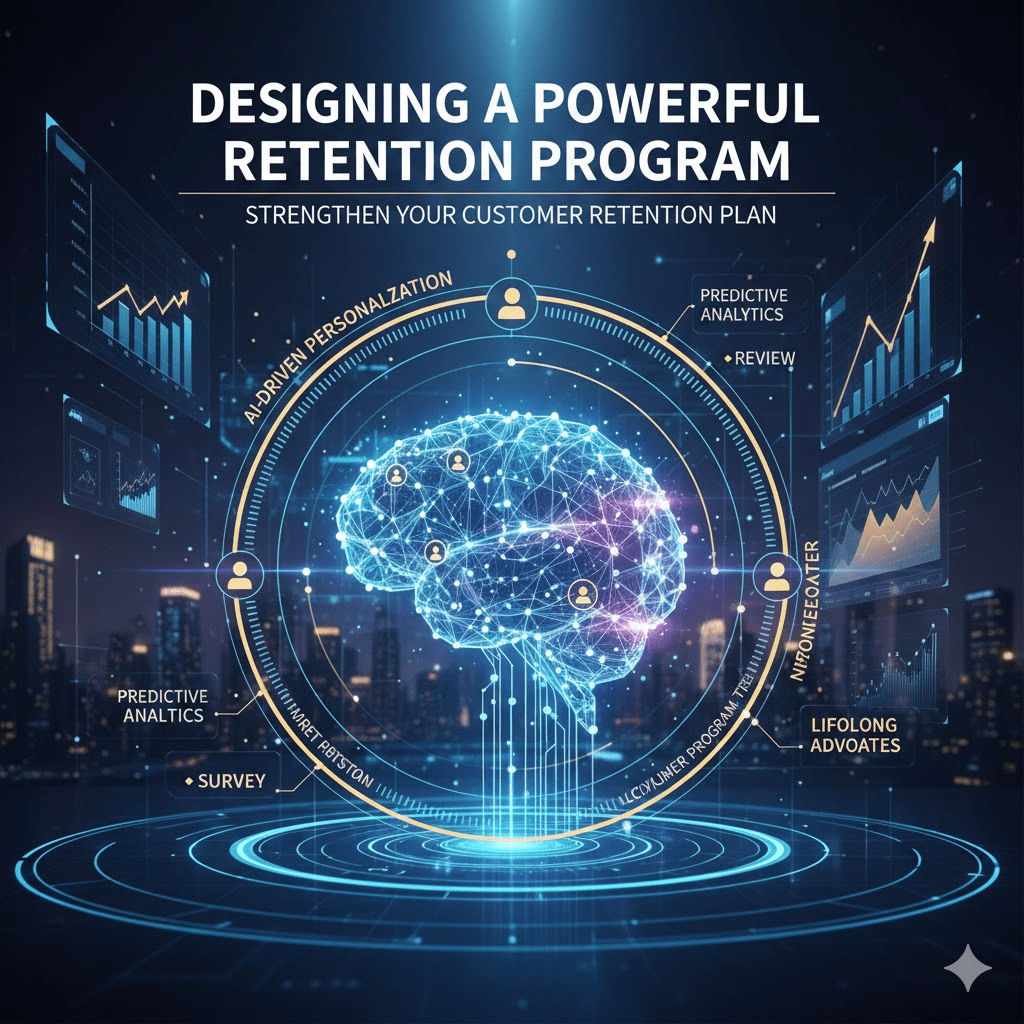
Key Takeaways: Retention in 2026
- The Profitability Gap: Acquiring a new customer is 5-7x more expensive than retaining an existing one. Brands with structured loyalty programs see an ROI of 200-400%.
- Predictive Personalization: Modern retention has moved beyond “First Name” tags. Success now requires predictive personalization—anticipating customer needs based on behavioral data and AI.
- The RFM Powerhouse: Recency, Frequency, and Monetary (RFM) analysis is the gold standard for segmentation. It allows you to identify “Champions” to reward and “At-Risk” customers to save.
- Psychology Over Points: Discounts are a race to the bottom. High-performing programs use behavioral economics (Loss Aversion, Goal Gradient Effect, and Social Proof) to build emotional loyalty.
- The “Golden 30 Days”: The first month after a purchase is the most critical window. Customers who buy again within 30 days are 3x more likely to become lifelong advocates.
- Community as a Moat: Engaged brand communities result in a 5x higher Lifetime Value (CLV) compared to transactional customers.
Part 1: Understanding Your Customers’ Needs and Expectations
The Foundation: Why Customer Understanding Drives Retention
Before designing any retention program, you must answer three fundamental questions: What do customers value most about your offering? What pain points drive them away? What expectations are evolving faster than you realize?
The research is clear: 78% of customers now expect higher levels of personalization in their interactions, yet most brands are still sending generic, one-size-fits-all messaging. This gap represents both a risk and an opportunity. Businesses that understand customer needs achieve retention rates 10-20% higher than competitors using basic approaches.
Gathering Actionable Customer Intelligence
Start by implementing a multi-channel feedback system:
Surveys & Direct Feedback: Deploy targeted surveys asking specific questions—not vague satisfaction metrics. Ask about the primary reason they chose you, obstacles they face, and what would make them more likely to repurchase.
Online Reviews & Social Listening: Monitor reviews on Google, your website, and social platforms. These unfiltered insights reveal what actually matters to customers, not what you think matters.
Purchase Behavior Analysis: Using tools like Google Analytics 4 or Shopify analytics, track which products customers buy together, how frequently they return, and what abandonment patterns emerge.
Churn Analysis: Segment your lost customers and identify commonalities. Did they abandon after a support ticket? Following a price increase? After the first purchase? These data points point directly to retention weak points.
| Feedback Channel | Best For | Frequency | ROI |
| Exit surveys | Understanding churn triggers | At abandonment | High intent data |
| Email surveys | Retention insights from active customers | Monthly | Actionable feedback |
| Review monitoring | Identifying systemic issues | Continuous | Early warning signals |
| RFM analysis | Predictive segmentation | Quarterly | 10-20% retention lift |
| Social listening | Brand sentiment & community needs | Weekly | Trend identification |
Customer Expectation Evolution in 2025-2026
Customer expectations are accelerating. Here’s what’s changing:
- Personalization as Standard: Not personalized messaging, but predictive personalization—where brands anticipate needs before customers articulate them
- Omnichannel Consistency: Customers expect seamless experiences across mobile, email, SMS, social, and in-store touchpoints
- Transparent Communication: Customers increasingly value authenticity over aggressive selling
- Speed & Convenience: Same-day shipping is becoming standard; customers now expect immediate support responses (72% want immediate service)
- Values Alignment: Particularly for younger demographics, brand values and sustainability matter as much as product quality
Part 2: Personalizing the Customer Experience at Scale
Moving Beyond Basic Personalization
Personalization in 2026 isn’t about using a customer’s name in emails—it’s about behavioral prediction and contextual relevance. Research shows that 77% of business leaders believe deeper personalization increases retention, yet only a fraction are executing at this level.
Data Collection Framework
Implement systematic data collection across these dimensions:
- Purchase History: What they’ve bought, when, price points they’re comfortable with, product categories
- Browsing Behavior: Which products they viewed but didn’t buy (abandoned cart triggers), time spent on category pages
- Engagement Patterns: Email open rates, link clicks, social media interactions
- Demographic & Psychographic Data: Location, device type, inferred interests
- Customer Service Interactions: Support tickets, complaints, and resolution satisfaction
This data enables you to segment customers not by demographics, but by lifetime value potential and churn risk.
Segmentation Strategy Using RFM Analysis
RFM (Recency, Frequency, Monetary) analysis is the most predictive framework for retention. Here’s how it works:
Recency: How recently did they make a purchase?
Frequency: How often do they buy?
Monetary Value: How much do they spend?
By scoring customers 1-5 on each dimension, you create 125 possible segments. But for retention focus, prioritize:
- Champions (555): Recent, frequent, high-value—reward and celebrate
- Loyal Customers (445, 544, 454): The core of your business—reinvest heavily
- At-Risk (311, 312, 321): Declining frequency—intervention needed NOW
- Lost (111, 112, 121): Haven’t purchased in months—win-back campaigns
RFM-based retention strategies have proven to boost retention by 10-20% and increase CLV by 20-30%.
Personalization Execution: The Email Marketing Engine
Email remains the highest-ROI retention channel. But not all emails are created equal. Structure your email program around these triggers:
Welcome Series (Days 0-7): Educational, value-focused
Post-Purchase (Days 1-14): Onboarding, cross-sell opportunities
Abandoned Cart (Hours 1, 24, 72): Increasing urgency, incentive progression
Birthday/Anniversary (Personalized date): Exclusive offer timing
Engagement-Based (RFM triggered): Re-engagement or VIP elevation
Behavioral (Product view, category interest): Product recommendations
Optimization metrics to track:
- Open rate target: 25-35% (depends on audience quality)
- Click-through rate target: 2-5%
- Unsubscribe rate: <0.5% indicates audience fit
- Conversion rate: 1-3% for retention emails
Part 3: Building Loyalty Programs That Actually Drive Repeat Purchases
Why Generic Loyalty Programs Fail
The average loyalty program retains just 12% of enrolled members actively. The issue? Most programs optimize for transactions rather than emotional loyalty.
Research from behavioral economics shows that social and exploration benefits are 3x stronger drivers of loyalty than monetary rewards. Customers don’t want another points program—they want to feel part of something.
The Four Pillars of Effective Loyalty Program Design
[Generated Mind Map: Loyalty Program Architecture – generated_image:54]
1. Program Architecture: Choosing the Right Model
Choose one primary model (or blend 2-3):
Points-Based Program
- Customer earns points per dollar spent
- Points redeemable for discounts or products
- Easiest to launch, most common (Smile.io specializes here)
- ROI: 200-300% for eCommerce
Tiered/VIP Program
- Status-based tiers (Bronze, Silver, Gold, Platinum)
- Higher tier = better benefits and recognition
- Drives aspirational loyalty
- Strongest for high-AOV businesses
Subscription/Membership Model
- Fixed monthly/annual fee for benefits
- Predictable retention (28% retention after Year 1 with annual billing)
- Highest CLV potential but requires value justification
Referral Program
- Customers earn rewards for bringing new customers
- Lowest CAC acquisition channel (word-of-mouth is trust)
- Combines retention + acquisition
Hybrid Model (Recommended for 2026)
- Base points system + VIP tiers + exclusive perks + referral bonuses
- Examples: Smile.io + custom integrations, BON Loyalty with premium features
Loyalty Program Psychology: Behavioral Economics in Action
Understanding behavioral psychology is the secret weapon. Here are the psychological principles that drive loyalty:
Expectancy Theory: People act in pursuit of rewards they expect to receive. Make rewards transparent and valuable.
Instant Gratification: Combine immediate micro-rewards (you earned 50 points!) with delayed larger rewards (50 points = $5 off).
Loss Aversion: Highlight what customers will lose if they don’t participate. “Earn 1% back on every purchase vs. losing money with competitors.”
Endowment Effect: Personalization makes rewards feel more valuable. A custom product recommendation feels more valuable than a generic discount.
Goal Gradient Effect: Progress toward a goal accelerates loyalty. Show progress bars: “50 points toward your $10 reward—only 20 points to go!”
Social Proof: Public recognition (leaderboards, badges, status displays) drives aspirational loyalty.
Application: Design rewards that trigger multiple psychological principles. A “surprise bonus” (instant gratification + endowment effect) outperforms a predictable earning rate.
Reward Design: Beyond Discounts
Most loyalty programs offer discounts. Differentiate by offering rewards customers actually crave:
| Reward Type | Psychological Driver | Best For | Impact on CLV |
| Exclusive Products/Early Access | Scarcity, belonging | Fashion, tech | High |
| Experiences (Events, Webinars) | Connection, learning | Content-driven brands | Very High |
| Recognition (Status, Badges) | Achievement, social proof | Engagement-driven | High |
| Personalized Discounts | Relevance, value | Retention-focused | Medium |
| Free Shipping | Convenience, value | High-frequency purchases | Medium |
| Birthday Offers | Recognition, surprise | Emotional connection | High |
| Referral Bonuses | Belonging, advocacy | Expansion-focused | High |
2026 Trend: Reward flexibility. Customers increasingly want choices: points can be redeemed for a discount, store credit, a product gift, an experience, or a donation to charity.
Calculating Loyalty Program ROI
This is critical—you must prove value to leadership and investors.
Formula:
Loyalty Program ROI = (Incremental Profit − Total Program Cost) ÷ Total Program Cost
Where:
- Incremental Profit = (Incremental Revenue from members × Gross Margin) − Reward Cost
- Total Program Cost = Platform fees + labor + marketing + rewards distribution
Example Calculation:
- Program members generated: $1,000,000 (Year 1)
- Baseline revenue (before program): $700,000
- Incremental Revenue: $300,000
- Gross Margin: 40% = $120,000 profit
- Reward Cost: $30,000
- Platform/Labor/Marketing Cost: $40,000
- Net Profit: $50,000
- ROI: ($50,000) ÷ ($70,000) = 71% ROI
For eCommerce, target ROI of 200-400%, meaning every $1 spent on the loyalty program generates $2-4 in incremental profit.
Part 4: Communication, Support, and Community Strategy
Authentic, Value-First Communication
The most overlooked retention lever is communication quality. Most brands communicate to sell; loyal customers want to be educated, entertained, and recognized.
Content Strategy for Retention Messaging:
- Educational Content (40% of messaging): How-to guides, maintenance tips, style inspiration, industry trends
- Value Offers (30%): Relevant discounts, new product previews, exclusive content
- Relationship Building (20%): Stories, behind-the-scenes, customer spotlights
- Transactional (10%): Order updates, confirmations, invoices
This 40-30-20-10 split maintains engagement without overwhelming customers.
Multi-Channel Communication: Where Should You Be?
- Email: Highest ROI, permission-based, detailed content
- SMS: Highest engagement rate, time-sensitive offers, transactional
- Push Notifications: High engagement for app users
- Social Media: Brand voice, community building, trending discussions
- In-App Messaging: Contextual, timely, non-intrusive
The truth about communication frequency: 3-4 times per week is optimal for retention email. Beyond that, unsubscribe rates spike.
Exceptional Customer Support as Retention
A great product that’s supported poorly will churn faster than a mediocre product with exceptional support.
Support excellence metrics:
- First Response Time: Aim for <2 hours
- Issue Resolution Time: Depends on issue complexity, but 24-48 hours is standard
- Satisfaction Score (CSAT): Target 85%+
- Accessibility: Multi-channel (chat, email, phone, social)
The retention impact of excellent support: A customer whose issue is resolved to satisfaction is 5-7% more likely to make a repeat purchase.
Building Community Around Your Brand
The most successful retention programs create community, not just transactional loyalty.
Community Building Strategies:
1. Exclusive Customer Groups
- Facebook Group for loyal customers
- Private Slack or Discord for VIPs
- Exclusive online forum for product discussions
2. User-Generated Content Programs
- Hashtag campaigns (#YourBrandStories)
- Photo contests with exclusive prizes
- Customer feature opportunities
3. Interactive Engagement
- Live Q&As with founders
- Voting on new product features
- Beta testing programs
4. Emotional Connection
- Share customer transformation stories
- Recognize customer milestones
- Show gratitude authentically (handwritten notes, surprise gifts)
Research shows customers in engaged communities have 5x higher lifetime value.
Part 5: Technology and Metrics That Matter
Technology Stack for Retention
Customer Data Platform (CDP):
Aggregates customer data from all sources (email, web, mobile, POS, CRM) for a 360-degree customer view.
CRM System:
Tracks all customer interactions and enables personalization at scale.
Loyalty Platform:
| Platform | Best For | Pricing | Key Feature | Setup Time |
| Smile.io | General loyalty, fast launch | $200-300+/mo | Pre-built widgets, integrations | 1-2 weeks |
| BON Loyalty | International, budget-conscious | Free-$100/mo | 18 earning methods, multilingual | 1 week |
| Growave | Design-forward brands | $100-300/mo | Beautiful UI, transparent support | 2 weeks |
| Yotpo Loyalty | Review ecosystem integration | Platform dependent | Reviews + loyalty + SMS | 2-3 weeks |
| LoyaltyLion | Granular personalization | $200-500+/mo | Advanced segmentation, rules engine | 3-4 weeks |
Email Marketing Platform:
Klaviyo, Mailchimp, or Klaviyo-alternative for segmentation and automation.
Analytics & Reporting:
Metabase, Tableau, or platform-native dashboards for real-time retention metrics.
Critical Retention Metrics to Track
Tier 1: Core Metrics
- Customer Retention Rate (CRR): % of customers who repeat purchase in the period
- Formula: [(End Customers − New Customers) / Start Customers] × 100
- Target: 40-60% depending on industry
- Repeat Purchase Rate (RPR): % of customers making repeat purchases
- Formula: (Customers who made repeat purchases) / Total customers × 100
- Target: 25-35% for eCommerce
- Customer Churn Rate: % of customers lost in period
- Formula: 1 − CRR
- Monitor: Identify trends, triggers, segments
- Customer Lifetime Value (CLV):
- Formula: (Average Purchase Value × Purchase Frequency) × Average Customer Lifespan
- Formula Alternative: (Avg Annual Revenue per Customer × Avg Customer Lifespan) − Customer Acquisition Cost
- Example: ($500 avg annual spend × 3.5 year lifespan) − $200 CAC = $1,550 CLV
- Loyalty Program Engagement: % of enrolled members actively earning/redeeming
- Target: 30%+ for healthy programs
- Monitor: Compare to peer programs
Tier 2: Behavioral Metrics
- Purchase Frequency: Orders per customer per period
- Average Order Value (AOV): Revenue per transaction
- Repeat Order Value: AOV for repeat purchases vs. first purchase
- Win-Back Success Rate: % of inactive customers reactivated
- Referral Success Rate: % of referred customers who makea purchase
Tier 3: Program Health Metrics
- Program Penetration: % of customer base enrolled
- Tier Distribution: How customers distribute across loyalty tiers
- Reward Redemption Rate: % of issued rewards actually redeemed
- Unsubscribe Rate from Loyalty Emails: Early churn signal
Pro Tip for 2026: Create a dashboard showing these metrics by customer segment (RFM tier). You’ll immediately spot where retention efforts are working and where they’re failing.
Part 6: Advanced Strategies—Subscription Models, Win-Back, and Segmentation
Subscription Model for Predictable Retention
Subscription models create compound loyalty. Customers who receive a shipment automatically become habitual buyers, increasing repeat purchase probability.
Retention benchmarks for subscription models:
- Annual billing: 28% retention after Year 1
- Monthly billing: 5-15% retention after Year 1
- Key insight: Longer billing cycles = dramatically higher retention
Why subscriptions work for retention:
- Predictable Revenue: Makes CLV projections accurate
- Reduced Friction: Pre-approved payment removes decision fatigue
- Habit Formation: Regular touchpoints build habitual behavior
- Flexibility: Tiered options (basic, premium, VIP) capture different customer segments
Dropshipping + Subscription Hybrid: High-value dropshipping businesses increasingly pair subscriptions with loyalty programs—delivering complementary products on schedules while incentivizing larger orders through points/tiering.
Win-Back Email Campaigns for Churned Customers
Win-back campaigns are surprisingly effective. 45% of inactive customers who receive win-back emails open subsequent brand messages, demonstrating dormant loyalty.
Win-Back Campaign Structure:
Email 1 (Immediately after churn signal or at 60 days of inactivity):
Subject: “We Miss You, [Customer]”
Focus: Nostalgia, value reminder, honest reflection (not aggressive selling)
Email 2 (10 days later):
Subject: “Here’s What You’ve Missed”
Focus: New products, brand updates, improvements made since they left
Email 3 (20 days later):
Subject: “One Last Thing Before We Say Goodbye”
Focus: Special win-back offer (typically 15-25% discount), personalized
Expectation: This is the final outreach; respect their choice if they don’t engage
Psychology-Based Tactics:
- Highlight what they specifically bought before (social proof of value)
- Emphasize changes/improvements (loss aversion—they’re missing out)
- Personalize offer based on past purchases (endowment effect)
- Use real person signatures (CSM, founder) when possible
Results: Win-back campaigns typically achieve 2-4x higher ROI than cold acquisition.
First-Time Customer Retention—The Critical 30 Days
The first 30 days after purchase are crucial. Customers who make a second purchase within 30 days of their first purchase are 3x more likely to become loyal.
Critical First-Time Retention Tactics:
- Welcome Email (Day 1): Thank them, set expectations, educate on product use
- Delivery Confirmation + Setup (Day 2-3): Tracking info + tips for optimal use
- Check-In Email (Day 7): How’s the product working? Any questions? Early feedback.
- First Product Recommendation (Day 10): Complementary product based on purchase
- Second Purchase Incentive (Day 14): Special offer for repeat purchase
- Surprise + Delight (Day 21-30): Unexpected reward (bonus points, gift) to exceed expectations
From Strategy to Implementation—Your 90-Day Retention Roadmap
Building a powerful retention program isn’t a one-time project—it’s a compounding investment in customer relationships. The businesses winning in 2026 aren’t those acquiring customers most aggressively; they’re the ones retaining customers most effectively.
From research across 100+ ecommerce brands: Companies that systematize retention (clear metrics, feedback loops, personalization architecture) achieve 30-40% higher customer lifetime value than competitors using ad-hoc approaches.
The 90-Day Implementation Path
Weeks 1-2: Assessment & Infrastructure
- Audit current retention metrics (CRR, RPR, churn, CLV)
- Implement RFM analysis to segment your audience
- Choose loyalty platform (Smile.io for speed, BON for flexibility, Growave for design)
- Set up tracking for all retention metrics
Weeks 3-6: Quick Wins
- Launch post-purchase email sequence (Welcome + Day 7 + Day 14)
- Implement abandoned cart recovery with a 3-email sequence
- Set up a basic VIP tier for the top 10% customers
- Launch a win-back campaign for lapsed customers (60+ days)
Weeks 7-10: Program Launch & Optimization
- Roll out a full loyalty program with points + rewards
- Launch targeted retention email segments (by RFM tier)
- Begin community building (Facebook group or exclusive content)
- Implement support improvements (response time, accessibility)
Weeks 11-12: Measurement & Iteration
- Analyze all metrics; identify what’s working
- Double down on high-impact tactics
- Test new reward structures or communication angles
- Prepare stakeholder report with ROI data
By Week 16: You should see measurable improvements in repeat purchase rate and engagement metrics. Sustained execution over 6+ months will compound these gains dramatically.
Conclusion: The New Standard for Growth
In 2026, the math is inescapable: you cannot out-spend a churn problem. As acquisition costs continue to climb and customer attention spans shrink, the most sustainable competitive advantage is no longer the product itself—it is the relationship you build after the first click.
Building a powerful retention program is not just about points or discounts; it’s about creating a predictable ecosystem where customers feel seen, valued, and understood. By moving from generic interactions to predictive, RFM-driven personalization, you transform your brand from a one-time transaction into a lifelong habit. The roadmap is clear: listen to your data, automate your empathy, and treat your existing customers like the VIPs they are.
The brands that win tomorrow are the ones investing in their customers today.
Ready to Turn Your One-Time Buyers Into Lifelong Advocates?
Don’t let your hard-earned customers slip through the cracks. Whether you’re looking to implement high-ROI loyalty tiers, automate your win-back sequences, or dive deep into RFM analytics, Retenzy is here to bridge the gap between data and devotion.
Stop guessing and start growing. Book Your Free Retention Audit with Retenzy Today
Frequently Asked Questions
Q1: What’s the difference between customer retention rate and repeat purchase rate?
A: Retention rate measures whether any customer made a repeat purchase in a period. Repeat purchase rate measures the % of customers making 2+ purchases. A customer could be retained (made 1 repeat purchase) but not be a repeat customer (could be a one-time repeat). For loyalty programs, repeat purchase rate is the better metric.
Q2: How long should we wait before launching a win-back campaign?
A: Research suggests 60-90 days of inactivity is optimal. Waiting too long (6+ months) reduces responsiveness; launching too early wastes resources. Monitor your data—when does repeat purchase probability drop sharply? That’s your win-back trigger.
Q3: Is loyalty program membership required for retention success?
A: No. Best-in-class retention comes from excellent product, exceptional support, and personalized communication—loyalty programs amplify these, not replace them. A formal program isn’t necessary if you’re already doing the fundamentals well.
Q4: What’s the ideal loyalty program reward value?
A: Rules of thumb: 1-5% of purchase value is standard. But research shows perceived value matters more than actual value. A surprise $5 reward beats a predictable 2% cashback. Experiment with your audience.
Q5: How do we measure CLV for new businesses with limited history?
A: Use predictive models based on cohort analysis. Track the first 6-12 months of customers in similar segments and project forward based on industry benchmarks. Update regularly as data accumulates.
Q6: Should we use SMS for retention?
A: Yes, strategically. SMS has 98% open rate vs. 20-30% for email. Use SMS for time-sensitive (abandoned cart, flash sale) and transactional messages. Email remains better for longer-form content and nurturing.
Q7: How often should we update our retention strategy?
A: Quarterly minimum. Review metrics, test new tactics, and iterate. What worked in Q1 might not work in Q3 (seasonality, market changes). Successful retention is continuous optimization.