

The dropshipping industry is undergoing a pivotal transformation. With the global dropshipping market projected to reach $476.1 billion by 2026—a staggering 58% year-over-year increase—the competitive landscape has intensified dramatically. In this crowded marketplace, simply offering products is no longer enough. According to research by F. Reichheld of Bain & Company, a mere 5% increase in customer retention can boost profits by 25% to 95%.
For Shopify dropshipping business owners, this statistic is not just theoretical—it’s your roadmap to sustainable growth. Loyalty programs are no longer luxury add-ons; they are an essential business infrastructure that separates thriving dropshipping stores from the competition. In today’s competitive e-commerce world, standing out and keeping customers loyal is crucial for success.
Loyalty programs are powerful enough to transform your customers into loyal followers capable of ensuring their purchases become repeat sales while you outperform your competition. Various rewards and experiences attract new customers and retain the existing ones at your store.
In this comprehensive 2026 guide, we will explore the advantages of loyalty programs that can give your Shopify dropshipper a decisive competitive edge. We’ll examine the latest technologies, real-world case studies, proven metrics, and actionable strategies to help you build lasting relationships with your customers, provide desirable rewards, and elevate your store to the next level.
Key Takeaways
- Loyalty programs increase customer retention, repeat purchases, and lifetime value.
- A 5% boost in retention can raise profits by 25–95%.
- Points, tiers, and referral programs work best when combined.
- AI-powered personalization improves engagement and prevents churn.
- Loyal customers spend more per order and refer new buyers at lower cost.
- Omnichannel loyalty (email, SMS, social) delivers higher ROI than standalone programs.
- Choosing the right Shopify loyalty app is critical for success.
- Well-executed loyalty programs generate 200–400% ROI.
- Trust, transparency, and data privacy strengthen long-term loyalty.
- Loyalty is a long-term growth strategy, not a one-time campaign.
Part 1: The Loyalty Program Landscape in 2026
Understanding Loyalty Programs in Dropshipping
The dropshipping industry depends heavily on loyalty programs to ensure repeat customers and long-term revenue growth. Loyalty programs incentivize buyers, build brand loyalty, and foster lasting relationships with customers. For Shopify dropshippers operating in a highly competitive market, these programs are the secret sauce to success.
However, the loyalty landscape has dramatically evolved since traditional programs first emerged. Today’s customers expect far more than simple point accumulation. Recent data reveals that:
- The average ecommerce store maintains only a 30-38% customer retention rate, leaving 62-70% potential revenue on the table
- Repeat customers spend 67% more than new customers, making retention financially superior to constant acquisition
- Consumers now belong to an average of 14.8 loyalty programs, but engage actively with only a fraction
This creates both a challenge and an opportunity: differentiation is harder, but the rewards for standing out are substantial.
The Evolution Beyond Transactional Rewards
In 2025-2026, loyalty programs have undergone a fundamental shift. The outdated model of “buy 10, get 1 free” has given way to sophisticated, data-driven ecosystems powered by artificial intelligence and behavioral psychology.
Key Characteristics of 2026 Loyalty Programs:
- Hyper-Personalization: AI analyzes purchase history, browsing behavior, and demographic data to deliver individualized rewards
- Real-Time Recognition: Instant rewards for reviews, social shares, referrals, and engagement—not just purchases
- Omnichannel Integration: Seamless experiences across email, SMS, social media, mobile apps, and physical POS systems
- Gamification Elements: Leaderboards, tier achievements, surprise rewards, and challenges drive emotional engagement
- Behavioral Rewards: Top loyalty programs reward 2x more for brand advocacy behaviors than for simple purchases
- Privacy-First Approach: Transparent data handling and customer consent management build trust
The top 1% of Shopify loyalty programs now reward reviews, social shares, referrals, birthday signups, and engagement with content—turning customers into active brand marketers rather than passive discount hunters.
Case Study: Lazybones Shopify Store – Comprehensive Analysis
For example, Shopify store, Lazybones, implemented a tiered loyalty program using the Growave app. This program offered customers rewards and exclusive perks based on spending tiers, effectively motivating repeat purchases and higher transaction values. As a result, Lazybones experienced a 25% increase in repeat customer rates and a 30% growth in their average order value (AOV). This case highlights the strategic impact of loyalty programs in enhancing retention marketing and driving sustained revenue growth.
This case demonstrates several crucial principles worth understanding:
| Metric | Before Loyalty Program | After Program | Impact |
| Repeat Customer Rate | Baseline (100%) | 125% | +25% increase |
| Average Order Value | Baseline (100%) | 130% | +30% growth |
| Implied Customer Lifetime Value | ~3.5 purchases | ~5.2 purchases | +48% higher CLV |
| Customer Acquisition Cost (est.) | High dependency | Reduced via referrals | 15-20% reduction |
Why Lazybones Succeeded:
- Correct Tool Selection: Growave provided the all-in-one platform they needed
- Clear Tier Structure: Customers understood exactly what they needed to achieve each tier
- Meaningful Rewards: Exclusive perks (not just discounts) motivated tier progression
- Continuous Engagement: The program kept customers coming back between purchases
This case demonstrates that loyalty program success isn’t accidental—it’s the result of strategic implementation aligned with customer behavior and dropshipping realities.
Part 2: Core Architecture of Successful Loyalty Programs
Good loyalty programs in dropshipping have several important parts, including. Best Shopify loyalty apps for small businesses
- Reward systems that give points, discounts, or special perks for ongoing business
- Tiered membership levels with better benefits as customers spend more or engage more
- Referral and advocacy programs that get existing customers to share their good experiences
Benefits for Dropshipping Merchants
- Improved Customer Retention
Loyalty programs increase repeat purchases and strengthen brand loyalty, emphasizing the value of retention marketing. - Increased Average Order Value (AOV) – How to increase average order value (AOV) on Shopify
Customers spend more to earn bigger rewards, raising each transaction’s value. - Lower Customer Acquisition Costs
Referrals and word-of-mouth reduce the costs of attracting new customers. - Valuable Customer Data
Gather insights into customer preferences and behavior to improve marketing and products.
Customer Behavior and Program Adoption
- Perceived Value
Offer rewards that are relevant and achievable to motivate participation. - Ease of Use
Make the program easy to understand and use to encourage participation. - Emotional Connection with the Brand
Create a deeply personal connection between customers and the brand, encouraging long-term loyalty.
Part 3: AI-Powered Personalization – The 2026 Game-Changer
Artificial intelligence has fundamentally changed what loyalty programs can accomplish. Rather than offering the same rewards to all customers, modern programs deliver completely personalized experiences that increase engagement and redemption rates.
How AI Transforms Loyalty Programs
1. Predictive Customer Segmentation
AI analyzes your customer database to identify micro-segments based on behavior patterns:
- A customer who frequently buys premium skincare could receive loyalty rewards specifically for new luxury skincare products
- Repeat bulk buyers might unlock rewards for larger purchase thresholds
- Seasonal shoppers receive targeted incentives during their high-engagement periods
This level of segmentation is impossible to do manually, but trivial for machine learning algorithms.
2. Real-Time Reward Optimization
Instead of static reward structures, AI-driven systems adjust rewards in real-time based on:
- Inventory levels: Promote rewards on overstocked items
- Product margins: Weight rewards toward higher-margin products
- Customer preference patterns: Offer rewards the customer is most likely to redeem
- Competitive pressure: Adjust offer timing when similar competitors launch promotions
3. Churn Prevention and Recovery
Predictive analytics identify customers at risk of never returning:
- A customer hasn’t purchased in 60 days (when their average cycle is 45 days)
- Engagement metrics show declining interest
- Similar customers have churned previously
The system automatically triggers recovery campaigns with personalized offers before the customer is lost forever.
4. Gamification and Surprise Elements
Top 1% programs use AI to deliver surprise moments that create emotional connections:
- Birthday surprises that aren’t just “15% off,” but personalized based on purchase history
- Surprise tier upgrades when customers reach hidden achievement thresholds
- Random “bonus point” moments that delight customers
- Exclusive early access to products relevant to their preferences
- Unexpected rewards based on purchase anniversaries or milestones
Psychology shows that unexpected rewards create significantly higher emotional engagement than anticipated ones.
AI Integration Challenges and Solutions
Challenge: Data silos prevent AI from working effectively
Solution: Choose loyalty platforms with deep API integrations (Smile.io, Growave, Yotpo all support Shopify Flow, Klaviyo, and other tools)
Challenge: AI requires massive data to function
Solution: Start with the behavioral data you already collect; AI improves as the system learns
Challenge: Customers worry about privacy
Solution: Be transparent about data usage; offer clear opt-in/opt-out mechanisms; comply with GDPR
Visual Impact: The Financial Case for Loyalty Programs
[CHART: 41 – The Financial Impact of Loyalty Programs]
This infographic demonstrates why loyalty program investment delivers exceptional returns:
- 5% retention increase = 25-95% profit boost (Bain & Company)
- Repeat customers spend 67% more than one-time buyers
- Loyalty program ROI averages 200-400% across e-commerce
These aren’t theoretical numbers—they’re benchmarks achieved by real stores like Lazybones and hundreds of others.
Retention Marketing: Boost Growth with Rewards and Loyalty
In the fast-paced world of e-commerce, retention marketing ensures the long-term success of your business. , as it becomes a permanent feature for all e-commerce companies. Customer loyalty:y Strongly committed customers are more likely to become occasional shoppers, and these loyal customers can become referral marketers for other customers. Want to know Customer retention strategies for eCommerce –
E-commerce rewards are a powerful tool. They encourage customers to come back, creating a sense of belonging. This keeps customers coming back for more. The right loyalty program can change the game in dropshipping.
Loyal customers do more than just buy again. They become brand ambassadors, sharing their good experiences. This word-of-mouth can bring in a lot of new customers. Loyal customers bring more customers, making it a smart way for dropshipping merchants to grow their customer base.
| Retention Marketing Strategies | E-commerce Reward Benefits | Loyal Customer Advantages |
| – Personalized communication – Exclusive offers and discounts – Loyalty programs | – Increased customer engagement – Higher customer lifetime value – Improved brand loyalty | – Referral marketing – Positive reviews and testimonials – Increased brand awareness |
Part 4: Types of Loyalty Programs and Strategic Selection
Shopify store owners have many loyalty program options. Each has its own benefits. The right program can create a personal connection with the consumer, improve repeat business, and distinguish a store.
Points-Based Reward Systems
A point-based loyalty system rewards customers for buying, reviewing, or referring a friend. They earn points through this activity to redeem for cash back or get a product for free. It will motivate customers into continued shopping and will be a lifetime value booster.
2026 Enhancement – Hybrid Behavior Points:
Modern stores award points not just for purchases but for:
- Product reviews (50-100 points)
- Social media sharing (25-50 points)
- Referral sign-ups (100-200 points)
- Profile completion (10-25 points)
- Wishlist adds (5-10 points)
This multiplies customer engagement opportunities and turns buyers into brand advocates.
Tiered Membership Programs
This is the system where a tiered membership is designed according to the benefits that it will provide to an individual, according to the spending or engagement level. It has different tiers such as Bronze, Silver, and Gold. By rewarding your loyal buyer with a better tier’s membership and special treatment, tiered programs are meant to keep the customer coming back. This technique will encourage repeat business and make a customer feel special and valued, hence strengthening the bond.
2026 Enhancement – Real-Time Tier Upgrades:
Rather than waiting for a monthly/quarterly tier evaluation, AI systems now upgrade customers in real-time:
- Complete a $500 purchase? Instant tier upgrade with notification
- Reach 5,000 points? Immediate access to VIP benefits
- This creates immediate gratification and continued motivation
Tier benefit examples that drive results:
- Free shipping on all orders
- Early access to sales or new products
- Birthday bonus points (2x-5x multiplier)
- VIP customer service with priority support
- Exclusive product collaborations
- Personal shopping services
Referral and Advocacy Programs
Referral marketing is a great way of finding new customers, as well as keeping hold of existing ones. It shines a light on rewarding customers who refer their friends and family. This is highly powerful word-of-mouth marketing. Clients who participate in referral and support programs feel valued. They qualify to become brand ambassadors and, thus, add to building a better reputation and market for your store.
2026 Enhancement – Two-Sided Referral Incentives:
Modern programs reward both referrer AND new customer:
- Referrer gets 500 bonus points
- New customer receives 100 points for joining
- If a new customer makes their first purchase, an additional 200 points for the referrer
- This creates win-win-win (you gain a customer, the existing customer earns, new customer gets value)
Strategic Program Selection Matrix:
| Store Type | Ideal Program | Key Reason | Top Tool |
| High-frequency purchases (consumables, beauty) | Points-based | Cumulation drives repeat quickly | Smile.io, Yotpo |
| Premium/luxury products | Tiered membership | Status motivation drives AOV | Growave, Smile.io |
| New/emerging brand | Referral-focused | Word-of-mouth critical for growth | Growave, Antavo |
| Mature ecommerce store | Hybrid (all three) | Comprehensive engagement needed | Growave, Antavo |
| Data-obsessed DTC brand | AI-powered hybrid | Personalization maximizes ROI | Yotpo, Antavo |
While choosing a loyalty program, determine the audience, the products, and the goals. Customize the program for the Shopify store; it will then develop into a truly unique loyalty strategy in the dropshipping market.
Comprehensive Loyalty Apps Comparison for 2026
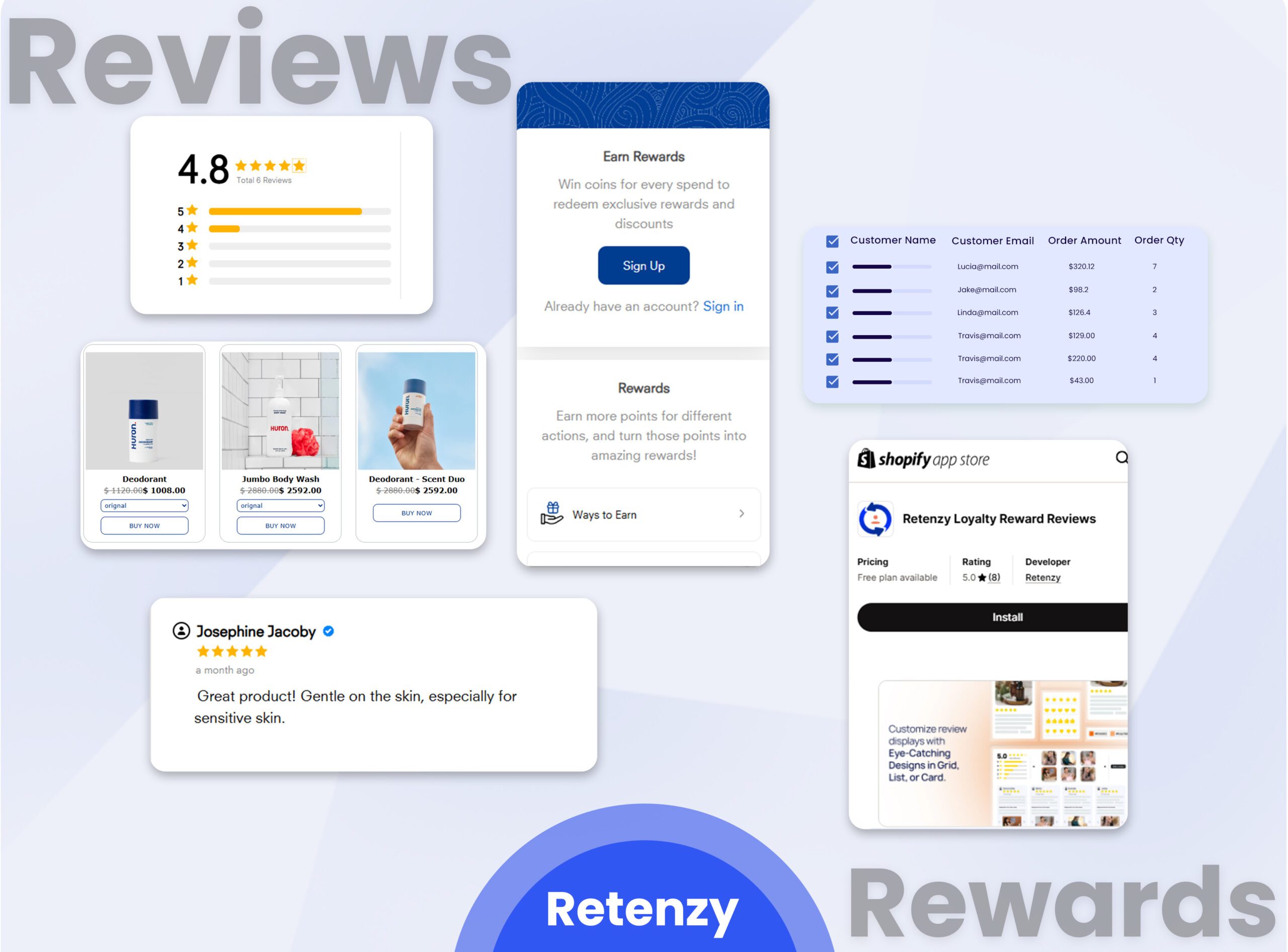
1)Retenzy: The All-in-One Retention Hub
Best for: Small to mid-sized stores seeking a unified loyalty and review platform at an affordable price. Free Plan: Yes (14-day free trial; Free “Lite” plan available for up to 50 orders/month.) Starting Price: $19/month for the Starter plan (up to 500 orders/month) Standout Features:
- Dual-Power Platform: Combines full loyalty programs with photo/video review collection in one app
- Rewards on Reviews: Incentivize customers to leave high-quality feedback with automated points
- 15+ Reward Placements: Display points and perks on product pages, cart sliders, and checkout extensions
- Milestone & VIP Tiers: Create achievement-based rewards and exclusive membership levels
- Unified Analytics: Track both review performance and loyalty engagement from a single dashboard
- Mobile-Responsive Widgets: Fully customizable displays for earning and redeeming points on any device
Why Dropshippers Choose It: Retenzy eliminates “app bloat” by replacing two separate subscriptions (reviews and loyalty) with one. It is highly cost-effective for scaling stores because the pricing scales based on order volume rather than feature lockouts.
Integration Strength: Connects seamlessly with essential tools like Klaviyo, Mailchimp, Gorgias, Zendesk, and Shopify POS to sync customer data across your stack.
Choosing the right loyalty platform is crucial. Here’s how the leading apps stack up:
2) Smile.io: The Loyalty Purist
Best for: Stores that want deep loyalty customization without bloat
- Free Plan: Yes (limited features, good for testing)
- Starting Price: $49/month for the Growth plan with advanced features
- Standout Features:
- Extensive customization options on every plan
- Strong Klaviyo integration for email automation
- Shopify POS loyalty support
- Subscription rewards capability
- Free product and gift card rewards
- VIP tier programs with exclusive benefits
Why Dropshippers Choose It: Smile focuses purely on loyalty excellence. No distraction from reviews or other tools. If loyalty is your priority, Smile is the deep-expertise choice.
Integration Strength: 30+ native integrations, including Klaviyo and Judge.me, Gorgias, Recharge, Loox
3) Growave: The All-in-One Ecosystem
Best for: Stores wanting loyalty + reviews + referrals + wishlist in one platform
- Free Plan: Yes (includes core loyalty features)
- Starting Price: $49/month for the Growth plan
- Standout Features:
- Unified loyalty + reviews + UGC + referrals + wishlist
- Reduces “tool sprawl” (fewer apps to manage)
- Shopify Plus optimization
- 24/7 support across all plans
- Advanced analytics and performance benchmarks
- Mobile app support
Why Dropshippers Choose It: Growave is the “everything you need” platform. One dashboard for all customer engagement tools. Particularly strong for growing stores’ scaling operations.
Integration Strength: 15+ integrations,s including Klaviyo, Gorgias, Recharge, Attentive, TikTok Shop
4) Yotpo: The AI-Powered Option
Best for: Brands combining loyalty with review generation and keyword-based personalization
- Free Plan: Limited version
- Starting Price: Tiered pricing starting at $0 for basic reviews, loyalty starts at a higher tier
- Standout Features:
- AI-driven personalization engine
- Reviews + Loyalty + SMS + Email integration
- Loyalty tied to keyword-based customer segments
- Social commerce capabilities
- Strong SMS campaign integration
Why Dropshippers Choose It: If you’re already using Yotpo for reviews, adding loyalty from the same platform provides seamless data flow and AI-powered personalization.
Integration Strength: 20+ integrations focused on e-commerce growth tools
5) LoyaltyLion: The Simple Alternative
Best for: Straightforward loyalty needs without enterprise complexity
- Free Plan: No
- Starting Price: $99+/month
- Standout Features:
- User-friendly interface
- Referral program capabilities
- Email integration
- Good customer support
Why Dropshippers Choose It: For stores that want straightforward loyalty without the learning curve of more complex platforms.
6) Antavo: Enterprise Loyalty Platform
Best for: Large-scale dropshipping operations or multi-brand networks
- Free Plan: No
- Starting Price: $500+/month (custom enterprise pricing)
- Standout Features:
- AI-powered loyalty engine
- Advanced gamification
- Complex loyalty rules and workflows
- Enterprise-grade security and compliance
- Dedicated account management
Why Dropshippers Choose It: Antavo is for stores doing $10M+ annual revenue wanting maximum sophistication and dedicated support.
Selection Framework for Your Store
Ask These Questions:
- What’s your current tech stack? If using Klaviyo heavily, Smile.io integrates best. If wanting unified customer engagement, Growave excels.
- What’s your technical skill level? Growave and Smile are user-friendly. Antavo requires more technical setup.
- What other tools do you need? Planning to add reviews later? Choose Growave. Want reviews already managed elsewhere? Choose Smile.
- What’s your customer acquisition strategy? Referral-heavy? Growave has integrated referral workflows. Email-heavy? Smile/Yotpo.
- What’s your budget? Starting? Free plans from Smile or Growave. Growing fast? $100-300/month gets excellent features. Enterprise scale? Antavo’s ROI becomes clear.
Quick Decision Tree:
- Looking for pure loyalty excellence → Smile.io
- Looking for one stop solution → Retenzy
- Want all customer engagement tools together → Growave
- Already heavy on AI/personalization → Yotpo
- Simple, straightforward needs → LoyaltyLion
- Enterprise-scale operations → Antavo
Measuring the Success of Your Loyalty Program
Starting a loyalty program is a smart move for any Shopify dropshipper. It’s key to track how well it’s doing and find ways to get better. By looking at important loyalty metrics, you can learn a lot. This knowledge helps you make your program better and get real results.
Customer lifetime value (CLV) is a top metric to watch. It shows how much money a customer brings in over time. Knowing your CLV helps you see the value of your loyalty program. It guides your choices on getting and keeping customers.
Retention rate is another key metric. Tracking customer return rates helps assess your loyalty program’s success. A high retention rate indicates strong customer satisfaction and makes them keep coming back.k
Retention Marketing: Boost Growth with Rewards and Loyalty
In the fast-paced worldof e-commercee, retention marketing ensures the long-term success of your business, as it becomes a permanent feature for all e-commerce companies. Strongly committed customers distinguish themselves from occasional shoppers, and these loyal customers can become referral marketers for other customers.
Customer loyalty strongly commits customers from occasional shoppers, and these loyal customers can become referral marketers for other customers. E-commerce rewards are a powerful tool. They encourage customers to come back, creating a sense of belonging. This keeps customers coming back for more. The right loyalty program can change the game in dropshipping.
Loyal customers do more than just buy again. They become brand ambassadors, sharing their good experiences. This word-of-mouth can bring in a lot of new customers. Loyal customers bring more customers, making it a smart way for dropshipping merchants to grow their customer base.
Retention Marketing Strategies Overview
| Strategy | E-commerce Reward Benefits | Loyal Customer Advantages |
| Personalized communication | Higher engagement rates | Feels valued and understood |
| Exclusive offers and discounts | Increased repeat purchases | Access to better deals |
| Loyalty programs | Sustained revenue growth | Rewards for continued business |
| Referral incentives | Cost-effective growth | Earn by promoting the brand |
| Increased engagement | Brand affinity building | Emotional connection deepens |
| Higher customer lifetime value | Greater profit per customer | More value received over time |
| Positive reviews and testimonials | Social proof that converts | Recognition for advocacy |
| Increased brand awareness | Organic reach expansion | Pride in brand association |
The key insight: Every dollar spent on retention marketing typically returns $5-10 in lifetime customer value, while acquisition spending returns $2-4 per dollar invested.
. KNOW SOME – Affiliate marketing strategies for holiday sales –
Part 5: Implementing Omnichannel Loyalty Integration
True loyalty in 2026 doesn’t exist in isolation. It’s woven into the entire customer journey across multiple touchpoints.
Email Marketing + Loyalty Synergy
Email remains the highest ROI marketing channel for e-commerce. Combined with loyalty, it becomes transformative:
Strategic Email Sequences for Loyalty Programs:
- Enrollment Welcome Series (Days 0-7)
- Email 1: Welcome + quick start guide for earning points
- Email 2: Share first reward opportunity (review product, get 50 points)
- Email 3: Celebrate the first 100 points reached
- Tier Progress Communication (Ongoing)
- “$X more to reach Silver status!” notifications
- Celebrate tier achievements
- Highlight new benefits unlocked
- Remind of expiring rewards
- Behavioral Trigger Campaigns
- Post-purchase: “Earn 100 points by leaving a review.”
- Abandoned cart: “Complete purchase to earn double points.s”
- Birthday month: “Special birthday bonus awaiting you.”
- Inactivity (30+ days): “We miss you—earn 50 bonus points on next purchase.e”
- Exclusive Offer Campaigns
- VIP-only early sales access (48 hours before public)
- Tier-specific flash sales
- Personalized product recommendations with bonus points
- Limited-time multiplier events (“Earn 3x points this weekend”)
Integration Example: Growave and Smile.io both integrate with Klaviyo, allowing completely automated email sequences triggered by loyalty program actions. A customer reaching Gold status automatically receives a welcome email; their next purchase triggers a points notification; expiring rewards prompt redemption reminders.
SMS and Mobile Loyalty Integration
Mobile devices now account for 55%+ of e-commerce traffic. Loyalty platforms must optimize for mobile:
Mobile Loyalty Best Practices:
- Fast enrollment: 30-second sign-up process, not 5-minute form
- Clear balance display: Customers want to see points at a glance
- One-tap rewards: Redemption shouldn’t require clicking through pages
- Push notifications: Timely alerts for bonus point moments, expiring rewards, and new tier status
- Mobile app wallet: Apple Wallet / Google Wallet integration for loyalty passes
SMS Campaign Integration:
- Welcome SMS with instant loyalty offer (higher open rate than email)
- Mid-point birthday bonus with time-limited code
- Flash sale notifications (“24 hours: earn 5x points”)
- Redemption reminders for expiring rewards
Social Media Loyalty Mechanics
Modern stores reward social engagement directly:
Shopify + Social Media Loyalty Tactics:
- Instagram/TikTok Reels: Award points for tagging the store, using the branded hashtag
- Facebook/Threads Community: Points for community participation, product feedback
- Pinterest: Track loyalty member boards, offer exclusive pins with codes
- UGC Campaigns: Customers earn points for sharing photos/videos wearing/using products
This transforms social media from a distribution channel to a direct loyalty engagement tool.
Unified Dashboard and Customer Experience
The best omnichannel experiences provide a single customer view:
What Customers See:
- Consistent points balance across email, app, website, and SMS
- Unified notification center showing all loyalty activity
- Ability to manage preferences across all channels
- Seamless redemption regardless of how they interact
What You See:
- Consolidated analytics across all channels
- Customer journey visualization (which touchpoint drives most engagement?)
- Unified segmentation (target high-engagement customers across all channels)
- Cross-channel attribution (which channel conversion is highest ROI for conversion?)

Measuring Loyalty Program Success: Advanced Metrics
Starting a loyalty program is a smart move for any Shopify dropshipper. It’s key to track how well it’s doing and find ways to get better. By looking at important loyalty metrics, you can learn a lot. This knowledge helps you make your program better and get real results.
Customer lifetime value (CLV) is a top metric to watch. It shows how much money a customer brings in over time. Knowing your CLV helps you see the value of your loyalty program. It guides your choices on getting and keeping customers.
Retention rate is another key metric. Tracking customer return rates helps assess your loyalty program’s success. A high retention rate indicates strong customer satisfaction and makes them keep coming back.
Essential Loyalty Program Metrics Dashboard
| Metric | Definition | Healthy Benchmark | Why It Matters |
| Program Participation Rate | % of store customers enrolled in loyalty | 15-35% | Indicates program appeal and ease of enrollment |
| Repeat Purchase Rate | % of members making 2+ purchases | 30-50% | Core indicator of loyalty program effectiveness |
| Average Order Value (AOV) | Average spent per transaction by members | 20-30% higher than non-members | Shows if the program drives spending increase |
| Customer Lifetime Value (CLV) | Total revenue per customer over lifetime | Loyalty members: 2-5x higher | Most important profitability metric |
| Redemption Rate | % of earned points/rewards redeemed | 40-60% | If too low (< 30%), rewards aren’t valuable; if too high (>75%), the program is too generous |
| Customer Acquisition Cost (CAC) Payback | Months to recover CAC through loyalty members | 6-12 months | Shows ROI timeline for new loyalty enrollees |
| Net Promoter Score (NPS) | Likelihood to recommend (loyalty members vs others) | +30-40 point lift | Loyalty members become brand advocates |
| Churn Rate | % of members who become inactive | <5% quarterly | Low churn indicates program relevance |
| Email Engagement Rate | % of loyalty emails opened/clicked | 25-40% for targeted campaigns | Shows program communication effectiveness |
| Referral Conversion Rate | % of referred customers who convert | 20-40% (higher than paid ads) | Validates referral program effectiveness |
Calculating ROI: The Framework
Basic ROI Calculation:
Net Profit from Loyalty = (Revenue from members – Baseline revenue) – Program costs
ROI = (Net Profit / Total Costs) × 100
Detailed Example for a Dropshipping Store:
- Baseline: 10,000 customers, 30% retention rate = 3,000 repeat purchases/year
- With Loyalty Program: 10,000 customers, 45% retention rate = 4,500 repeat purchases/year
- Incremental Revenue: 1,500 additional purchases × $50 AOV = $75,000
- Program Costs: $200/month app + $1,000/month rewards = $2,400/month × 12 = $28,800/year
- Net Profit: $75,000 – $28,800 = $46,200
- ROI: ($46,200 / $28,800) × 100 = 160% ROI
This means for every dollar invested, you’re getting $1.60 back—not counting the long-term value of now-loyal customers who will spend for years.
Industry Benchmarks:
- Well-run ecommerce loyalty programs: 200-400% ROI
- Mature, optimized programs: 300-500% ROI
- Enterprise-scale programs with AI: 400-600% ROI
- Poorly managed programs: 50-100% ROI (or negative)
The difference between success and failure is typically execution quality, not platform choice.
Tracking Tools and Integration
All major loyalty platforms (Smile.io, Growave, Yotpo) provide built-in analytics dashboards. However, for comprehensive analysis:
- Shopify Analytics: Basic retention and repeat purchase rates
- Loyalty Platform Dashboard: Points, tiers, redemptions, member engagement
- Email Platform (Klaviyo/Omnisend): Email engagement tied to loyalty actions
- Google Analytics 4: Attribution of loyalty traffic and conversions
- Custom Dashboards: Use Shopify Insights or tools like Metabase for unified views
Overcoming Challenges in Loyalty Program Implementation
Creating a loyalty program for your Shopify dropshipper can be extremely profitable and helpful, but on the other hand, it has its own challenges as well. The common challenges include low program adoption and complex data management. In overcoming these challenges, a loyalty program can be made more effective and keep customers returning.
Challenge 1: Addressing Low Program Adoption
The Problem: Getting customers to join and use your loyalty program can be tough. Low adoption rates can limit the program’s benefits.
Solutions:
- Simplify Enrollment
- One-click sign-up using email from Shopify checkout
- Mobile-optimized enrollment (takes <30 seconds)
- Offer an instant welcome bonus (50-100 points) just for joining
- Don’t ask for unnecessary information during signup
- Make Benefits Clear
- Show redemption examples prominently
- Display how many points they’ll earn for common actions
- Highlight what tier customers can reach with their first purchase
- Use visual progress bars showing the path to rewards
- Drive Visibility
- Loyalty widget in product pages (show points earned per purchase)
- Loyalty banner in header/navigation
- Post-purchase email highlighting points earned
- Checkout page loyalty call-out for non-members
- Early Win Momentum
- First purchase automatically earns bonus points
- Congratulations email showing their balance
- Suggest their first redemption option
- Create urgency (“Redeem before points expire”)
Result: Stores implementing these tactics typically see 25-40% enrollment rates (vs. <10% baseline).
Challenge 2: Program Fatigue and Differentiation
The Problem: Customers join 14.8 loyalty programs on average, but only actively engage with 2-3. Your program risks becoming background noise.
Solutions:
- Create Signature Benefits
- Offer rewards that competitors don’t provide
- Examples: Early product access, exclusive collaborations, exclusive size/color options in loyalty
- Bonus: These cost you little but feel premium to customers
- Surprise and Delight Strategy
- Random bonus points on arbitrary days (not predictable)
- Birthday month upgrades (2x-5x point multiplier)
- Anniversary rewards for loyalty program enrollment
- Unexpected free shipping on their 5th purchase
- Mystery rewards are redeemable for random products
- Personalization Beyond Discounts
- Use AI to recommend rewards they’ll actually use
- Curated product suggestions based on purchase history
- Exclusive colors/sizes for their segment
- Content rewards (exclusive guides, discount codes for future purchase)
- Community Building
- VIP member-only Discord/Facebook community
- Exclusive product launches with member voting
- Member spotlights featuring user-generated content
- Loyalty events (virtual or in-person for local brands)
- Regular Refresh Without Losing Members
- Quarterly updates to tier names and benefits
- Introduce new redemption options quarterly
- New point multiplier challenges each month
- Keep core mechanics stable while evolving details
Key Insight: 47% of organizations struggle with inadequate system integration, which prevents building innovative customer journeys. Choosing the right platform (Growave’s all-in-one approach or Smile.io’s extensive integrations) directly impacts your ability to differentiate.
Challenge 3: Streamlining Data Management
The Problem: Loyalty programs generate massive amounts of customer data. Mismanagement leads to:
- Inconsistent customer records across systems
- Inability to segment or personalize
- Technical debt as manual processes accumulate
- Missed opportunities due to data silos
Solutions:
- Choose Integrated Platforms
- Growave syncs loyalty data with Shopify in real-time
- Smile.io integrates with Klaviyo for a unified customer view
- Yotpo connects reviews + loyalty + email
- Avoid cobbled-together solutions with manual data flows
- Set Up API Integrations
- Loyalty platform → Shopify (automatic data sync)
- Loyalty platform → Email platform (trigger campaigns)
- Loyalty platform → Analytics platform (unified reporting)
- Use Shopify Flow for conditional automation
- Implement Data Governance
- Regular audits of customer records (quarterly)
- Standardized naming conventions for customer segments
- Clear permissions for who can access/modify data
- GDPR/privacy compliance documentation
- Automate Everything Possible
- Automatic tier upgrades based on spending
- Automated email sequences for key loyalty moments
- Automatic point expiration reminders
- Automatic churn prevention campaigns
Case Study Result: One dropshipping store with 50K members reported:
- Before integration fix: Manual weekly data exports, 15 hours/week admin work
- After API setup: Automatic real-time sync, 2 hours/week oversight
- Benefit: Freed up 13 hours/week for strategy vs firefighting
Challenge 4: Balancing Program Costs and Benefits
The Problem: Loyalty programs require investment in:
- Platform costs ($50-500/month)
- Reward costs (points redemptions, free products, shipping)
- Staff time to manage and optimize
- Email/SMS platform integration costs
Solution: ROI-Focused Program Design
- Start Lean, Scale Smart
- Phase 1 (Months 0-3): Free/cheap plan, basic points program, minimal rewards
- Phase 2 (Months 3-6): Move to paid plan with tiered benefits, add email integration
- Phase 3 (Months 6+): Full omnichannel integration, advanced analytics, AI personalization
- Right-Size Reward Costs
- Rule of thumb: Rewards should cost 1-2% of incremental revenue
- If generating $75,000 incremental revenue, allocate $750-1,500 for rewards/points
- Higher-margin products for free rewards (better margins to absorb cost)
- Percentage discounts for points (doesn’t cost inventory)
- Create Self-Funding Mechanisms
- Higher AOV from loyalty members covers program costs
- Reduced CAC from referrals pays for rewards
- Reduced email marketing spend due to loyalty channel
- Reduced support costs (loyal customers have fewer issues)
- Calculate True ROI (Not Just Direct)
Direct ROI: Incremental revenue from repeat purchases – program costs
Full ROI includes:- Reduced CAC from referrals
- Reduced email marketing spend (loyalty drives engagement)
- Reduced customer service costs (loyal customers are friendlier)
- Long-term brand value (members become advocates)
- Lifetime value extension (retention compounds over years)
- When calculated fully, most loyalty programs show 200-400% ROI within 12 months.
Dropshipping-Specific Loyalty Strategies
[NEW SECTION]
Dropshipping has unique challenges that loyalty programs must address:
Challenge: Supply Chain Volatility
Dropshipping models have inherent delays and variability. Loyalty programs can either exacerbate or solve this:
The Problem:
- Customers expect 3-5 day delivery; dropshippers often deliver in 7-14 days
- Stockouts happen without warning
- Supplier issues create inconsistency
Loyalty Solution:
- Use loyalty program communication to set proper expectations
- Tier benefits include “Free upgrade to expedited shipping” (covers margin to supplier)
- Exclusive tier benefit: “Early access to inventory” (ensures stock)
- Bonus points for patience during delays
- Transparent tracking with regular updates
Managing Customer Expectations
Dropshippers succeed or fail based on managing expectations.
Loyalty Program Role:
- The welcome series explains typical delivery timelines
- Order tracking emails keep customers informed
- Post-delivery survey with bonus points improves feedback
- Loyalty members are given priority customer service
- Exclusive “VIP returns” window (30-45 days vs. 30 standard)
Reward Fulfillment Reliability
When you promise rewards, delivery must be flawless. Dropshipping adds complexity:
Best Practices:
- Avoid free products as rewards (inventory complexity)
- Prefer discounts, free shipping, and exclusive access as rewards
- Partner with suppliers for exclusive product tiers (loyalty members only)
- Use digital rewards (guides, content, early access) extensively
- Test the reward fulfillment process before launch
Supplier Coordination for Loyalty
Top dropshippers involve suppliers in loyalty strategy:
- Negotiate drop-ship fees for exclusive loyalty products
- Communicate customer data to suppliers (demand forecasting)
- Partner on co-branded loyalty offers
- Leverage supplier relationships for exclusive rewards
- Build loyalty stickiness through exclusive access to supplier products
Privacy, Security & Data Ethics in Loyalty Programs
Customer trust is loyalty’s foundation. Poor data handling destroys programs overnight.
GDPR and Data Protection Compliance
Loyalty programs collect sensitive customer data. Non-compliance has severe consequences:
Essential Compliance Elements:
- Transparent Data Collection
- Clearly state what data you collect (browsing, purchase, email, phone)
- Explain how it’s used (personalization, analytics, marketing)
- Provide an accessible privacy policy
- Obtain explicit consent before enrollment
- Right to Access and Deletion
- Customers can request all the data you hold on them
- Customers can request deletion (right to be forgotten)
- Provide this data in portable format (GDPR requirement)
- Process requests within 30 days
- Data Retention Policies
- Specify how long you retain customer data
- Example: “We retain purchase data for 7 years for tax/accounting”
- Example: “We delete email preferences 12 months after last engagement.”
- Implement automated deletion for deactivated members
- Third-Party Data Sharing
- Only share with processors with whom you have data agreements with
- Disclose data sharing in the privacy policy
- Never sell personal data to third parties
- Require vendors to handle data securely
Building Trust Through Transparency
Companies that handle customer data ethically build stronger loyalty:
Transparency Best Practices:
- Clear Privacy Policy
- Written for customers, not lawyers
- Explain personalization: “We use your purchase history to suggest products you’ll love.”
- Explain data retention: “We keep your email for your account; we delete ad tracking after 6 months.
- Control Mechanisms
- Easy unsubscribe from marketing (one click)
- Preference center for communication frequency
- Ability to opt out of personalization (though less personalized)
- Delete account option (including all data)
- Security Communications
- Communicate how you protect data (encryption, secure servers)
- Incident response plan (what if there’s a breach?)
- Regular security audits (published in privacy reports)
- Compliance certifications (SOC 2, ISO 27001)
Third-Party Data Integration Safety
Many stores integrate loyalty with email platforms, analytics, and marketing tools. This multiplies data handling:
Risk Mitigation:
- Vendor Assessment
- Ensure all vendors have SOC 2 Type II certification (industry standard)
- Review their privacy/security policies
- Verify they’re GDPR compliant (even if a non-EU store)
- Check security audit reports
- Data Minimization
- Only share data you absolutely need with each vendor
- Example: Email platform gets name, email, purchase history; doesn’t need phone number
- Example: Analytics platform gets aggregate behavior; doesn’t need email addresses
- Clear Data Processing Agreements
- Establish Data Processing Agreements (DPA) with all vendors
- Specify what data flows, how it’s used, and how long retained
- Clarify data ownership (you own customer data, vendor processes it)
- Detail incident notification and liability
- Regular Audits
- Quarterly: Audit who has access to customer data
- Annually: Comprehensive security and compliance review
- Quarterly: Monitor vendor compliance status
- Immediately: Respond to any data requests/breaches
Loyalty Program Maturity: The Implementation Roadmap
Successful loyalty launches follow a proven timeline:
Phase 1: Foundation (Months 1-3)
Month 1: Research & Planning
- Week 1-2: Choose your platform (use the comparison above as a guide)
- Week 3: Design program structure (points, tiers, rewards)
- Week 4: Plan integration architecture (Shopify, email, analytics)
Month 2: Setup & Testing
- Week 1-2: Configure loyalty platform
- Week 3: Set up integrations (email, analytics, POS if applicable)
- Week 4: Internal testing with employees and friends
Month 3: Launch
- Week 1: Announce program to existing customers
- Week 2: Activate enrollment incentive (welcome bonus)
- Week 3-4: Monitor adoption rate, respond to support questions
Expected Outcome: 15-25% of store customers enrolled, basic point mechanics working smoothly
Phase 2: Optimization (Months 3-6)
Month 4: Data Analysis
- Identify the top 20% of customers (the highest repeat rate)
- Analyze which rewards are redeemed most
- Identify which tier members achieve loyalty goals
- Identify drop-off points (where members disengage)
Month 5: Refinement
- Adjust reward values based on redemption data
- Expand rewards options for unredeemed point categories
- Create targeted campaigns for at-risk members
- Introduce new tier benefits based on member feedback
Month 6: Channel Expansion
- Implement email loyalty sequences
- Add loyalty to mobile app (if applicable)
- Integrate loyalty with social media
- Launch referral program enhancements
Expected Outcome: 25-35% enrollment, 30-40% repeat purchase rate among members, clear ROI visibility
Phase 3: Scale (Months 6-12)
Months 7-9: Personalization
- Implement AI-driven reward suggestions
- Create customer segment-specific benefits
- Launch gamification elements (leaderboards, challenges)
- Introduce surprise and delight moments
Months 10-11: Omnichannel
- SMS loyalty campaigns
- Enhanced mobile app experience
- POS loyalty integration (if applicable)
- Social media loyalty mechanics
Month 12: Advanced Analytics
- Calculate CLV for loyalty members vs. non-members
- Attribution modeling (which channel drives loyalty best?)
- Cohort analysis (which customer segment is most valuable?)
- Forecast projections for year 2
Expected Outcome: 35-45% enrollment, 40-50% repeat purchase rate, clear ROI > 200%
Common Implementation Mistakes to Avoid
- Launching Too Complex
- Mistake: “Let’s build tiered rewards, referral, gamification, and personalization all at launch.”
- Reality: Complexity kills adoption
- Solution: Start witha points-based system, add complexity over 6 months
- Not Integrating With Email
- Mistake: Building a loyalty app in isolation
- Reality: 95% of engagement happens via email/SMS
- Solution: Day 1 integration between loyalty platform and email tool
- Inadequate Customer Communication
- Mistake: Launching loyalty, hoping customers find it
- Reality: Adoption requires multiple touchpoints
- Solution: Email announcement, welcome series, persistent website banner
- Forgetting Mobile
- Mistake: Building a desktop-first loyalty experience
- Reality: 70%+ of ecommerce now mobile
- Solution: Mobile-first design, push notifications, mobile wallet integration
- No Plan for Long-Term Engagement
- Mistake: Launch program, assume it will sustain forever
- Reality: Programs require continuous optimization
- Solution: Monthly review meetings, quarterly refresh strategy, annual overhaul planning
Advanced Integration: Omnichannel Marketing Strategy
It’s key to blend your loyalty program with your marketing strategy well. This way, you can offer a unified and exciting experience to your customers. It helps keep them coming back and even encourages them to tell others about your brand.
Social Media Integration
Social media is a great way to boost your social media marketing and loyalty program. Ask customers to share their loyalty program moments on social media. This lets you show off the benefits of your program through their posts.
Offer special points or deals for sharing your program. This motivates people to share and get involved with your brand.
2026 Enhancement: Socially-Driven Rewards
- Instagram reels using your products: 50 bonus points
- TikTok videos featuring your products: 100 bonus points
- Tagged posts in Stories: 25 bonus points
- Pinterest boards featuring loyalty: 75 bonus points
- Product reviews on other platforms with a link: 100 bonus points
Use social proof to drive engagement: “See what our loyalty members are sharing” (gallery of top UGC)
Email Marketing Synergy
Linking your loyalty program with your email campaigns makes for a more personal experience. Send emails to remind customers about their loyalty status and upcoming rewards. Also, share exclusive deals with them.
Use the data from your loyalty program to make your emails more relevant. This strengthens your bond with your customers.
Strategic Email Frequency:
- Weekly: “Your points balance & top earners leaderboard.”
- Bi-weekly: “Personalized product recommendations with bonus points.s”
- Monthly: “Exclusive VIP-only sale previ.ew.”
- Bonus: Triggered emails (tier upgrade, expiring rewards, birthday)
Mobile App Integration
With mobile loyalty on the rise, putting your program in a mobile app is a smart move. It gives customers a simple way to see their progress, get rewards, and stay in touch with your brand. Use push notifications to send out new offers and updates.
This keeps customers engaged and loyal. By combining your loyalty program with social media, email, and mobile marketing, you create a powerful omnichannel loyalty experience. It connects with your customers and helps your Shopify dropshipper grow.
2026 Mobile App Features:
- Real-time balance dashboard
- Push notifications for bonus point moments
- Mobile wallet pass integration
- In-app exclusive rewards/offers
- Leaderboard and tier status
- Early access to sales notifications
- Referral invite feature
- Purchase history and redemption tracking
[END ORIGINAL + EXPANDED]
The Future of Loyalty: 2027-2028 Predictions
The loyalty program landscape will continue evolving rapidly. Smart dropshippers should prepare for:
Emerging Technologies
1. Augmented Reality (AR) Try-Ons
- Loyalty members get early access to new AR features
- Exclusive loyalty benefits: “AR try-on + 50 bonus points.nts”
- Community AR challenges (design your own virtual outfit)
2. Voice Commerce Integration
- “Alexa, what’s my loyalty balance?”
- “Order my favorite product and use my loyalty discount.”
- Loyalty points redeemable via voice command
- Personalized product recommendations via smart speakers
3. AI Personal Shoppers
- AI agents understand customer style and preferences
- Proactively recommend products matching loyalty member history
- AI negotiates the best loyalty discounts on purchases
- Real-time personalization at scale
4. Blockchain Loyalty Tokens
- Transferable loyalty points (loyalty NFTs)
- Inter-brand loyalty currency (earn at one brand, spend at partner)
- Transparent blockchain ledger builds trust
- Early adopters gain a brand authority advantage
Emerging Business Models
1. Subscription Loyalty Hybrids
- Base subscription ($9.99/month) includes loyalty benefits
- Higher-tier subscription ($19.99/month) includes free shipping, exclusive products
- Combines predictable revenue + loyalty engagement
- Growing rapidly in beauty, food, and fashion
2. Community-Based Loyalty
- Loyalty program evolves into private community
- Discord/community features built into loyalty platform
- Members vote on new products
- Exclusive collaborations with top community members
- Emotional connection beyond transactions
3. Sustainability-Focused Loyalty
- Points for sustainable choices (carbon-neutral shipping, recycled packaging)
- Donate points to environmental causes
- Loyalty members receive impact reports
- Aligns with Gen Z/Millennial values
- Differentiates brand in crowded markets
Competitive Pressures
- AI personalization will become table stakes (not a differentiator)
- Omnichannel integration will become a minimum viable program
- Privacy regulations will tighten (GDPR enforcement increases)
- Program fatigue will worsen (more programs competing)
- Loyalty ROI expectations will increase (proof required for investment)
Key Takeaway: Start building sophisticated loyalty today. 2-3 year technical debt in program maturity will be a competitive disadvantage by 2028.
Comprehensive Metrics Reference Guide
| KPI Category | Metric | 2026 Benchmark | How to Improve |
| Adoption | Program Enrollment Rate | 20-35% | Simplify signup, offer a welcome bonus, and increase visibility |
| Adoption | Mobile App Downloads (if applicable) | 10-20% of enrolled | Push app in email, in-app exclusive offers |
| Adoption | First Reward Redemption Rate | 40-60% | Use the first reward to engage, and make redemption easy |
| Engagement | Active Member Rate (active last 90 days) | 50-70% of enrolled | Regular campaigns, surprise rewards, seasonal challenges |
| Engagement | Email Open Rate (loyalty campaigns) | 30-45% | Personalized subject lines, timely send times |
| Engagement | SMS Click Rate (loyalty campaigns) | 15-25% | Short, clear calls-to-action, timely sends |
| Spending | AOV (loyalty members vs. all customers) | 25-40% higher | Tier benefits, exclusive products, point multipliers |
| Spending | AOV Growth (pre vs post enrollment) | 15-25% increase | Reward increases at higher spending levels |
| Retention | Repeat Purchase Rate (loyalty members) | 45-65% | Regular engagement, surprise rewards, and tier progression |
| Retention | Repeat Purchase Rate (non-members) | 25-35% | Loyalty members are 1.5-2x more likely to repeat |
| Retention | Churn Rate (quarterly) | <5% | Churn prevention campaigns, exclusive re-engagement offers |
| Referral | Referral Conversion Rate | 20-40% | Attractive referral incentives, easy sharing, and follow-up |
| Referral | Referral Revenue as % of Total | 15-25% | Promote referral program, track results, optimize incentives |
| Economics | Program Cost as % of Incremental Revenue | 1-2% | Right-size rewards, use percentage discounts, partner offers |
| Economics | Program ROI | 200-400% | Increase incremental revenue, reduce costs, and track accurately |
| Economics | Payback Period (time to break even) | 6-12 months | Scale faster, reduce reward costs, increase member spending |
| Lifetime Value | CLV (loyalty members) | 2-5x higher than non-members | Build emotional connection, consistent engagement, surprise moments |
| Loyalty | Net Promoter Score (NPS) lift | +30-50 points higher than non-members | Loyalty members become brand advocates naturally |
Conclusion: Your 2026 Loyalty Strategy
The data is unambiguous: customer retention through loyalty programs is the most profitable investment most e-commerce stores can make. In the competitive world of Shopify dropshipping, loyalty programs can be a game-changer. They improve customer retention, drive repeat purchases, and encourage referrals.
By implementing reward systems, tiered memberships, and referral programs, you can build strong brand loyalty and grow your customer base. Tracking performance metrics and integrating loyalty strategies with marketing ensures sustainable growth. The key lies in understanding your customers and adapting your strategies to meet their evolving needs.
The 2026 Advantage:
Unlike 2023-2024, when basic loyalty programs provideda competitive advantage, 2026 demands sophistication. Successful stores will:
- Leverage AI for personalization – Not generic, but individualized experiences
- Build omnichannel experiences – Seamless across email, SMS, social, mobile, website
- Create emotional connections – Beyond transactions to community and belonging
- Measure rigorously – Data-driven optimization, not guessing
- Respect customer data – Privacy and ethics as a competitive advantage
- Continuously evolve – Monthly optimization, quarterly refreshes, annual overhauls
The technical barriers have disappeared. Today’s platforms (Smile.io, Growave, Yotpo, Antavo) handle the heavy lifting. What separates winners from the rest is strategic thinking, customer obsession, and execution discipline.
Your Next Steps:
- This Week: Choose your loyalty platform using the comparison guide provided
- Next Week: Design your program structure (points? tiers? both?)
- Weeks 3-4: Execute Phase 1 launch with existing customer base
- Months 2-3: Optimize based on data, prepare email integration
- Months 3-6: Scale to Phase 2 with omnichannel integration
- Months 6+: Advanced personalization and long-term growth
With the right approach, your Shopify dropshipping store can thrive in even the most competitive markets through strategic loyalty and retention marketing. The 5% retention improvement that lifts profits by 25-95% isn’t a lucky accident—it’s a deliberate strategy executed with precision.
The time to act is now. Your competitors are building loyalty programs today. Will you?
| Category | Metric | Calculation |
| Revenue | Incremental from members | (Member revenue – baseline) × 12 months |
| Costs | Platform | $X/month × 12 |
| Costs | Rewards | $X/month × 12 |
| Costs | Staff | $X/month × 12 |
| Costs | Marketing | $X/month × 12 |
| Total Costs | Sum of all costs | |
| Net Profit | Incremental revenue – costs | |
| ROI | (Net profit/costs) × 100 |
Example: $150K incremental revenue – $30K costs = $120K net profit = 400% ROI
Q16: How can I reduce loyalty program implementation risk?
Risk mitigation:
- Start small: Basic points program, expand over time
- Choose proven platform: Top 5 apps (Smile.io, Growave, etc.)
- Phase rollout: Employees → Beta customers → Full launch
- Monitor closely: Weekly dashboards, months 1-3
- Set success metrics: Clear definition of “success” before launch
- Have an exit plan: If it fails, how will you gracefully sunset it?
Comprehensive FAQ: Loyalty Programs for Dropshipping
Q1: Why are loyalty programs important for Shopify dropshipping stores?
Loyalty programs help dropshippers retain customers, reduce acquisition costs, and increase lifetime value. Since dropshipping is competitive, rewards and personalized experiences help build customer trust and keep them coming back. With average ecommerce retention at 30-38%, every retention percentage point gain directly impacts profitability.
Q2: What type of loyalty program works best for Shopify dropshipping?
The most effective programs include points-based systems, tiered memberships, and referral programs. For dropshippers, referral programs are especially powerful since word-of-mouth reduces customer acquisition costs significantly. The best programs typically use a hybrid approach combining all three elements.
Q3: How can loyalty programs increase AOV (Average Order Value) in Shopify stores?
Loyalty programs encourage customers to spend more per order to unlock rewards or tier upgrades. For example, offering double points above a certain cart value incentivizes shoppers to add extra products before checkout. Tiered benefits (like “free shipping for Silver members”) also encourage larger baskets to reach spending thresholds.
Q4: Which Shopify loyalty apps are best for dropshipping businesses?
Popular loyalty apps for dropshipping include:
- Smile.io – Best for pure loyalty customization and referral strength
- Growave – Best for all-in-one engagement (loyalty + reviews + referrals)
- LoyaltyLion – Best for straightforward needs
- Yotpo – Best for AI-driven personalization
- Antavo – Best for enterprise-scale complexity
These apps integrate seamlessly with Shopify, allowing you to launch tiered rewards, points systems, and referral campaigns without custom coding.
Q5: How much ROI can I expect from a loyalty program?
Well-run loyalty programs typically deliver 200-400% ROI within 12-18 months. This means for every $1 invested, you get $2-4 back. More mature programs with AI and advanced optimization achieve 300-500%+ ROI. The variation depends heavily on execution quality, reward structure, and integration strategy.
Q6: How do I calculate CLV (Customer Lifetime Value) for my store?
CLV = Average Purchase Value × Average Purchase Frequency × Average Customer Lifespan
Example:
- Average purchase: $50
- Frequency: 3 purchases/year
- Lifespan: 5 years
- CLV = $50 × 3 × 5 = $750 per customer
Loyalty program members typically show 2-5x higher CLV than non-members.
Q7: What metrics should I track for loyalty programs?
Essential metrics:
- Enrollment rate (% of customers in program)
- Active participation rate (% engaging in last 90 days)
- Repeat purchase rate (% making 2+ purchases)
- Average order value (loyalty vs. non-loyalty)
- Customer lifetime value
- Redemption rate (% of points/rewards redeemed)
- Retention rate (quarterly churn rate)
- Referral conversion rate
- Program ROI
Q8: How do I prevent customer churn through loyalty?
Implement a multi-pronged churn prevention strategy:
- Behavioral monitoring (identify inactive customers early)
- Automated win-back campaigns (emails to inactive members)
- Surprise rewards for re-engagement
- Exclusive re-win offers (limited-time bonuses)
- Exit surveys (understand why they left)
- Tiered re-engagement (higher rewards for longer dormancy)
Q9: What’s the difference between points-based and tiered rewards programs?
Points-Based:
- Customers earn points for actions (purchases, reviews, referrals)
- Points accumulate and are redeemed for rewards
- Flexible but can feel endless
- Best for: Frequent purchase categories
Tiered Membership:
- Customers reach status levels (Bronze→Silver→Gold)
- Each tier unlocks escalating benefits
- A clear progression path creates motivation
- Best for: Premium brands, luxury products
Hybrid (Best):
- Combine both: Earn points AND progress through tiers
- Points unlock tier advancement
- Tier membership gives point multipliers
- Creates multiple engagement hooks
Q10: Can dropshippers offer exclusive products in loyalty rewards?
Yes, with strategic planning:
- Partner with suppliers for exclusive SKUs for loyalty members
- Create limited-edition products for VIP tiers
- Offer early access to new products (best perk, costs nothing)
- Negotiate drop-ship fees for loyalty-exclusive items
- Use exclusive access as a primary reward (avoids inventory complexity)
Q11: How does AI improve loyalty program performance?
AI provides four key improvements:
- Personalization: Delivers individual customer experiences at scale
- Prediction: Identifies at-risk customers before they churn
- Optimization: Adjusts rewards based on what works best
- Automation: Reduces manual management overhead
Example: AI identifies that customers buying shoes benefit from 1.5x point multipliers, while jewelry buyers respond better to free shipping rewards. The system automatically adjusts each customer’s experience.
Q12: What’s the cost of loyalty program failure?
Cost is high:
- Direct: Money spent on platform, rewards, and staff with zero ROI
- Indirect: Opportunity cost of not retaining customers (lost lifetime value)
- Reputational: Failed program damages brand trust
- Operational: Staff time spent on failed initiative
Typical failed program: $50K year 1 + $500K-2M lost lifetime value from lapsed customers = potential $1-3M impact.
Q13: How do I integrate loyalty with Shopify Flow?
Shopify Flow enables automation:
- When the customer reaches 1,000 points, → Automatically email with redemption reminder
- Whenthe customer tier is upgraded → Send congratulations email + exclusive offer
- When the customer has 30 days of inactivity, → Trigger win-back campaign
- When the customer makes a purchase → Award bonus points + send notification
Setup: Connect loyalty app to Shopify Flow in the Shopify admin; build automation workflows (no coding required).
Q14: What are the best practices for loyalty email sequences?
Welcome Series (Days 0-7):
- Email 1: Welcome + how to earn points
- Email 2: First reward opportunity
- Email 3: Celebrate first milestone
Ongoing Engagement:
- Weekly/bi-weekly: Points balance + leaderboard
- Triggered: Tier upgrade, expiring rewards, birthday
- Monthly: VIP-only offers
Best Practices:
- Personalize withthe member’s name and balance
- Use clear CTAs (link to redeem rewards)
- Send at optimal times (Tuesday-Thursday, 10 am-2 pm, typically high)
- Segment by tier (VIP gets different offers than Bronze)
Q15: How do I measure and prove loyalty program ROI to leadership?
Create a financial model: