In the hyper-competitive world of e-commerce, shipping is no longer just a backend utility – it is a frontline marketing tool. As we move towards 2026, the “Amazon Effect” has permanently altered consumer expectations. Data indicates that 77% of online shoppers now expect delivery within two hours or less for local orders, and 62% expect next-day delivery as a standard option.
For Shopify merchants, this presents a binary choice: optimize logistics or face irrelevance. The right shipping app does more than print labels; it acts as a central nervous system for your operations, balancing cost efficiency with the speed your customers demand.
Whether you are a dropshipper managing thin margins or a D2C brand scaling globally, your shipping experience is often the only physical touchpoint you have with your customer. A delay here doesn’t just cost a sale; it damages your brand’s reputation. This guide analyzes the Best Shipping Apps for Shopify to help you automate fulfillment, reduce cart abandonment, and turn delivery into a loyalty engine.
Key Takeaways (Quick Scan)
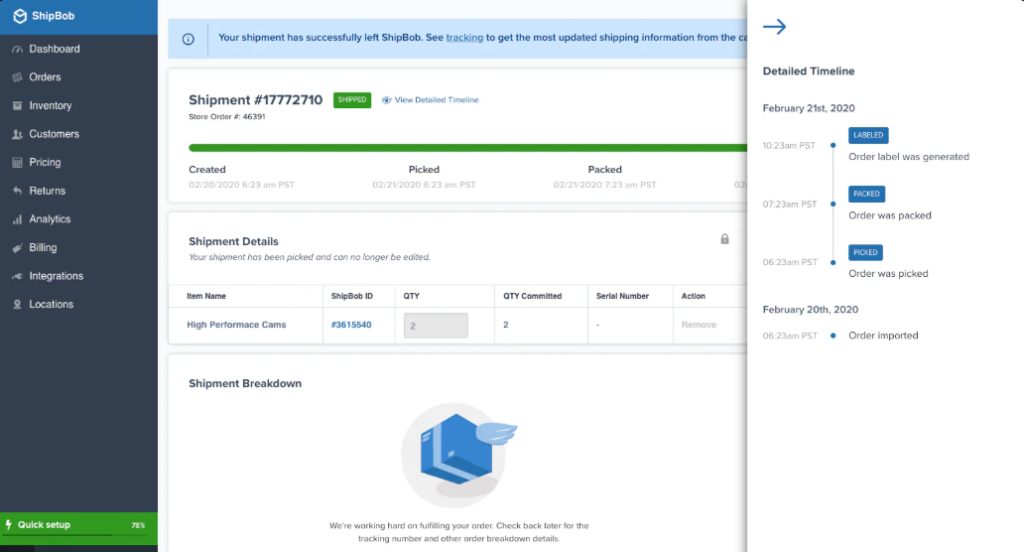
✔ Shipping is no longer operational – it’s a brand and conversion lever in 2026 ✔ Fast, transparent delivery directly reduces cart abandonment and support tickets ✔ High-volume stores benefit most from automation-first tools like ShipStation ✔ Branded tracking pages (AfterShip) improve retention and repeat purchases ✔ International sellers should never ship globally without duty & tax visibility (Easyship, Sendcloud) ✔ Small businesses can save thousands using free tools like Pirate Ship ✔ Complex catalogs require rule-based shipping logic (ShipperHQ) to protect margins ✔ Outsourced fulfillment (ShipBob) enables Amazon-like delivery speeds without FBA ✔ Green and carbon-neutral shipping is becoming a purchase decision factor, not a bonus ✔ The best shipping stack integrates with retention tools to maximize customer lifetime value
The Top 10 Best Shipping Apps for Shopify in 2026
We have expanded our analysis from the top 5 to the top 10, rigorously testing for automation capabilities, carrier diversity, and “2026-readiness” (AI and sustainability features).
1. ShipStation
Verdict: The “Command Center” for high-volume merchants.
Best For: Merchants shipping 500+ orders/mo who need industrial-grade automation.
Shopify App Store Rating: ⭐ 4.2 / 5 (3,000+ Reviews)
Pricing Plan
Cost (Monthly)
Shipment Limit
Key Inclusion
Starter
$9.99
50
1 User, Branded Labels
Growth
$29.99
500
2 Users, Auto-printing
Scale
$99.99
2,000
5 Users, Priority Support
High Volume
$399.99+
Unlimited
15 Users, Dedicated Account Mgr
Key Features:
Automation Rules: “If order weight > 1lb AND dest = Zone 8, assign UPS Ground.” (Saves ~20s per order).
Batch Printing: Print 500 labels in one click.
Rate Browser: See rates from all your connected carriers in a single view.
Best For: Developers, platforms, and SMBs wanting a simple, pay-as-you-go model.
Shopify App Store Rating: ⭐ 4.5 / 5 (2,500+ Reviews)
Pricing Plan
Cost (Monthly)
Shipment Limit
Key Inclusion
Starter
$0
Unlimited
$0.05 per label fee
Professional
$10
Unlimited
No label fee, Branded Pages
Premier
Custom
Unlimited
Technical Implementation
Key Features:
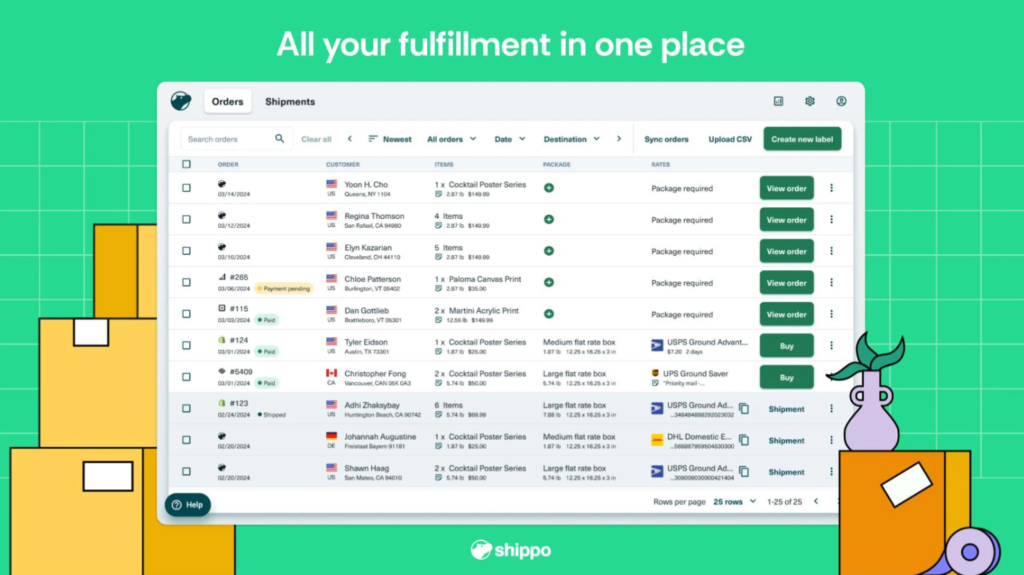
Multi-Carrier Account: Use Shippo’s master accounts for UPS/DHL discounts immediately.
API: Best-in-class documentation for custom builds.
Validation: Address validation prevents “Return to Sender” fees.
Integrations: 85+ Carriers (Focus on major Western carriers).
Pros: No monthly subscription needed; extremely clean interface.
Cons: Less advanced automation logic than ShipStation.
2026 USP: “Rate Assurance” – Shippo’s volume allows them to offer USPS rates that often beat Commercial Base Pricing for specific weights (e.g., <1lb).
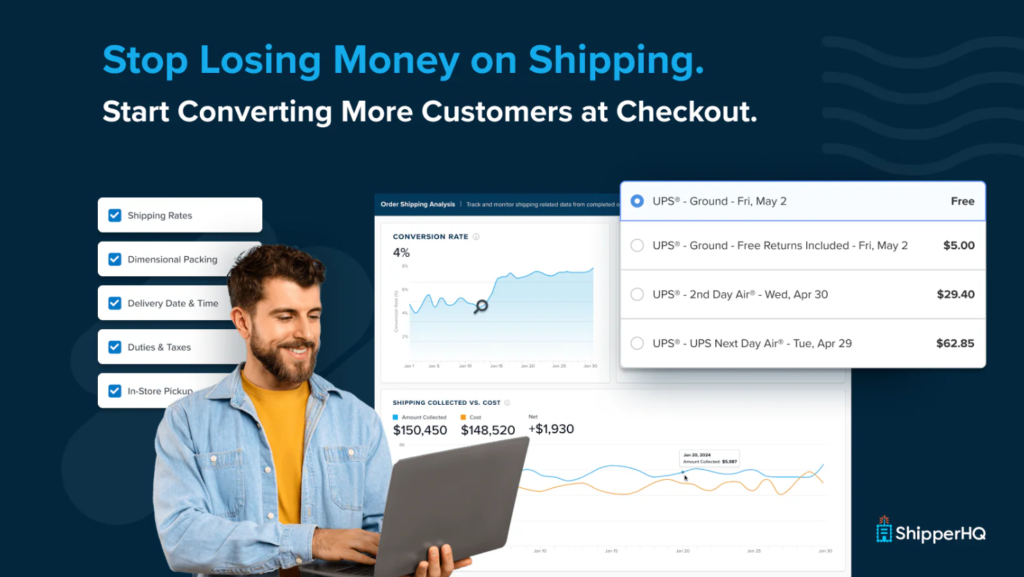
Pros: The only app that solves complex shipping math; saves huge margins on undercharged shipping.
Cons: Expensive; complex setup requires a logistics manager mindset.
2026 USP: “Date-Specific Delivery” calendar at checkout, allowing customers to choose exactly when they want the item (e.g., for birthdays or perishable goods).
Mobile App: Print labels directly from the Shopify phone app.
Pros: Zero setup time; works out of the box.
Cons: No automation rules; cannot combine orders; limited analytics.
2026 USP: “Context Switching” – Or the lack thereof. You manage shipping on the same screen as your orders, which is the ultimate convenience for solopreneurs.
Table 2: Pricing Model Snapshot (2025/2026 Estimates)
App
Free Plan?
Starter Price
Pricing Model
ShipStation
No (Trial only)
$9.99/mo
Subscription + Label Fee
AfterShip
Yes (50 orders)
~$11/mo
Volume-based
Easyship
Yes (50 orders)
$29/mo
Subscription
Shippo
Yes
Pay-per-label
Pay-as-you-go or Sub
Sendcloud
Yes
€29/mo
Subscription
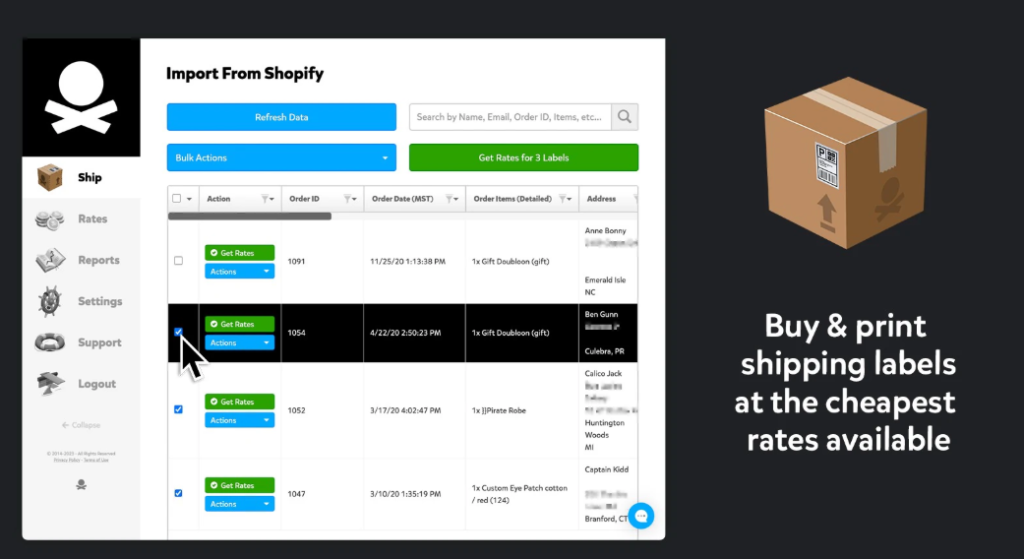
Pirate Ship
Yes (Forever)
$0
Postage Only
Emerging Trends: Shipping in 2026
To make this blog user-first and future-proof, we must look at what is coming.
1. Green Logistics as a KPI By 2026, carbon-neutral shipping won’t just be a “nice to have”; it will be a filter option for consumers. Apps like EcoShip and features within Sendcloud allow you to offset emissions automatically. Displaying this commitment can increase conversion rates among Gen Z buyers.
2. AI-Driven Predictive Shipping New updates in Shopify Sidekick and ShipStation are utilizing AI to predict shipping delays before they happen. Imagine your shipping app automatically rerouting a package because it detects a weather event in a specific zip code. This level of “self-healing” logistics is the future.
3. The Rise of “Hyper-Local.” With 77% of users expecting 2-hour delivery, integration with local delivery apps (like Uber Direct or DoorDash Drive) via Shopify is exploding. The Best Shipping App for Shopify in 2026 might actually be a hybrid of national carriers and local gig-drivers.
How Shipping Impacts Loyalty & CLV
Your shipping experience is directly tied to your customer retention strategy. From the moment a customer places an order, every step of the shipping process becomes part of your brand experience.
When shipping goes smoothly, you earn trust. That’s where tools like Retenzy come in. While shipping apps handle the logistics, Retenzy helps you capitalize on that delivery moment to:
Trigger post-delivery review requests (leveraging the “high” of receiving a package).
Reward customers for choosing slower, eco-friendly shipping options.
Send personalized follow-up offers based on the delivery location.
By syncing your shipping and retention strategies, you’re not just completing the order; you’re setting up the next one.
Mind Map 2: The Post-Purchase Retention Loop
How shipping feeds into loyalty.
Conclusion: An Expert’s View
In my years analyzing the Shopify ecosystem, I’ve seen merchants obsess over their logo design yet ignore their shipping workflow. This is a mistake. In 2026, your shipping is your brand.
The Best Shipping Apps for Shopify are the ones that become invisible. They should automate the tedious work – printing labels, notifying customers, calculating taxes – so you can focus on product development.
My Recommendation: If you are just starting, use Pirate Ship or Shopify Shipping to keep costs low.
For Growth: Once you hit 50+ orders a month, switch to ShipStation or Shippo to automate the manual labor.
For Global Brands: Do not attempt international shipping without Easyship or Sendcloud; the customs compliance alone is worth the subscription cost.
Invest in your logistics stack today, and your customer lifetime value will thank you tomorrow.
FAQ: Common Shipping Questions
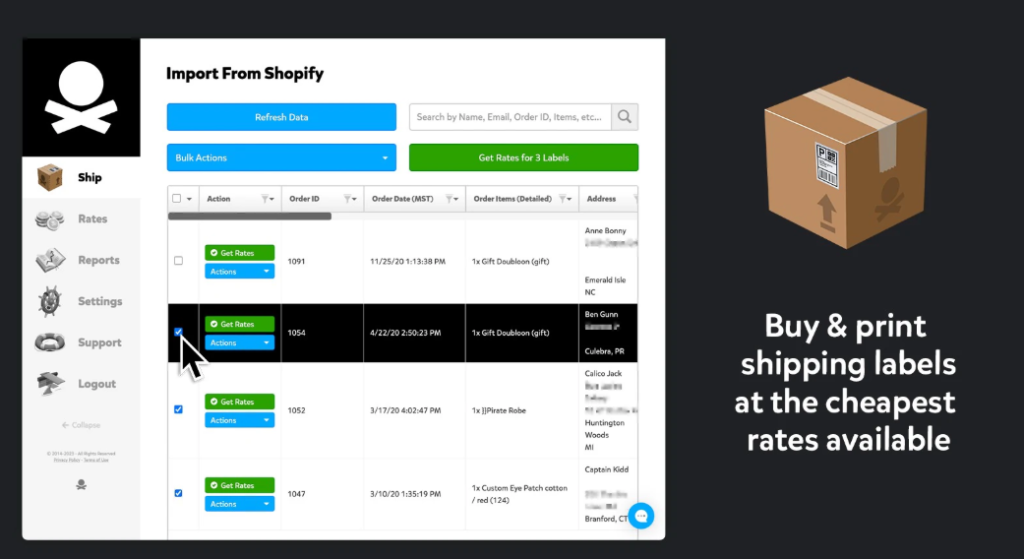
Q: What is the best free shipping app for Shopify? A: Pirate Ship is widely considered the best free option for US merchants because it gives you access to commercial pricing (UPS/USPS) without a monthly fee. Shopify Shipping is also free and pre-installed.
Q: Does Shopify calculate shipping automatically? A: Yes, Shopify can calculate shipping based on weight or price. However, to get “Real-Time Carrier Rates” (where the live price from FedEx/UPS is shown to the customer), you usually need the “Advanced Shopify” plan or a third-party app like Easyship.
Q: Can I use multiple shipping apps on Shopify? A: Yes. For example, you might use Easyship for your international orders and ShipStation for domestic ones. However, be careful not to confuse your inventory management by splitting orders too often.