- Features
Features


Here’s a reality that keeps Shopify store owners awake at night: one in every four clothing items purchased online never makes it to the customer’s wardrobe. It comes back.
The numbers are staggering. In 2024, retailers processed $890 billion worth of returned merchandise, with 2025 projections hitting $849.9 billion. For apparel specifically, the average return rate hovers between 20.8% and 26%, while some fast-fashion brands experience rates exceeding 40%. But here’s the real problem: 93% of these returns trace back to a single issue—incorrect sizing and fit.
This isn’t just a logistics headache. Each return costs merchants between $21 and $26.50 to process, factoring in reverse shipping, restocking labor, and lost resale value. For a merchant selling 1,000 items per month with a 24% return rate, that’s $5,040-$6,360 in monthly return processing costs alone. Scale that annually, and you’re looking at $60,480 to $76,320 in expenses that directly erode profitability.
The Wall Street Journal estimates that if a retailer could cut returns in halfit would see a 25% increase in profit margins. That’s not incremental improvement—that’s transformational business impact.
The root cause is deceptively simple: bodies are diverse, sizing standards are fragmented, and online shopping removes the most critical element—the try-on.
Research by Statista shows that size inconsistencies across brands create a cascade of problems:
But there’s a behavioral trend amplifying the problem: bracketing. This is when customers intentionally order multiple sizes with the explicit plan to return the ones that don’t fit. According to recent data, 48% of online shoppers engage in bracketing, with Gen Z pushing that number to 51%. Multi-brand retailers attribute nearly 15% of their returns to bracketing alone.
The fundamental issue? Customers don’t trust your size chart enough to commit to a single purchase.
This is where Shopify size & fit apps become essential infrastructure, not optional extras. These applications address the trust gap by providing personalized sizing guidance, virtual try-on experiences, and exchange-first return management—fundamentally changing how customers approach the purchase decision.
Modern Shopify size & fit solutions operate on three integrated layers:
🠲 Layer 1: Accurate Size Information
The foundation starts with customizable, brand-specific size charts. Leading apps allow merchants to create product-level, collection-level, or brand-level sizing guides with support for multiple measurement systems (inches, centimeters, EU sizing, etc.). The key differentiator: these aren’t static, one-size-fits-all charts. Smart apps allow merchants to tag products with how they fit (runs small, runs large, true to size) and back that up with customer data.
🠲 Layer 2: AI-Powered Personalization
Next-generation apps use machine learning to analyze customer inputs (height, weight, body type, preferred fit) and recommend the optimal size based on historical purchase and return data. When a customer provides their measurements, the app cross-references that against thousands of similar customers, identifying size patterns unique to that specific product or brand. This reduces guesswork by correlating body metrics with successful purchases.
🠲 Layer 3: Behavioral Nudging & Social Proof
The most sophisticated apps incorporate psychological triggers that increase purchase confidence. This includes displaying “80% of customers your size chose this” messages, showing how many people bought the product and didn’t return it, or highlighting positive reviews from customers with similar body types. These micro-signals work together to replace the confidence that physical try-on provides.
Apps implementing this three-layer approach report measurable outcomes:
For context: if a merchant reduces their return rate from 24% to 20% through sizing tools, that’s a 4 percentage point improvement. On $100,000 in monthly sales, that represents $4,000 fewer returns to process—or $48,000 annually in saved processing costs.
Best For: D2C brands, international retailers, design-conscious merchants
Pricing: Free plan available; premium plans from $4.99/month
Rating: 5.0 ★ (103 reviews)
Developer: SmartSize
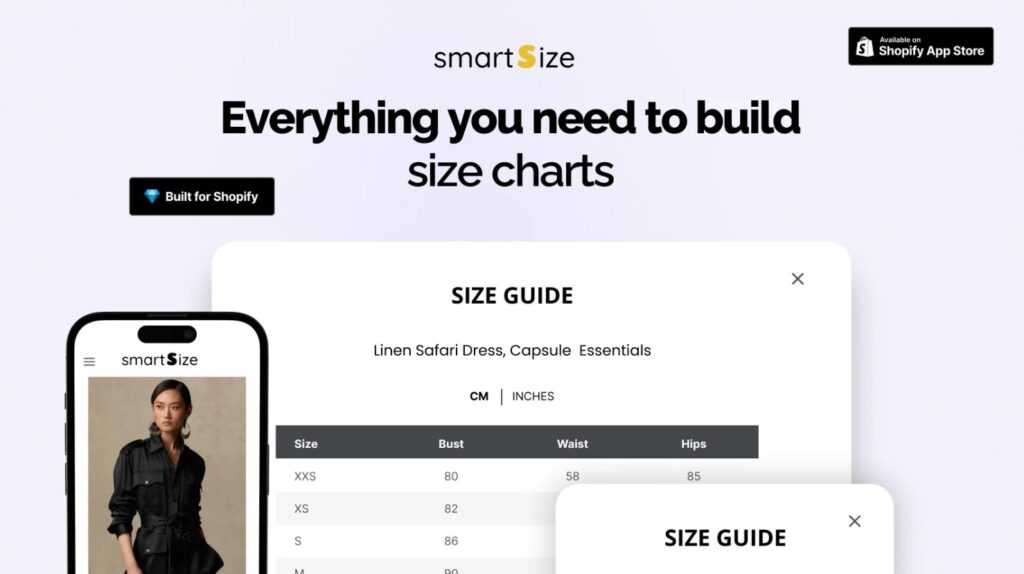
SmartSize differentiates itself by making size charts beautiful. While competitors often create utilitarian tables, SmartSize enables merchants to build responsive, brand-aligned size guides that feel native to the store design. The app supports unlimited charts, automatic unit conversion, and multilingual interface options—critical for merchants selling globally.
Key Features That Matter:
Why It Matters for 2026: As conversion rate optimization becomes increasingly sophisticated, the friction caused by poor UX on size charts gets amplified. SmartSize eliminates this by ensuring the size-selection experience matches the quality of your store design. Merchants using SmartSize report that customers spend 40% longer on product pages—a signal of increased confidence.
Implementation Time: 15-20 minutes per product (using templates)
Best For: Fashion brands, apparel retailers, merchants fighting bracketing
Pricing: Free plan (4 charts); Premium $6.99/month; Ultimate $12.49/month
Rating: 4.7 ★ (800+ reviews)
Developer: Kiwi
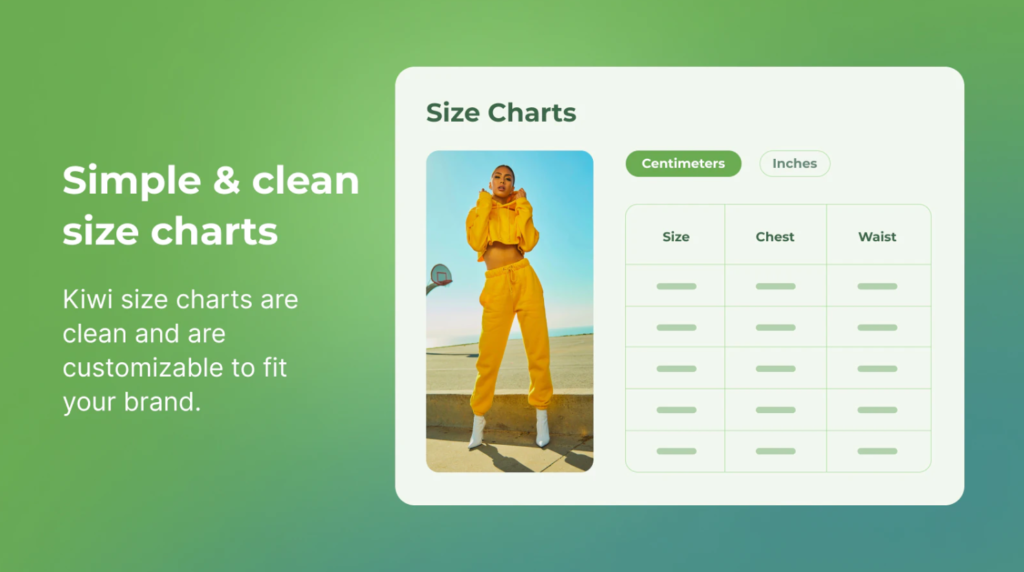
Kiwi stands out for marrying clean UI with genuine AI intelligence. The app’s recommendation engine doesn’t just display sizes—it learns from your store’s data. When a customer inputs their measurements or body type, Kiwi analyzes how other customers with similar profiles fared with your products, then recommends the size most likely to prevent a return.
Core AI Capabilities:
2026 Advantage: In a year when generative AI and predictive analytics dominate tech conversations, Kiwi’s approach feels increasingly relevant. The app doesn’t just reduce returns—it creates a feedback loop where each return teaches the system to be smarter for the next customer.
Conversion Impact: Merchants report 32% of revenue now comes from size-personalized recommendations, with 2.5x higher conversion rates on personalized size advice vs. generic charts.
Best Use Case: Premium fashion brands selling directionally-sized products (hoodies vs. fitted tees) where fit varies significantly.
Best For: Apparel retailers managing high return volumes, merchants wanting to recover lost sales
Pricing: Free install; paid plans from $49/month
Rating: 4.9 ★ (341 reviews)
Developer: ReturnGO
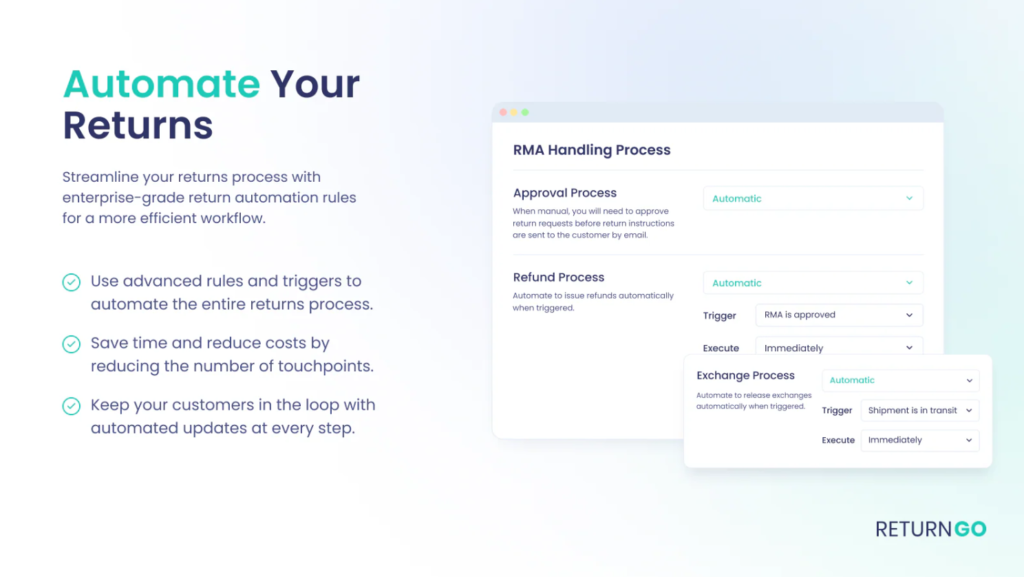
ReturnGO attacks the problem from a different angle: if a return is inevitable, how do you convert it into retained revenue? The app replaces traditional refund-focused return workflows with exchange-first logic. When a customer initiates a return for sizing reasons, ReturnGO guides them toward exchanging for a different size rather than requesting a refund.
Game-Changing Features:
The Psychology: A customer who receives a refund leaves. A customer who exchanges for the correct size buys again 3x more frequently. ReturnGO acknowledges this behavior and optimizes for it.
ROI Calculation:
2026 Positioning: As profitability pressure increases, merchants are moving away from “customer experience” as a nice-to-have toward “retention economics” as a core business lever. ReturnGO directly aligns with this shift.
Best For: Merchants without the budget for full virtual try-on, mid-market brands, fashion-forward retailers
Pricing: Free plan (4 charts); Premium $49.99/month
Rating: 4.8 ★ (800+ reviews)
Developer: [AI Fit Finder]
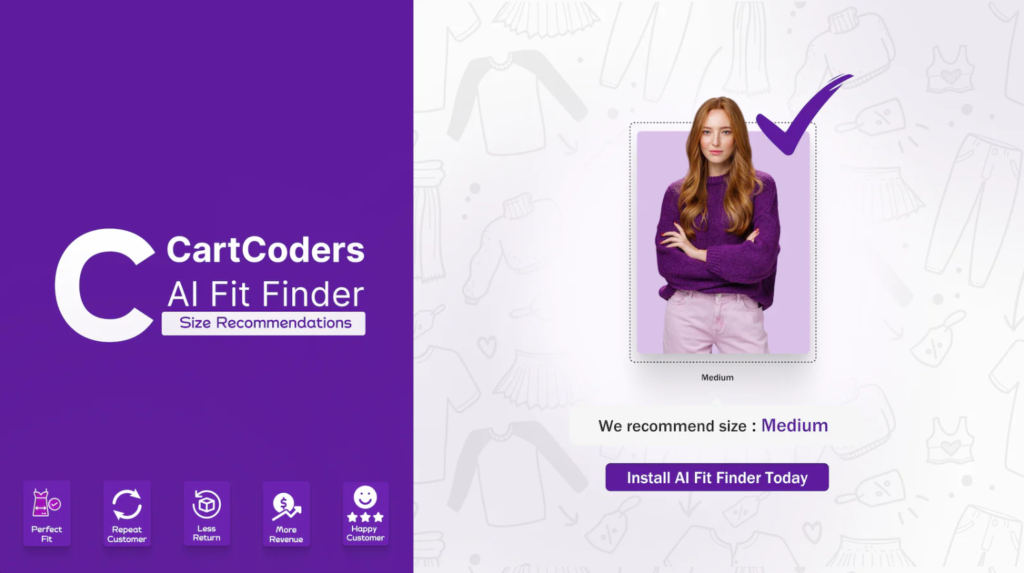
While virtual try-on powered by 3D models gains traction in luxury segments, AI Fit Finder offers a pragmatic middle ground. The app uses dimension-based matching (height, weight, body shape preferences) to recommend sizes with remarkable accuracy—without requiring customers to upload photos or interact with complex AR interfaces.
Why This Matters:
Technical Differentiation:
Implementation Scenario: A menswear brand with diverse body types in its customer base implements AI Fit Finder. Within 6 weeks, the app analyzes 3,000+ purchases and identifies that tall customers (6’2″+) consistently exchange oversized hoodies for mediums. The algorithm learns this pattern and now proactively recommends medium to tall customers who browse oversized hoodies.
Best For: Large catalogs, brands with 500+ SKUs, international retailers
Pricing: Free install; paid plans from $5.99/month
Rating: 4.9 ★ (748 reviews)
Developer: Mageplaza
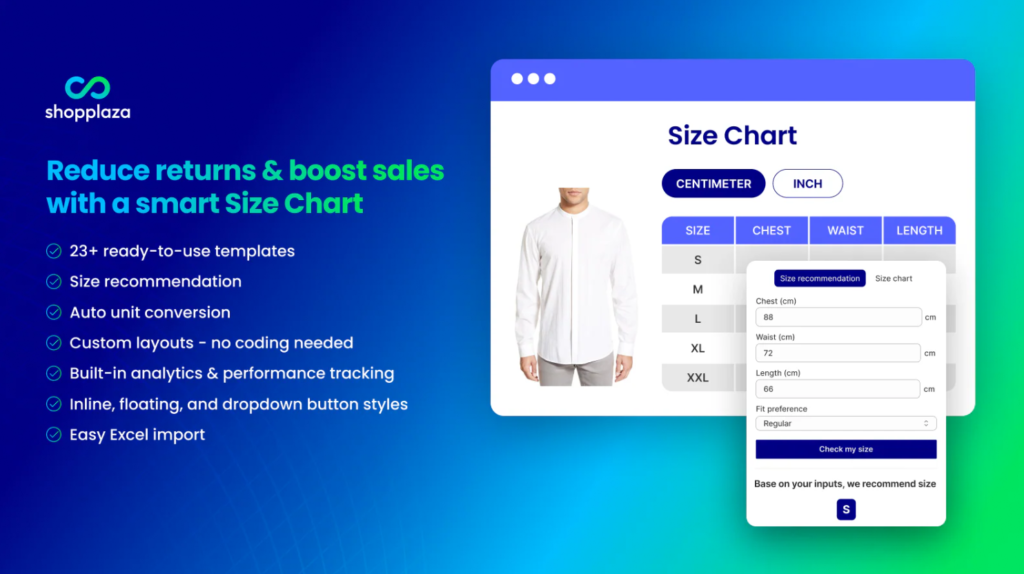
MP Size Chart (now called Avada Size Chart) earned its reputation through relentless feature development. With 23 pre-built templates covering clothing, footwear, accessories, and more, the app serves as a complete sizing solution for complex product catalogs.
Enterprise-Level Features:
Data-Driven Advantage:
The app tracks which size most frequently gets purchased vs. returned for each product. This data helps merchants:
2026 Trend Alignment: As sustainability becomes a customer expectation, merchants recognize that reducing returns reduces packaging waste, carbon from reverse logistics, and landfill volume. MP Size Chart’s granular analytics enable merchants to quantify this impact for sustainability-conscious customers.
Best For: Merchants wanting to recover margin on returned items, brands selling complementary products
Pricing: Free plan; premium plans available
Rating: 4.9 ★ (659 reviews)
Developer: Appsdart Solutions
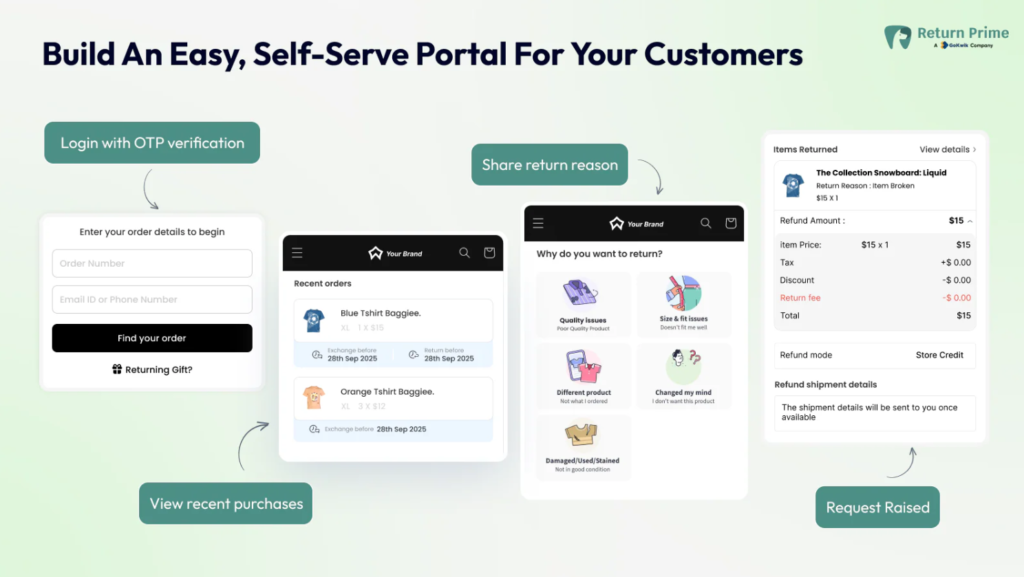
Return Prime flips the return narrative entirely. Instead of viewing returns as lost sales, the app treats them as second-purchase opportunities. When a customer initiates a return, Return Prime’s branded portal upsells complementary products (a correctly-sized item, accessories, confidence-boosting deals).
Psychology-Based Features:
Real Scenario:
Best For: Data-driven merchants, stores with complex sizing patterns, mid-to-large operations
Pricing: Free
Rating: 4.7 ★ (2,409 reviews)
Developer: Shopify (Native)
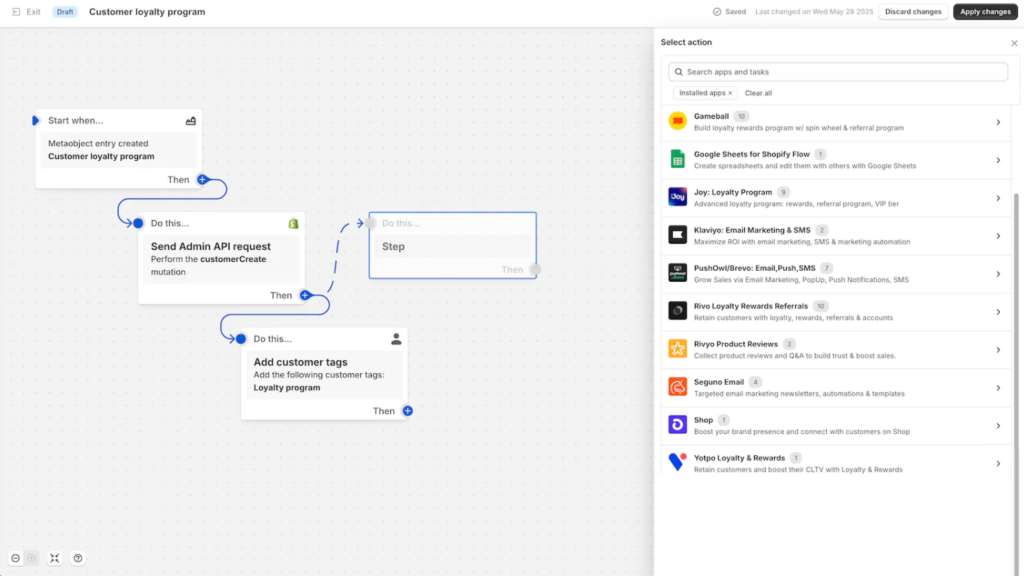
While not exclusively a sizing solution, Shopify Flow belongs in this list because it enables sophisticated automation around sizing data. Merchants can build workflows that trigger on sizing patterns: if a product gets more returns for size L than S, automatically create a dynamic collection for size recommendations. If a customer has multiple returns for “size too small,” flag them for customer service outreach.
Sizing-Specific Workflows:
2026 Relevance: As merchants face inventory optimization under tariff pressure and inflation concerns, using actual return data to forecast future demand becomes a competitive advantage. Shopify Flow enables this without custom development.
Best For: Brands selling niche sizing (plus-size, petite, extended sizes), a premium customer service approach
Pricing: Free
Rating: 4.7 ★ (4,770 reviews)
Developer: Shopify (Native)
Sometimes the best size recommendation comes from a human. Shopify Inbox enables real-time chat where customers can ask sizing questions before purchase. Support agents see the customer’s cart contents, browsing history, and previous purchases—enabling personalized guidance.
Live Chat for Sizing:
AI-Powered Efficiency:

Best For: Luxury brands, international retailers, brands with proprietary sizing
Pricing: Enterprise (custom quotes)
Rating: 4.6 ★ (review count limited, premium positioning)
Developer: Goodsize
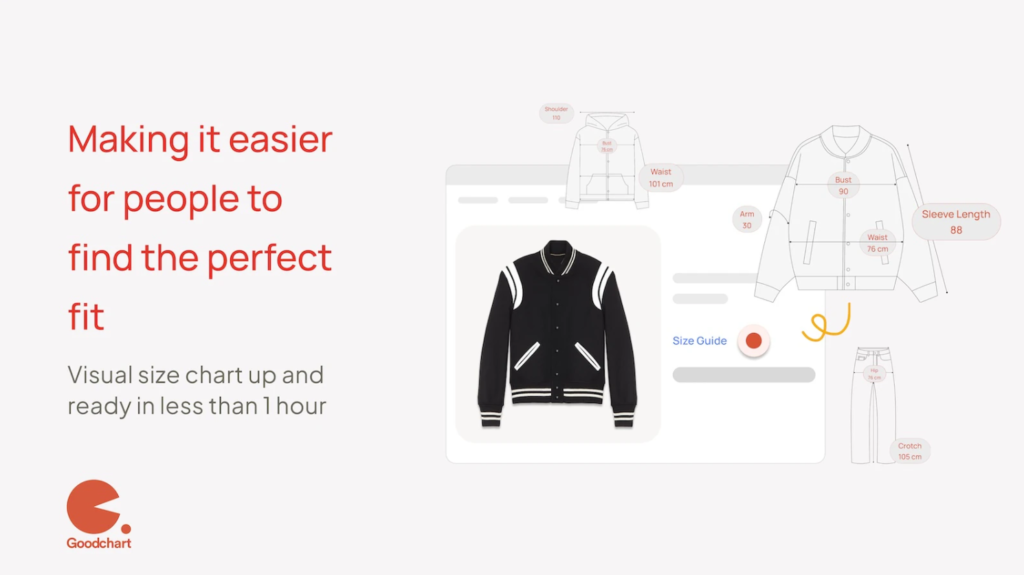
Goodsize represents the premium tier of size recommendation. Unlike apps serving the mass market, Goodsize builds proprietary size profiles based on 1) customer measurements, 2) brand-specific fit preferences, and 3) advanced body shape categorization (not just S/M/L, but hourglass/athletic/rectangular/pear shapes).
Advanced Personalization:
Data Advantage: Over time, Goodsize creates a proprietary dataset of body shapes + sizing preferences that becomes increasingly valuable. Brands using Goodsize report 15-20% improvement in repeat purchase rates because the system “remembers” customers.
Best For: Mobile-first stores, brands selling basic sizes, conversion-obsessed merchants
Pricing: $9.99/month (free trial available)
Rating: 4.9 ★ (40 reviews)
Developer: Size Swatch
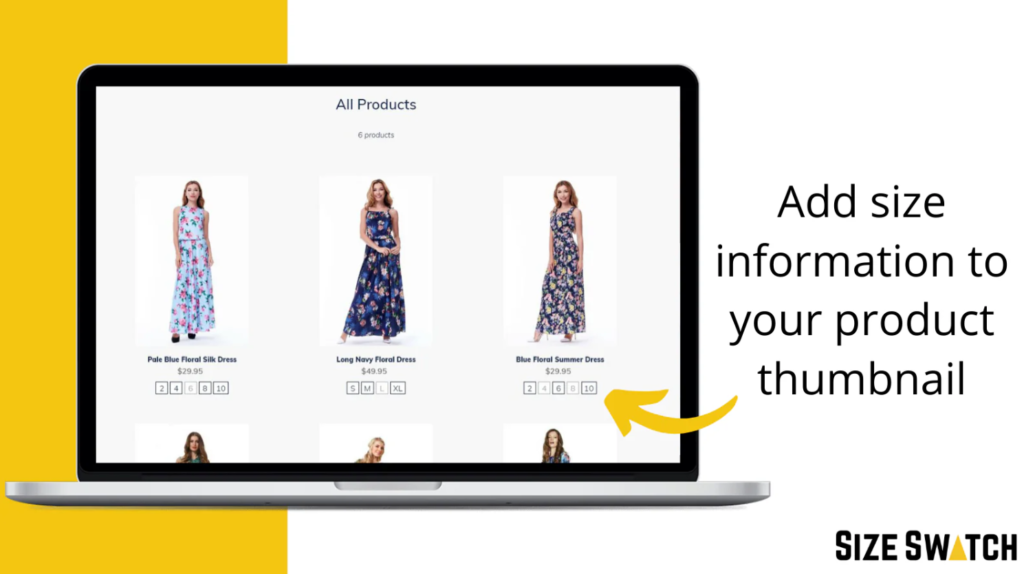
Size Swatch makes one specific optimization: it replaces the default Shopify size dropdown with visual swatches (S, M, L, XL displayed as clickable buttons). This micro-interaction improves conversion by reducing friction—the customer’s brain processes “click the M button” faster than “open dropdown, find M, click.”
Why This Matters for 2026:
Implementation: Install the app, select which products get swatches, and customize colors. That’s it. The app automatically replaces dropdowns with visual buttons while maintaining Shopify’s inventory sync.
Best For: Merchants uncomfortable with code, visual thinkers, designers who want full creative control
Pricing: Free plan; Premium $4.99/month
Rating: 4.8 ★
Developer: Eastside Co
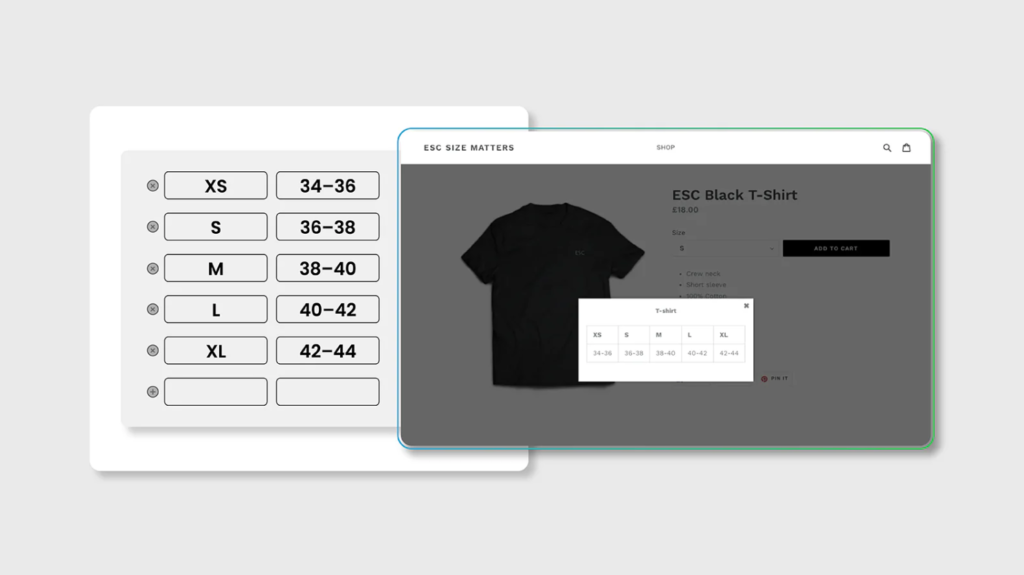
ESC Size Charts provides a drag-and-drop visual builder where merchants can create size charts with images, videos, and custom layouts without touching code. The appeal is democratization—small merchants can build professional sizing guides without hiring developers.
Visual-First Features:
| Feature | SmartSize | Kiwi | ReturnGO | AI Fit Finder | MP Size Chart | Return Prime | Shopify Flow | Shopify Inbox | Goodsize | Size Swatch | ESC |
| Price | Free+ | Free+ | $49+ | Free+ | Free+ | Free+ | Free | Free | Custom | $9.99 | Free+ |
| AI Recommendations | ✗ | ✓✓ | ✗ | ✓ | ✓ | ✗ | ✗ | ✓ | ✓✓ | ✗ | ✗ |
| Visual Builder | ✓ | ✓ | ✗ | ✗ | ✓ | ✗ | ✗ | ✗ | ✗ | ✓ | ✓✓ |
| Return Management | ✗ | ✗ | ✓✓ | ✗ | ✗ | ✓✓ | ✗ | ✗ | ✗ | ✗ | ✗ |
| Live Chat | ✗ | ✗ | ✗ | ✗ | ✗ | ✗ | ✗ | ✓ | ✗ | ✗ | ✗ |
| Bulk Import | ✓ | ✗ | ✗ | ✗ | ✓✓ | ✗ | ✗ | ✗ | ✗ | ✗ | ✗ |
| Mobile Optimized | ✓✓ | ✓ | ✗ | ✓ | ✓ | ✗ | N/A | ✓ | ✓ | ✓✓ | ✓ |
| Analytics Dashboard | ✓ | ✓ | ✓ | ✗ | ✓✓ | ✓ | ✗ | ✓ | ✓✓ | ✗ | ✗ |
| International Sizing | ✓✓ | ✓ | ✗ | ✓ | ✓ | ✗ | ✗ | ✓ | ✓ | ✗ | ✗ |
| Estimated ROI | 15-20% | 20-25% | 25-35% | 15-20% | 10-15% | 20-30% | 10-20% | 5-10% | 25-30% | 3-5% | 5-10% |
ROI Explanation: Based on return rate reduction % × average item value × monthly sales. Example: 24% initial return rate reduced to 20% (4 points) on $50,000 monthly sales = $2,000 fewer returns × $22 processing cost = $44,000 annual savings.
Start with a single app addressing your most critical pain point:
Implement on 20% of your catalog first. Track baseline metrics:
Add a complementary app:
Set specific KPIs:
Introduce automation (Shopify Flow) to:
Let’s work through a realistic scenario for a mid-size Shopify apparel merchant:
Starting Position:
After implementing the Kiwi Size Chart & ReturnGO (6-month impact):
Scenario 1: Conservative Implementation (10% improvement)
Scenario 2: Strong Implementation (15% improvement)
Scenario 3: Optimized Implementation (20% improvement with exchange focus)
The Realistic Outcome: Most merchants see 10-15% improvements in the first 6 months, hitting $4,000-$6,000 annual net ROI on app investment.
As we move through 2026, several trends amplify the ROI of sizing apps:
1. GenAI Integration
Apps are increasingly layering generative AI into size recommendations. Instead of “Customer with your measurements usually wears M,” systems now say: “Based on 5,000+ customers, here’s how this specific product’s fit compares to 10 similar items you’ve purchased.” The reasoning becomes transparent, building trust.
2. Privacy-Preserving Personalization
New techniques allow personalized sizing recommendations without storing customer measurements. Apps using federated learning compute recommendations locally, then sync only the prediction—not the underlying data. This satisfies privacy-conscious customers while maintaining accuracy.
3. Sustainability Positioning
Brands increasingly market reduced returns as environmental achievement. “Fewer returns = fewer packages shipped, less waste, lower carbon footprint.” Size apps become part of the sustainability story, not just logistics optimization.
4. Cross-Brand Size Matching
Apps like Goodsize are building datasets showing “if you’re a size 6 at Brand A, you’re likely a size 4 at Brand B.” This meta-knowledge, built from thousands of customer returns, becomes a competitive advantage for brands in the network.
5. TikTok/Social Commerce Integration
As TikTok Shop and Instagram Shopping grow, size recommendations travel with the shoppable content. A video posted on TikTok now includes embedded size guidance powered by Kiwi or AI Fit Finder, reducing return rates from impulse social purchases.
53% of apparel returns are due to size. Merchants ignoring this are leaving 6-figures on the table.”
That’s not hyperbole. For a $500,000 annual revenue apparel brand with a 24% return rate, sizing apps that reduce returns by 10% represent $12,000 in annual profit recovery. For a $2M brand, it’s $48,000. The economics are undeniable.
What’s changed in 2026:
The brands winning in 2026 aren’t the ones obsessing over acquisition cost—they’re the ones obsessing over keeping customers confident through the purchase journey. Sizing apps aisthe infrastructure for that confidence.
The Opportunity: Every returned item due to sizing represents a customer who was ready to buy but doubted your product. Size & fit apps eliminate that doubt.
The Timeline:
The Expected Outcome:
Which app should you pick?
The data is overwhelming: size & fit apps work. The question isn’t whether to implement one—it’s which one matches your business model and whether you’re ready to reclaim the $50,000+ in annual return costs you’re currently losing.