- Features
Features



Every day, across the global e-commerce landscape, a silent revenue leak continues to drain billions from online retailers. The statistics tell a sobering story: 70.19% of shopping carts are abandoned before checkout in 2025-2026, representing an estimated $18 billion in lost annual revenue for e-commerce businesses worldwide. For context, that’s nearly $4 trillion in merchandise value sitting in digital shopping carts, waiting for a second chance.
But here’s the liberating truth that separates thriving Shopify stores from struggling ones: not all abandoned carts are truly lost. When equipped with the right tools—specifically, intelligent abandoned cart recovery apps—e-commerce merchants can reclaim anywhere from 10% to 58% of that revenue through strategic, multi-channel follow-up campaigns.
This comprehensive guide walks you through the top 10 abandoned cart recovery apps specifically optimized for Shopify in 2026, complete with real recovery statistics, side-by-side feature comparisons, and practical implementation insights. Whether you’re operating a bootstrapped startup or scaling a seven-figure store, this research-backed analysis will help you select the solution that aligns perfectly with your business model, budget, and customer engagement philosophy.
✔ Over 70% of Shopify carts are abandoned, making cart recovery one of the highest-ROI growth levers in 2026
✔ Multi-channel recovery (Email + SMS + Push + Chat) recovers 2–3x more revenue than email-only tools
✔ Email-only tools typically recover 8%–12%, while SMS & omnichannel tools reach 15%–25%
✔ Mobile users abandon more, so SMS, WhatsApp, and Messenger-based tools outperform desktop-only strategies
✔ Free & low-cost tools (Shopify Email, Cartly, Retainful) deliver the highest ROI for small stores
✔ Mid-sized stores benefit most from SMSBump & Omnisend, balancing automation with cost efficiency
✔ Enterprise & high-volume stores gain the biggest lift from Klaviyo, Wisepops, and AI-driven personalization
✔ Prevention tools (exit-intent popups, live chat) reduce abandonment before it happens and boost total recovery
✔ Gamification (Spin-to-Win, urgency timers) increases email capture and recovery rates for budget-focused brands
✔ The best-performing stores track recovery rate, recovered revenue, and channel ROI weekly
✔ Implementing cart recovery usually becomes ROI-positive within days, not months
✔ The best abandoned cart app is not the most advanced, but the one aligned with your store size, traffic, and customer behavior
Before diving into solutions, it’s essential to understand the magnitude of the opportunity you’re facing.
The mobile discrepancy is particularly troubling because mobile commerce now represents over 60% of all e-commerce traffic. Checkout friction—unexpected shipping costs, forced account creation, limited payment options, and slow page speeds—drives the majority of mobile abandonments.
| Metric | Value | Impact |
| Total merchandise abandoned annually | $4 trillion | Represents 15%+ of annual e-commerce sales |
| Estimated recoverable revenue | $192.4–$198 billion | 5%–10% of the total abandoned cart value |
| Revenue lost to abandonment yearly | $18–$23.96 billion | Equivalent to a loss of 0.3% of global e-commerce revenue |
| Recovery via email campaigns | 10% of lost revenue | Basic email-only strategy baseline |
| Recovery via SMS + email | 20%–30% | Multi-channel approach effectiveness |
| Recovery via AI chatbots | 15%–25% | Proactive engagement before abandonment |
Understanding abandonment drivers shapes how you choose your recovery tool:
Top Abandonment Triggers (2025 Data):
Shopify App Store Rating: 4.7/5 (2,700+ verified reviews)
Starting Price: $16/month (free plan available for up to 250 contacts)
Why It Stands Out:
Omnisend redefines multi-channel recovery by seamlessly automating abandoned cart reminders across email, SMS, and web push notifications from a single platform. What elevates Omnisend above basic tools is its integration of dynamic content personalization—automatically inserting customer names, product details, specific cart values, and unique discount codes into each message channel.
Key Features:
Performance Metrics:
Best For: Established Shopify stores with diverse customer bases seeking maximum reach through multiple communication channels. Ideal for merchants willing to invest in sophisticated automation to maximize revenue recovery.
Pros:
Cons:
Shopify App Store Rating: 4.8/5 (2,360+ verified reviews)
Starting Price: $19/month (free plan available)
Why It Stands Out:
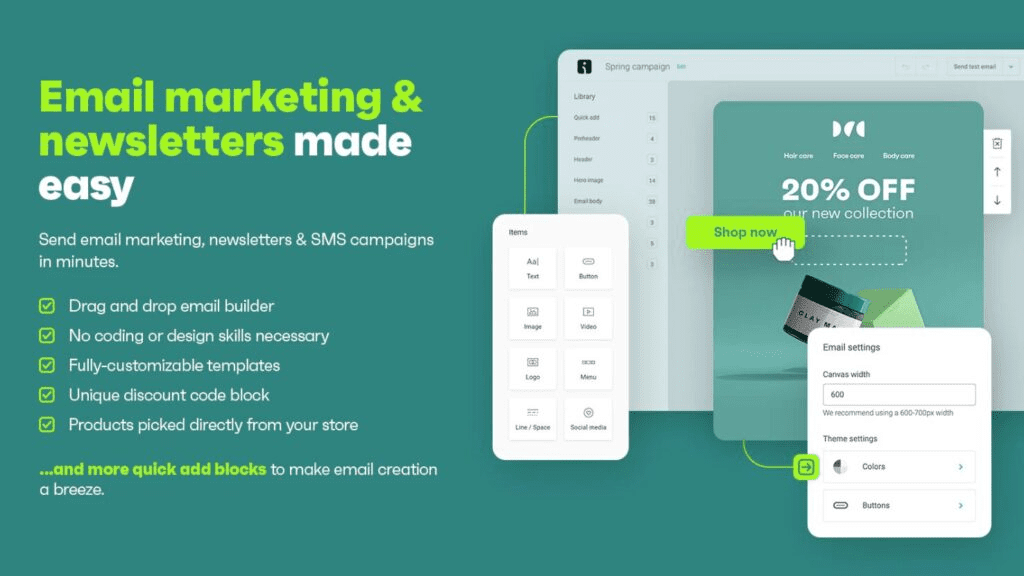
SMSBump cracks the code on SMS marketing effectiveness by combining high open/click-through rates of SMS (98% open rate, 25%+ CTR) with a full email marketing suite. The platform excels at personalization—dynamically inserting customer names, specific cart items, countdown timers, and time-sensitive discount codes into messages.
Key Features:
Performance Metrics:
Best For: Volume-focused merchants looking to maximize SMS effectiveness without needing sophisticated segmentation. Ideal for brands with customers who’ve previously opted into SMS communication.
Pros:
Cons:

Shopify App Store Rating: 4.8/5 (1,490+ verified reviews)
Starting Price: $19/month (free plan available)
Why It Stands Out:
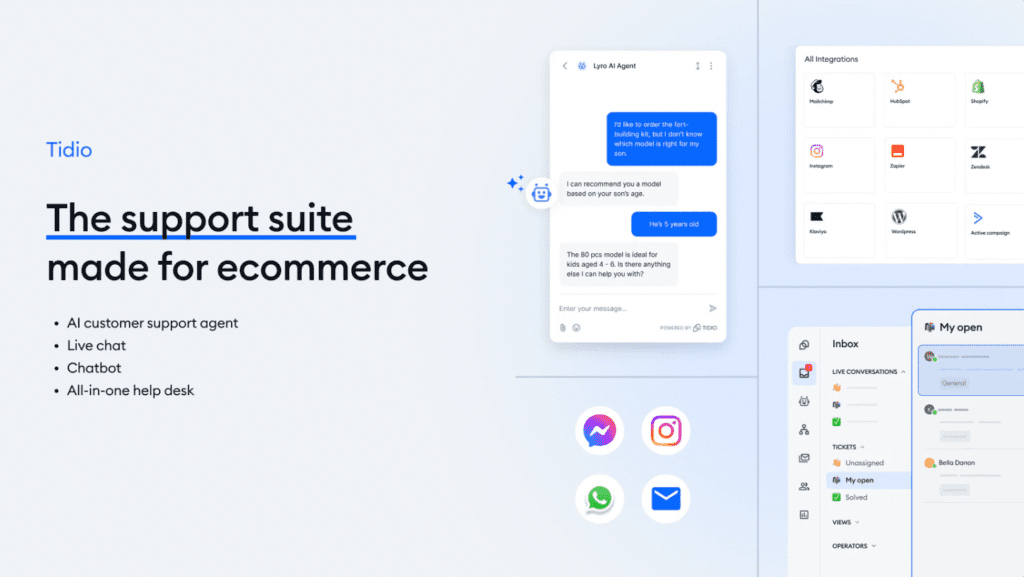
Tidio takes a fundamentally different approach by combining proactive live chat support, AI-powered chatbots, and email marketing into one unified platform. Its real-time engagement model allows support teams to intervene before cart abandonment occurs—addressing customer hesitations in real-time rather than waiting for post-abandonment recovery.
Key Features:
Performance Metrics:
Best For: Stores prioritizing customer service excellence and real-time engagement. Ideal for merchants willing to staff live chat or implement AI bots to reduce abandonment before it happens.
Pros:
Cons:
Shopify App Store Rating: 4.7/5+
Starting Price: Custom pricing (no public pricing available)
Why It Stands Out:
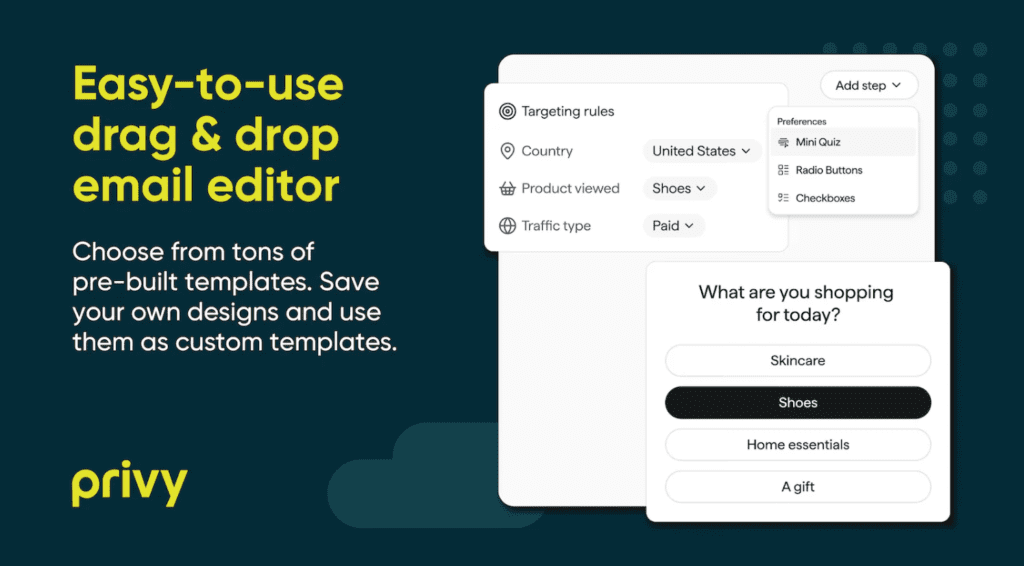
Privy inverts the traditional recovery model by focusing on prevention. It combines exit-intent technology, advanced popups, and email capture tools to engage customers before abandonment occurs. The “catch them before they leave” philosophy often outperforms reactive recovery.
Key Features:
Performance Metrics:
Best For: Data-driven merchants seeking to optimize every stage of the customer journey. Ideal for stores with existing email lists looking to capture additional audience segments before abandonment.
Pros:
Cons:
Shopify App Store Rating: 4.7/5
Starting Price: Custom pricing (enterprise focus)
Why It Stands Out:
Wisepops combines artificial intelligence with onsite marketing to predict cart abandonment moments with precision. Its machine learning engine analyzes visitor behavior patterns and determines the optimal time and messaging for each customer—maximizing conversion probability while minimizing annoyance.
Key Features:
Performance Metrics:
Best For: E-commerce leaders seeking cutting-edge technology to stay ahead of competitors. Ideal for stores with significant cart volume where even 1% improvements translate to meaningful revenue gains.
Pros:
Cons:
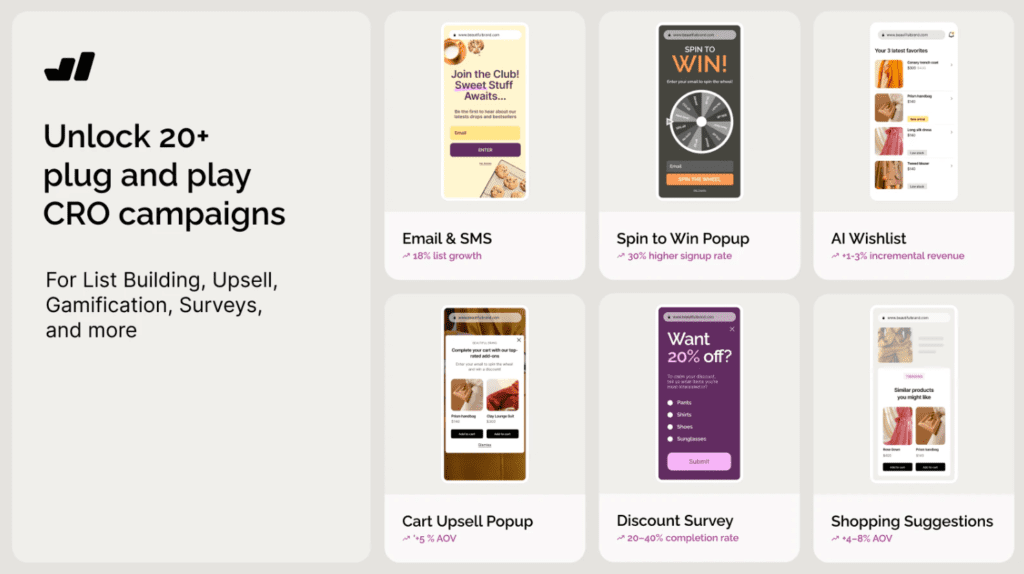
Shopify App Store Rating: 4.5/5
Starting Price: Free plan available (up to 1,000 subscribers)
Why It Stands Out:
Recart pioneered Facebook Messenger for abandoned cart recovery and has evolved into a comprehensive conversational commerce platform. Its thesis: customers are more likely to respond to cart reminders on platforms where they’re already engaged (Facebook, Instagram).
Key Features:
Performance Metrics:
Best For: Brands with strong Facebook/Instagram presence and younger demographics. Ideal for stores operating in markets where Messenger is the primary communication channel (Southeast Asia, Latin America).
Pros:
Cons:
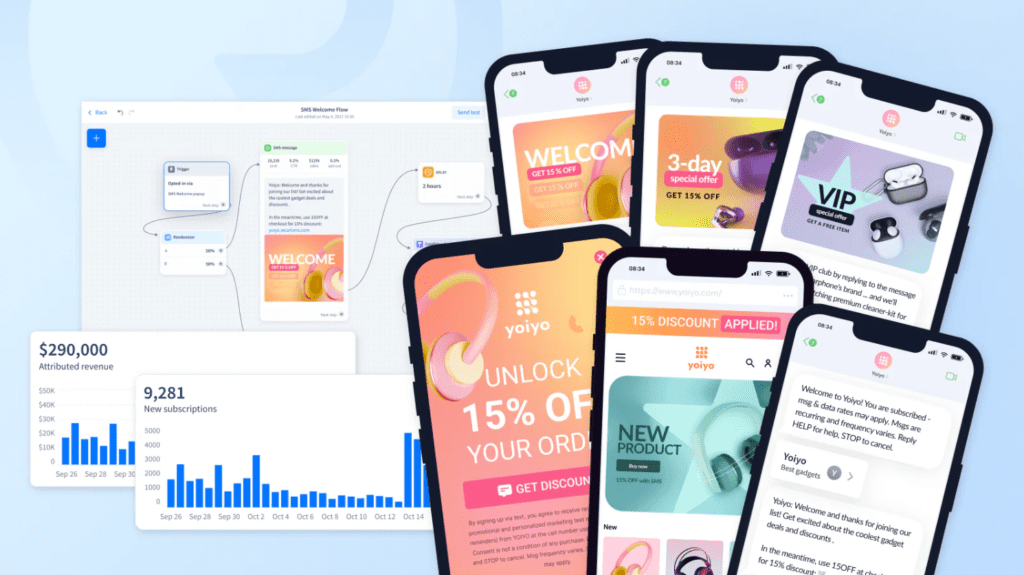
Shopify App Store Rating: 4.7/5 (19 reviews)
Starting Price: Free plan (300 emails/month) → $14–$19/month
Why It Stands Out:
Retainful takes a holistic customer lifecycle approach, combining cart recovery with post-purchase engagement and repeat order incentives. The philosophy is clear: recovering an abandoned cart is just the beginning; building repeat customers generates sustainable growth.
Key Features:
Performance Metrics:
Best For: Solo founders and early-stage Shopify stores prioritizing sustainable growth over short-term revenue spikes. Ideal for subscription or repeat-purchase businesses.
Pros:
Cons:
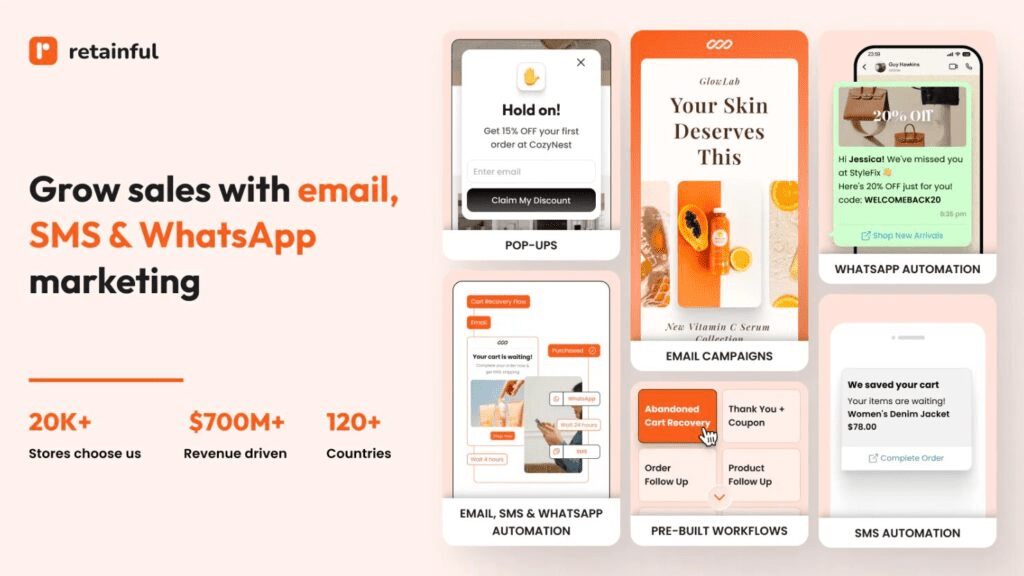
Shopify App Store Rating: 4.8/5
Starting Price: Free plan (100 emails/month) → $14.99/month
Why It Stands Out:
Cartly combines email recovery with gamification through its signature “Spin to Win” wheel pop-up. By leveraging psychological principles like curiosity and incentive, Cartly increases both email capture rates and cart recovery conversion rates simultaneously.
Key Features:
Performance Metrics:
Best For: Emerging Shopify stores seeking maximum functionality at minimum cost. Ideal for merchants willing to use gamification to simultaneously recover carts and grow email lists.
Pros:
Cons:
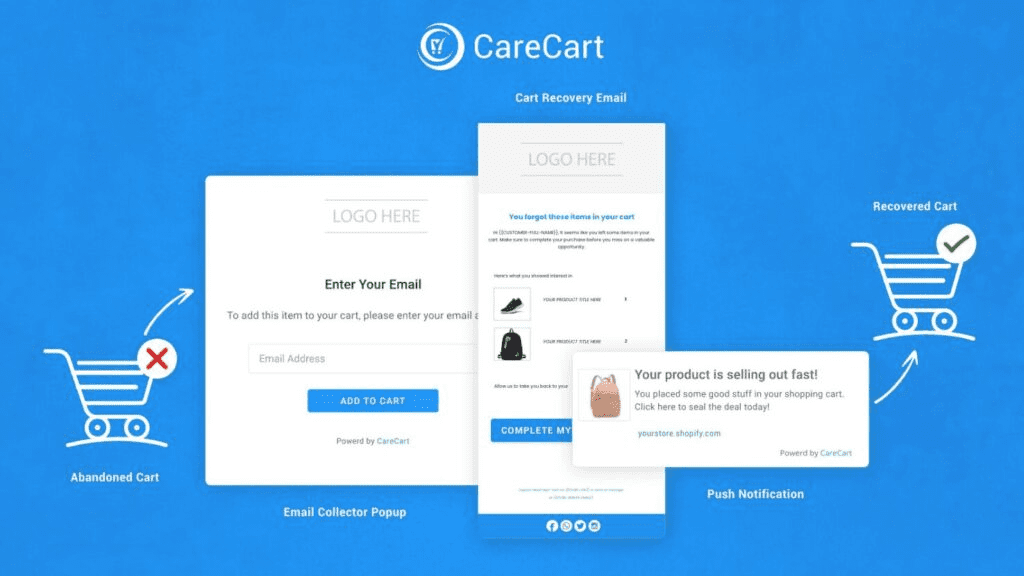
Shopify App Store Rating: 4.6/5
Starting Price: Custom pricing (enterprise)
Why It Stands Out:
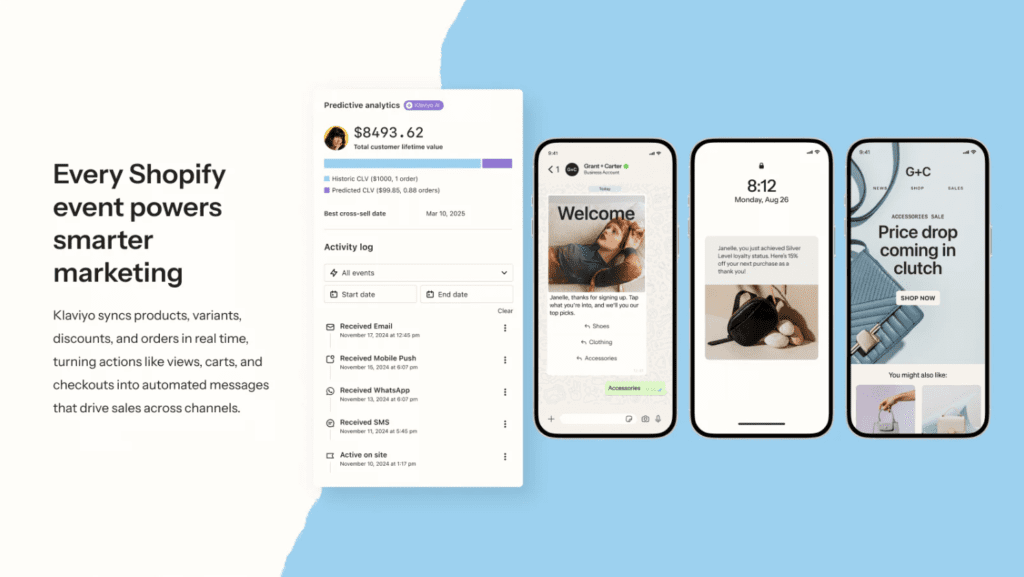
Klaviyo serves as the gold standard for sophisticated email + SMS orchestration in e-commerce. Its abandoned cart flows rival dedicated cart recovery tools while offering deeper integration into the overall customer lifecycle marketing strategy.
Key Features:
Performance Metrics:
Best For: Scaling Shopify stores already using Klaviyo for email marketing. Ideal for merchants seeking to leverage a single platform for all customer communication.
Pros:
Cons:
Shopify App Store Rating: 4.5/5
Starting Price: Free (unlimited contacts, 10,000 emails/month)
Why It Stands Out:
For merchants seeking the simplest possible entry point, Shopify’s native email tool provides surprisingly capable cart recovery automation without third-party dependencies. Its seamless data sync with Shopify checkout provides automatic abandoned cart detection and customer information.
Key Features:
Performance Metrics:
Best For: Bootstrapped Shopify stores, sellers with limited budgets, and merchants seeking minimal complexity. Ideal as a testing ground before investing in premium tools.
Pros:
Cons:

| Feature | Omnisend | SMSBump | Tidio | Privy | Wisepops | Recart | Retainful | Cartly | Klaviyo | Shopify Email |
| Multi-Channel (Email+SMS+Push) | ✅ | ✅ | ✅ | ✅ | ✅ | ✅ | Email Only | ✅ | ✅ | Email Only |
| AI/Predictive Features | ✓ | ✗ | ✓ | ✓ | ✅ | ✗ | ✗ | ✗ | ✓ | ✗ |
| A/B Testing | ✅ | ✅ | ✓ | ✅ | ✅ | ✓ | ✗ | ✗ | ✅ | ✗ |
| Advanced Segmentation | ✅ | ✓ | ✓ | ✅ | ✅ | ✓ | ✗ | ✗ | ✅ | ✗ |
| Live Chat/Chatbots | ✗ | ✗ | ✅ | ✗ | ✗ | ✓ | ✗ | ✗ | ✗ | ✗ |
| Gamification | ✗ | ✗ | ✗ | ✗ | ✗ | ✗ | ✗ | ✅ | ✗ | ✗ |
| Free Plan | ✅ | ✅ | ✅ | ✗ | ✗ | ✅ | ✅ | ✅ | ✗ | ✅ |
| Starting Price | $16/mo | $19/mo | $19/mo | Custom | Custom | Free | $14/mo | $14.99/mo | Custom | Free |
| Setup Complexity | Medium | Low | Medium | High | High | Low | Very Low | Very Low | High | Very Low |
| Customer Rating | 4.7/5 | 4.8/5 | 4.8/5 | 4.7/5 | 4.7/5 | 4.5/5 | 4.7/5 | 4.8/5 | 4.6/5 | 4.5/5 |
When comparing platforms, move beyond base pricing to the true cost of ownership and expected ROI.
| Platform | Base Price | SMS Credits | Monthly Total | Recovery Rate (Est.) | Recovered Revenue | ROI (At $50 AOV) |
| Shopify Email | Free | Free (Limited) | ~$0–50 | 8%–10% | $4,000–5,000 | Infinite |
| Cartly | $14.99 | $0 | ~$15 | 12%–15% | $6,000–7,500 | 40,000% |
| Retainful | $19/mo | $0 | ~$20 | 8%–12% | $4,000–6,000 | 20,000% |
| Omnisend | $80–150 | $40–100 | ~$150–250 | 12%–18% | $6,000–9,000 | 2,400%–6,000% |
| SMSBump | $19–49 | $40–100 | ~$150–200 | 15%–20% | $7,500–10,000 | 3,750%–6,667% |
| Tidio | $19–99 | $20–50 | ~$100–150 | 13%–17% | $6,500–8,500 | 4,333%–8,500% |
| Klaviyo | $300–1,000 | $100–300 | ~$500–1,500 | 12%–22% | $6,000–11,000 | 400%–2,200% |
Key Insight: Tools with lower fixed costs deliver the highest ROI, but more sophisticated platforms often deliver better recovery rates on larger volumes. The optimal choice depends on your baseline monthly abandoned cart value.
Selecting the right tool requires an honest assessment of your current state:
Stage 1: Bootstrapped/Testing Phase ($0–$10K Monthly Abandoned Value)
Stage 2: Growing Store ($10K–$50K Monthly Abandoned Value)
Stage 3: Scaling/Enterprise ($50K–$500K+ Monthly Abandoned Value)
Cart abandonment remains e-commerce’s largest untapped revenue opportunity. The global $4 trillion in abandoned merchandise represents an opportunity pool that dwarfs customer acquisition spend—yet most stores leave 80%+ of that recovery potential on the table through inaction or outdated single-channel strategies.
The data is unequivocal: merchants implementing multi-channel abandoned cart recovery systems recover 2–3x more revenue than those relying on email alone. The platforms detailed in this guide—from budget-friendly Cartly to enterprise-grade Klaviyo—all deliver measurable, often immediate ROI when implemented with strategic intent.
The framework is simple:
Combined with optimization of your checkout flow, mobile experience, and payment method diversity, a capable abandoned cart recovery app transforms lost revenue into acquired revenue—generating growth without requiring a proportional increase in customer acquisition spend.
The merchants winning in 2026 aren’t just running traffic to their stores. They’re recapturing every customer who’s already expressed intent by adding an item to their cart. Start with the platform matching your current stage, implement immediately, and watch as your revenue recovery rate climbs toward the 20%+ benchmark that separates industry leaders from the rest.
About This Guide:
This comprehensive analysis synthesizes 2025–2026 market data, platform features, and verified customer reviews to provide merchants with the most accurate information available. Pricing and features were verified in December 2025. Platform ratings reflect current Shopify App Store scores as of publication date.
Recommended Next Steps:
The best abandoned cart app is the one you’ll actually use consistently. Choose, implement, and watch your recovery rate climb.
Q: Which abandoned cart app works best with Shopify?
A: All 10 platforms work seamlessly with Shopify through native integrations. Omnisend, SMSBump, and Tidio offer the most user-friendly setup, while Klaviyo provides the most sophisticated features for advanced users.
Q: How long does it take to see results from abandoned cart recovery?
A: Results are typically visible within the first week. Most platforms deliver first recoveries within 24–48 hours of implementation. Expect 15%–20% of abandonment volume to be recoverable through email alone.
Q: What’s the difference between cart abandonment and checkout abandonment?
A: Cart abandonment refers to items left in the shopping cart before checkout begins. Checkout abandonment refers to customers who initiated the checkout process but didn’t complete it. Most platforms recover both, but checkout abandonment conversions are typically higher (3–5% better).
Q: Do abandoned cart emails feel spammy to customers?
A: Well-designed, timely cart reminders actually improve customer perception. Customers appreciate being reminded of items they were genuinely interested in. Avoid excessive frequency (more than 2–3 reminders) and aggressive language.
Q: Can I use multiple abandoned cart apps simultaneously?
A: Technically yes, but it’s not recommended. Multiple platforms tracking the same carts create duplicate messaging and a poor customer experience. Choose one primary platform and integrate complementary tools through APIs.
Q: What’s a realistic abandoned cart recovery rate?
A: 8%–12% with email-only strategies, 15%–20% with multi-channel approaches, and 20%–25% with sophisticated AI-optimized platforms. Luxury and high-AOV categories see lower recovery rates (5%–8%), while impulse-purchase categories see higher rates (25%+).