
Why Fashion Brands Lose Repeat Customers (and How Loyalty Fixes It)
You’ve just had a strong launch. The new collection sold well, the ads converted and your inbox is full of order confirmations. Three months later, you check how many of those shoppers came back, and the number is small. Most fashion brands find the same thing: winning the first order is the hard, expensive part, yet repeat customers are where the profit sits. The good news is that most of the reasons shoppers drift away can be fixed.
- Why fashion brands lose repeat customers after the first order
- What H&M and Princess Polly show about fashion brand loyalty
- Matching your loyalty strategy to your fashion category
- How to get repeat customers with a fashion rewards program
- Mistakes that push repeat customers away
- Give every first-time buyer a reason to come back
Key takeaways
- Fashion shoppers buy by season and occasion, so silence between collections costs you.
- Rewards that continue after checkout beat competing on price alone.
- VIP tiers make your best customers feel seen.
- Match the loyalty model to how often your category is bought.
- Measure second purchases, not sign-ups.
Why fashion brands lose repeat customers after the first order
Fashion brands lose repeat customers because the relationship usually ends at checkout. Shoppers buy for a season, a trend or an event, then go quiet for weeks or months. During that gap, a cheaper lookalike, a generic email or a bad return experience is enough to send them elsewhere. Each of the six causes below has a loyalty fix.
1. A better deal is always one tab away
Fashion is easy to compare. A shopper can find a similar jacket at three other stores in under a minute, and if the only thing tying them to you is the price, they’ll switch the moment someone else runs a sale.
Fix: value that keeps going after checkout
A loyalty program gives shoppers a reason to return that isn’t the sticker price. Imagine two jackets at $80. One store offers nothing extra. The other adds points toward the next order, early access to the winter drop and a birthday reward. The rewards don’t guarantee the sale, but they tilt a close decision your way, and they keep tilting it every time the shopper compares again.
2. The relationship goes quiet after delivery
Most brands put their effort into the path to purchase: ads, influencer posts, abandoned cart emails. Then the parcel arrives and the brand disappears until the next sale email. That silence is where one time buyers are made.
Fix: a reason to hear from you that isn’t a sale
A loyalty program gives you useful things to say after the order. A post-purchase sequence can thank the customer, show their points balance, share styling ideas for what they bought and invite them to leave a review. Someone who bought a linen shirt might get ideas for trousers and summer accessories, plus a reminder that they’re 100 points from a reward.
Fix: ask for the review when the fit is fresh
Fashion reviews about fit and sizing help the next shopper choose the right size, which also cuts returns. Timing the request for a few days after delivery catches the customer while they still remember how the piece felt.
3. Every customer gets the same treatment
A first-time shopper and someone on their tenth order are not in the same relationship with you. When both receive the same promo email and the same discount code, your best customers have no visible reason to stay loyal, and nothing to lose by leaving.
Fix: tiers that recognize loyalty
A vip loyalty program makes loyalty visible. Shoppers move up as they spend or order more, and each level unlocks something they care about.
| Tier | Example benefits |
|---|---|
| Member | Points on every order and member-only offers |
| Silver | Birthday reward and early sale access |
| Gold | Previews of new collections and bonus points |
| VIP | Priority support, first access to limited drops and event invites |
4. Nothing pulls shoppers back between collections
Fashion demand follows seasons, trends and occasions. Someone who buys a wedding guest dress may not need occasionwear again for months, and a winter coat buyer may not think of you until next autumn. If the plan relies on customers remembering you, the next purchase often goes to whoever reaches them first.
Fix: rewards tied to the shopping calendar
Connect loyalty moments to the natural rhythm of your category:
- Seasonal launches: give members early access to the new collection a few days before everyone else.
- Occasionwear: remind customers about accessories or outfits ahead of wedding and holiday seasons.
- Everyday apparel: reward customers for building a wardrobe over time, such as bonus points on a third basics order.
- Footwear and sportswear: flag new releases that pair with what they already bought.
The goal is to make the next relevant purchase more appealing, not to push clothes nobody needs.
5. Discounts train shoppers to wait
Discounts drive orders, but a customer who only buys with 30% off codes is loyal to the code, not the brand. When a competitor offers 40%, they leave.
Fix: reward actions beyond spending
A fashion rewards program can reward behavior that builds a real relationship: points for a photo review, credit for a referral that turns into an order, early access to limited pieces or an invite to a members’ styling event. A customer referral program works especially well in fashion, because people already ask friends where they bought an outfit. Discounts can still play a part; they just shouldn’t be the only reason anyone comes back.
6. A poor post-purchase experience undoes everything
No loyalty program can rescue a dress that runs two sizes small, a confusing returns page or a refund that takes three weeks. In fashion, sizing, returns and support decide whether a first order becomes a second.
Fix: loyalty that supports a good experience
Use loyalty to smooth the rough edges rather than cover them. Show reward balances clearly, explain how returns affect points, and offer bonus points as a goodwill gesture when something goes wrong. Loyalty gives customers reasons to return, while a dependable experience gives them reasons to stay.
What H&M and Princess Polly show about fashion brand loyalty
Two of the best-known customer loyalty examples in fashion take different routes to the same goal. H&M uses a free membership that rewards more than spending, while Princess Polly uses themed VIP tiers to make loyalty feel like status. Both keep shoppers connected between purchases, and both ideas scale down to a small Shopify store.
H&M: membership that rewards more than purchases
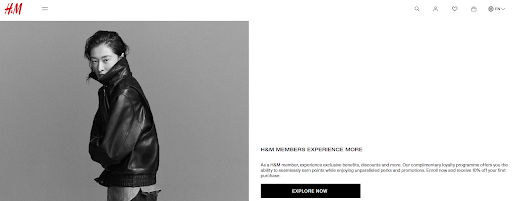
H&M runs a free member program where shoppers earn points on purchases online and in store, with a higher Plus level for its most active members. Benefits vary by market and have changed over time, but they have included member prices, vouchers, free returns and Plus perks such as free shipping and access to selected collections.
What smaller brands can borrow
The lesson is that membership can be useful, not just promotional. A Shopify clothing store can offer free membership with points on orders, reviews and referrals, plus early access to new collections at the top level. That combination keeps members engaged even in months when they aren’t buying.
Princess Polly: tiers that feel like status
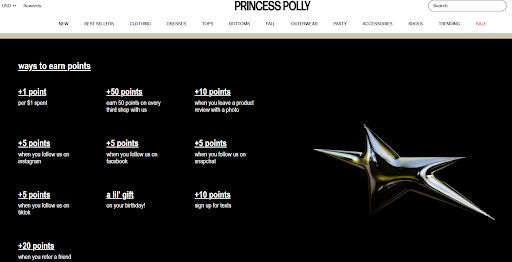
Princess Polly Rewards uses four music-festival themed tiers: General Admission, Front Row, VIP and Backstage Pass. Shoppers earn points as they spend and climb from one level to the next, so the program turns repeat orders into visible progress.
What smaller brands can borrow
Tier names that fit your brand voice make the program memorable. A boutique could create three themed levels based on yearly spend, give the top level early access to limited pieces, and make sure the entry level still feels worthwhile so new members don’t give up.
Matching your loyalty strategy to your fashion category
There’s no single fashion loyalty model, because purchase frequency varies so much across categories. Fast fashion shoppers may buy monthly, while occasionwear shoppers may buy once a year. Pick the mechanics that suit how often your customers buy and what motivates them, then build the rest of the program around that.
| Category | Common challenge | Strategy that fits |
|---|---|---|
| Fast fashion | Shoppers hop between brands and trends | Points, new-arrival access, member offers |
| Athleisure | Customers add pieces over time | Points, product pairings, collection previews |
| Streetwear | Demand centers on limited releases | Early access, member-only drops, VIP tiers |
What to focus on
For frequent categories, speed matters. Short gaps between orders mean points and early access keep you in the habit loop, and tiers give heavy buyers something to aim for.
| Category | Common challenge | Strategy that fits |
|---|---|---|
| Premium fashion | Shoppers expect exclusivity and service | VIP tiers, private previews, events |
| Occasionwear | Long gaps between purchases | Referral rewards, event reminders |
| Sustainable fashion | Customers buy less, by design | Care guides, repair perks, trade-in credit |
| Footwear | Shoppers compare price and availability | Purchase rewards, new-release alerts |
What to focus on
When customers buy rarely, don’t force frequency. Referrals, reviews and a great experience bring more value than nudging someone to buy a second formal gown they don’t need.
How to get repeat customers with a fashion rewards program
The fastest way to get repeat customers is to find where shoppers drop off, then build rewards and messages around that moment. Most fashion brands lose the most people between the first and second order, so the plan below starts there and adds tiers, personalization and easy redemption once the basics work.
Step 1: Find out why shoppers don’t come back
Before you launch anything, look at your order data. A few numbers tell you where the problem is.
Numbers to check first
- Repeat purchase rate: the share of customers who have ordered more than once.
- Time to second purchase: the typical gap between first and second orders.
- Repeat rate by category: casual shirts may bring returning customers while occasionwear rarely does.
- Returns and exchanges: high return rates in one category often point to sizing problems.
- Support reasons: the top three reasons people contact you.
Shoppers who need a nudge toward a second purchase need a different approach from loyal regulars, and the ways to increase second purchases are usually the quickest win.
Step 2: Choose rewards your customers actually want
Don’t copy another brand’s program without knowing your own audience. Ask customers what would bring them back; some will want savings, others early access, free delivery or styling help.
A simple starting set
- Points on every order
- A birthday reward
- Referral rewards for both friends
- Points for verified photo reviews, a form of incentivized reviews that also helps with sizing
- Member access to selected launches
Keep the earning and redeeming rules simple enough to explain in one sentence.
Step 3: Add VIP tiers once the base program works
Tiers work when the benefits are worth chasing. Three levels are enough for most stores. Set the thresholds from your own order data so the top tier holds your best customers without being out of reach.
Step 4: Personalize what each shopper hears
Use purchase history to keep messages relevant. A customer who buys running gear should hear about new running pieces, not formalwear. Someone who hasn’t ordered in four months might get a note about new arrivals in the category they bought before. More messages don’t mean better retention; more relevant ones do.
Step 5: Connect online and in-store shopping
If you have physical stores, members should be able to identify themselves, earn points and see their benefits wherever they shop. Recognizing the same member at the register and online is how to keep customers coming back to your store as well as your site, and it’s the backbone of retail customer retention for omnichannel brands, so check that your loyalty app supports your point of sale before committing.
Step 6: Make rewards easy to use
Confusing rules and high redemption thresholds kill interest fast.
Redemption checklist
- Show the value of each reward clearly.
- Display points balances on the account page and in emails.
- Let customers apply rewards at checkout in one step.
- Send a reminder before points expire.
- Explain how returns and cancellations affect points.
An ecommerce loyalty program that tracks points, tiers and referrals in one place makes every step above easier to run, because the data behind each message lives in the same system.
Mistakes that push repeat customers away
Even a well-built program can fail if it’s hard to use or disconnected from the customer experience. Most of the mistakes below come from treating loyalty as a discount engine or a sign-up count instead of a way to increase repeat purchases.
Program design mistakes
- Relying on discounts alone: customers learn to wait for the next code.
- Rewards that feel out of reach: if the first reward needs ten orders, few will try.
- Generic perks: benefits should match your brand and what your shoppers value.
Communication mistakes
- Too many messages: constant emails train people to ignore you.
- Ignoring the experience: loyalty can’t fix poor quality, slow refunds or hard returns.
Measurement mistakes
- Counting members instead of returning customers: a large member list means little if few people order again.
- Ignoring program cost: reward costs, returns and staff time all affect whether the program pays for itself.
Give every first-time buyer a reason to come back
Fashion brands lose repeat customers when the relationship stops at checkout. Points, VIP tiers, referrals, review rewards and timely messages give shoppers a reason to return, while good sizing, easy returns and helpful support give them a reason to stay. Start with the gap between the first and second order, fix what’s causing it, then build from there. The same foundations apply whether you’re fixing churn or launching a loyalty program for fashion brands from scratch.
Compare Retenzy plans against your monthly order count, then launch VIP tiers and referral rewards before your next collection drops.
FAQs
Why don’t fashion customers become repeat customers?
Most fashion shoppers buy for a season, trend or event, then go quiet for weeks or months. During that gap, they find cheaper alternatives, forget the brand or receive generic messages that give them no reason to return. Sizing problems and difficult returns also stop many first orders from turning into second ones, regardless of how much the shopper liked the product.
How do you get repeat customers in fashion ecommerce?
Start by finding where shoppers drop off, usually between the first and second order. Then add rewards that continue after checkout, such as points, early access and referral credit, and send useful post-purchase messages like styling tips and review requests. VIP tiers help keep your best customers engaged, while easy redemption makes sure people actually use the rewards they earn.
What is a good repeat purchase rate for a fashion brand?
It depends heavily on the category. Fast fashion and basics are bought more often than occasionwear, premium pieces or footwear, so a single benchmark is misleading. The more useful approach is to track your own rate by category and over time, and to watch the time between first and second orders, which shows whether your retention work is helping.
Do loyalty programs work for small fashion brands?
Yes. Small fashion brands often benefit more than large ones, because personal touches like early access, birthday rewards and themed tiers stand out more from a boutique. A free membership with points on orders, reviews and referrals is enough to start. Tiers and personalized messages can be added once the basic program is running and you know what your customers respond to.
Are discounts the best way to win back repeat customers?
Not on their own. Discounts bring orders, but customers who only buy with a code tend to leave when a competitor offers a bigger one. Rewards like early access, review points, referral credit and VIP perks build a relationship that a rival’s sale can’t easily break, so use discounts sparingly and as one part of the program.
Add points, referrals, and VIP rewards to your Shopify store in under 5 minutes.