
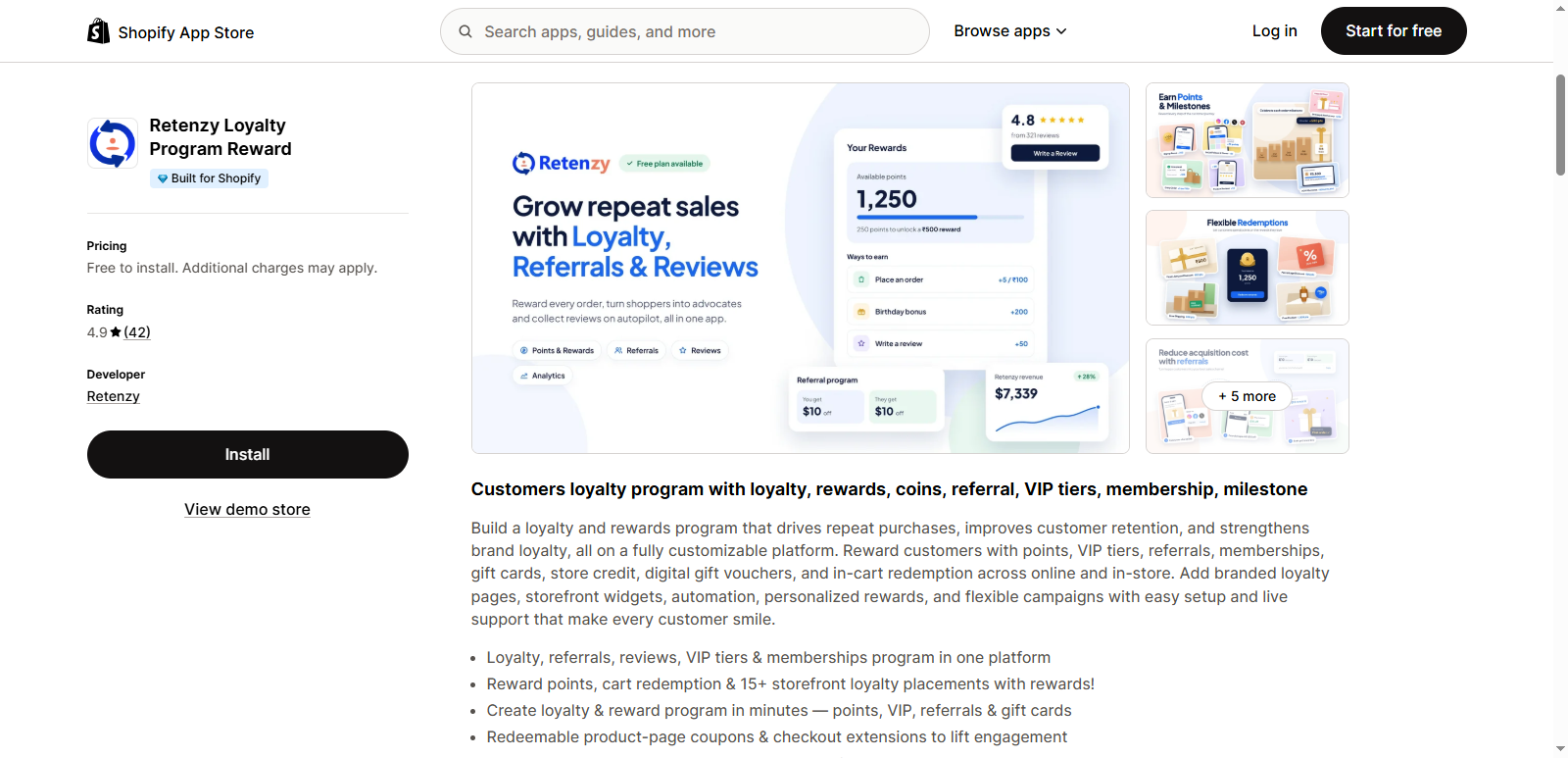
Repeat purchases often come from several connected moments: the points a customer earns, the review they leave and the friend they refer. Retenzy brings these together so Shopify merchants can run their loyalty program and product reviews from one app instead of two or three.
Key features
- Points and rewards: An ecommerce rewards program where customers earn points on purchases and redeem them on later orders.
- VIP tiers: A vip rewards program that gives frequent buyers higher earning rates or exclusive perks as they move up.
- Milestone rewards: Bonuses tied to spend, order count or inactivity, so a customer who hasn’t ordered in a while gets a reason to come back.
- Referrals: A customer referral program that rewards both the existing customer and the friend they invite.
- Reviews: Automated review requests after delivery, with the option to award points for each review.
How it can grow repeat sales
Picture a customer who buys a skincare set. They earn points on the order, get a review request once the product arrives, and receive bonus points when they post the review. Their balance is now close to a reward, which gives them a concrete reason to place a second order. Because loyalty and reviews share one customer record, merchants don’t have to sync data between separate apps.
Best for: Shopify merchants who want loyalty, referrals and reviews managed in one place.
Consider before installing: Map which rewards you can afford at your margin before launch, and decide whether reviews should earn points.
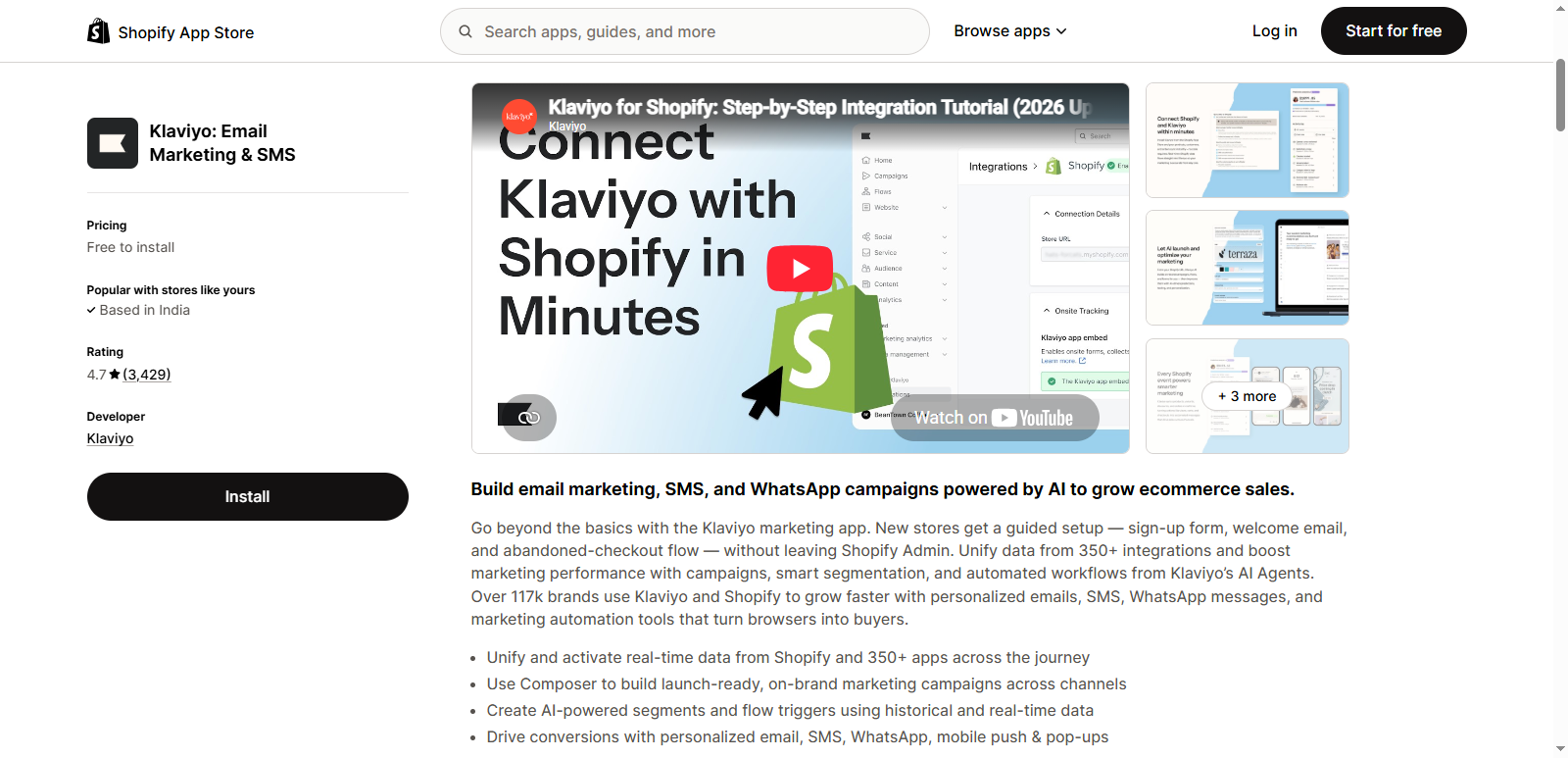
Customers don’t always remember when to reorder or notice when a new product launches. Klaviyo helps merchants reach them with personalized email and SMS campaigns built on shopping behavior and purchase history.
Key features
- Segmentation: Groups customers by purchase history, browsing behavior and engagement.
- Automated flows: Sends welcome, post-purchase, winback and replenishment messages without manual work.
- Email and SMS in one tool: Runs both channels from the same customer profile.
- Abandoned cart messaging: Follows up with shoppers who left items behind.
How it can grow repeat sales
A customer buys a 30-day supply of a supplement. Around day 25, a replenishment email reminds them before they run out. A post-purchase sequence that teaches them how to use the product well also makes the reminder land better, because they’ve already seen results.
Best for: Stores that want detailed segmentation and personalized marketing automation.
Consider before installing: Pricing grows with contact volume and message sends. Follow consent rules for email and SMS marketing in each market you sell to.
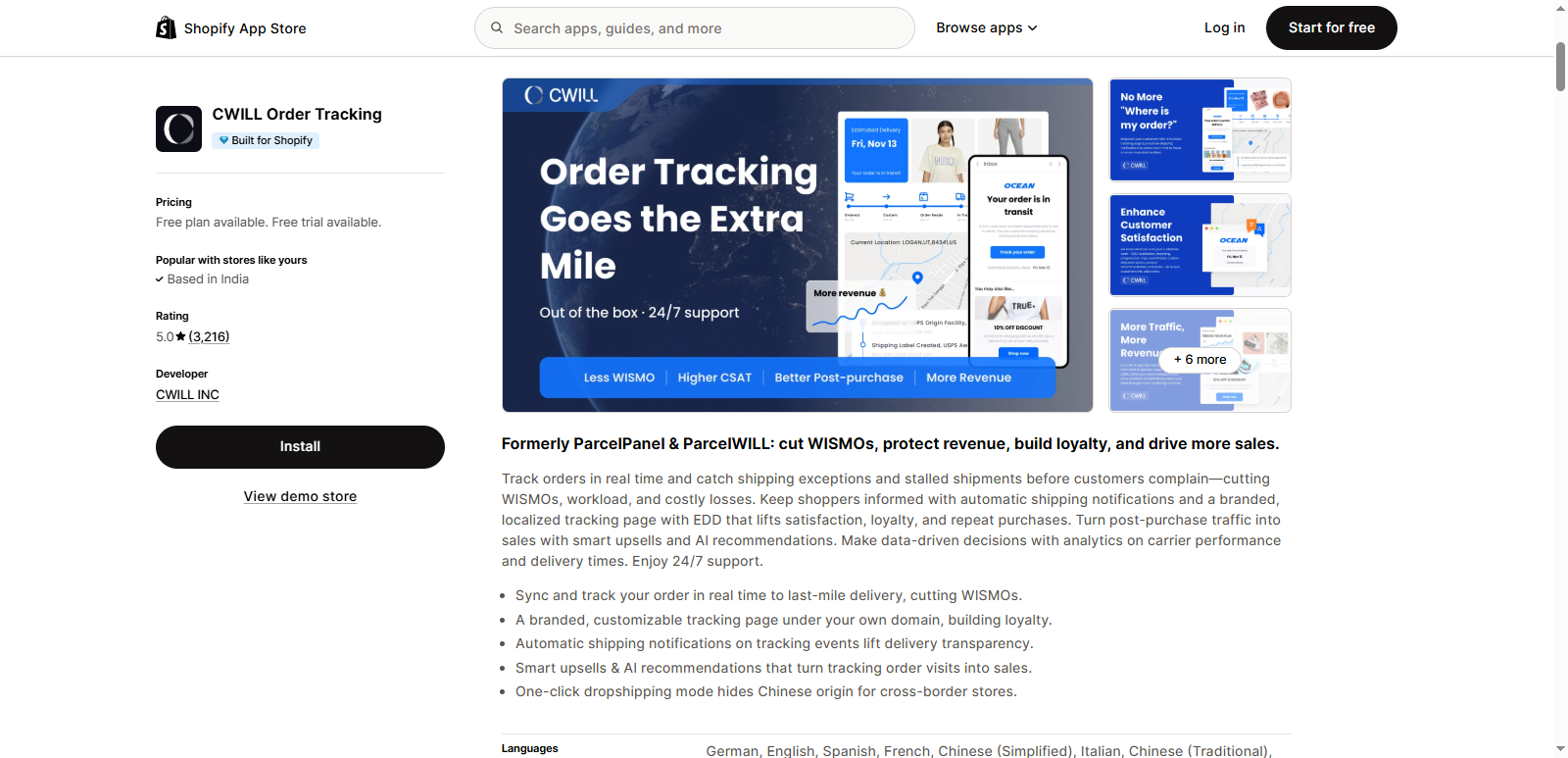
The days between checkout and delivery shape how a customer feels about the first order. CWILL Order Tracking, formerly ParcelPanel, gives shoppers a branded tracking page and automatic shipping updates, so they know where their order is without having to ask.
Key features
- Real-time tracking: Syncs orders with carriers through to last-mile delivery.
- Branded tracking page: A customizable page under your own domain instead of a carrier site.
- Shipping notifications: Automatic updates when a tracking event happens.
- Tracking page recommendations: Product suggestions shown to customers while they check their order.
- Shipment dashboard: One view of delayed, stuck or delivered orders.
How it can grow repeat sales
A customer who orders a gift checks on it three times before it arrives. If each visit lands on your branded page with a clear delivery date, they stay on your site, see a few related products and never need to email support. A smooth first delivery is what makes the second order feel safe.
Best for: Stores with frequent “where is my order?” questions or longer shipping times.
Consider before installing: The free plan covers 20 orders a month, and paid plans are priced by monthly order volume, with a fee for orders over the plan’s quota.
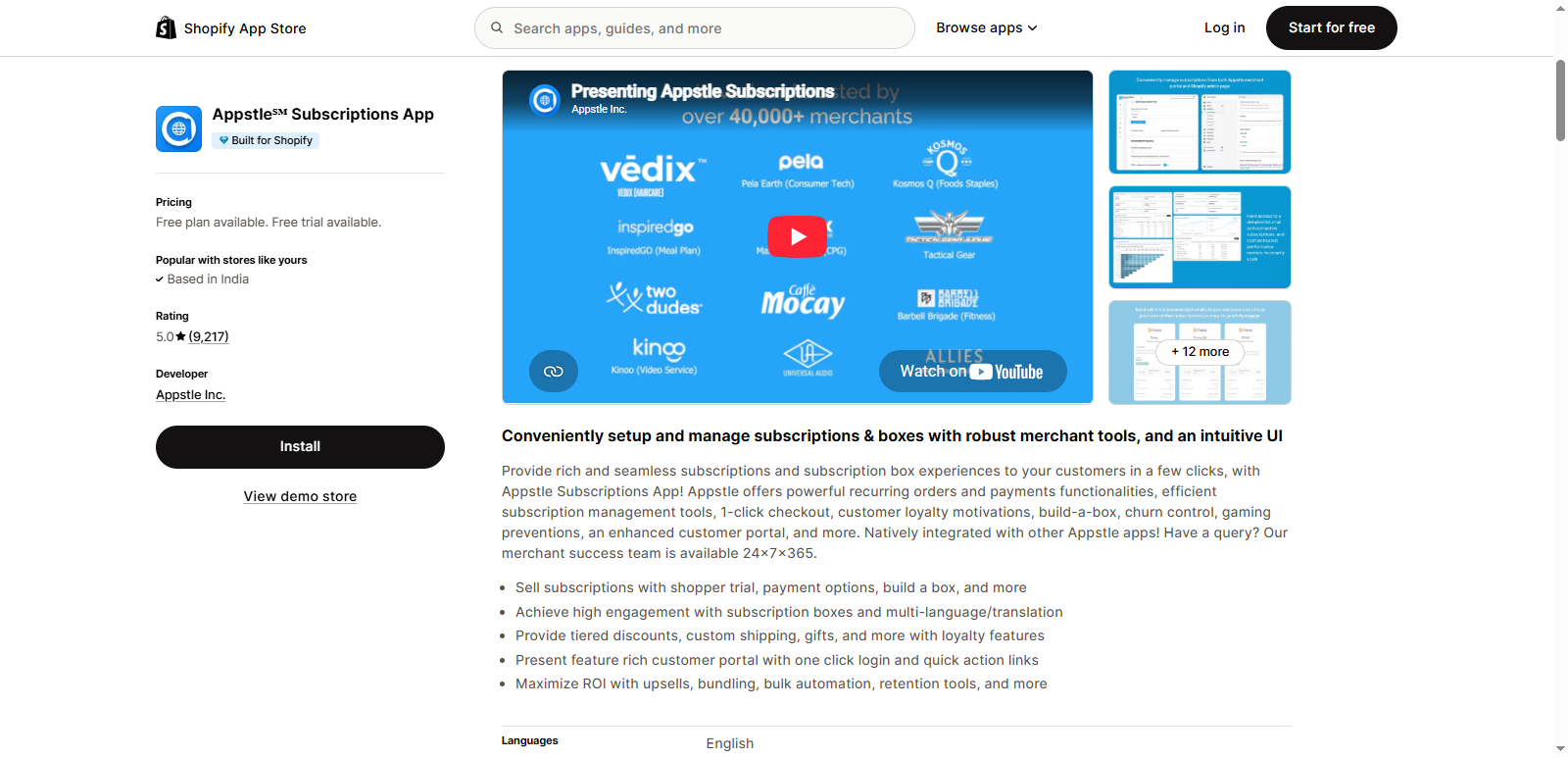
Some products are bought on a cycle: coffee, pet food, personal care and household essentials. Appstle Subscriptions lets merchants offer recurring orders so customers receive these products on a schedule they choose.
Key features
- Flexible schedules: Weekly, monthly or custom delivery intervals.
- Subscription boxes: Curated or build-your-own boxes on a recurring plan.
- Customer portal: Lets subscribers skip, pause or swap products themselves.
- Integrations: Connects with marketing and loyalty tools.
How it can grow repeat sales
Without a subscription, the customer has to remember to reorder. With one, a coffee brand can ship a fresh bag every three weeks automatically. Letting subscribers skip or swap a delivery often keeps them subscribed when they’d otherwise cancel.
Best for: Stores selling consumable products that customers buy regularly.
Consider before installing: Review billing flows, self-service options and the cancellation rules that apply in your markets.
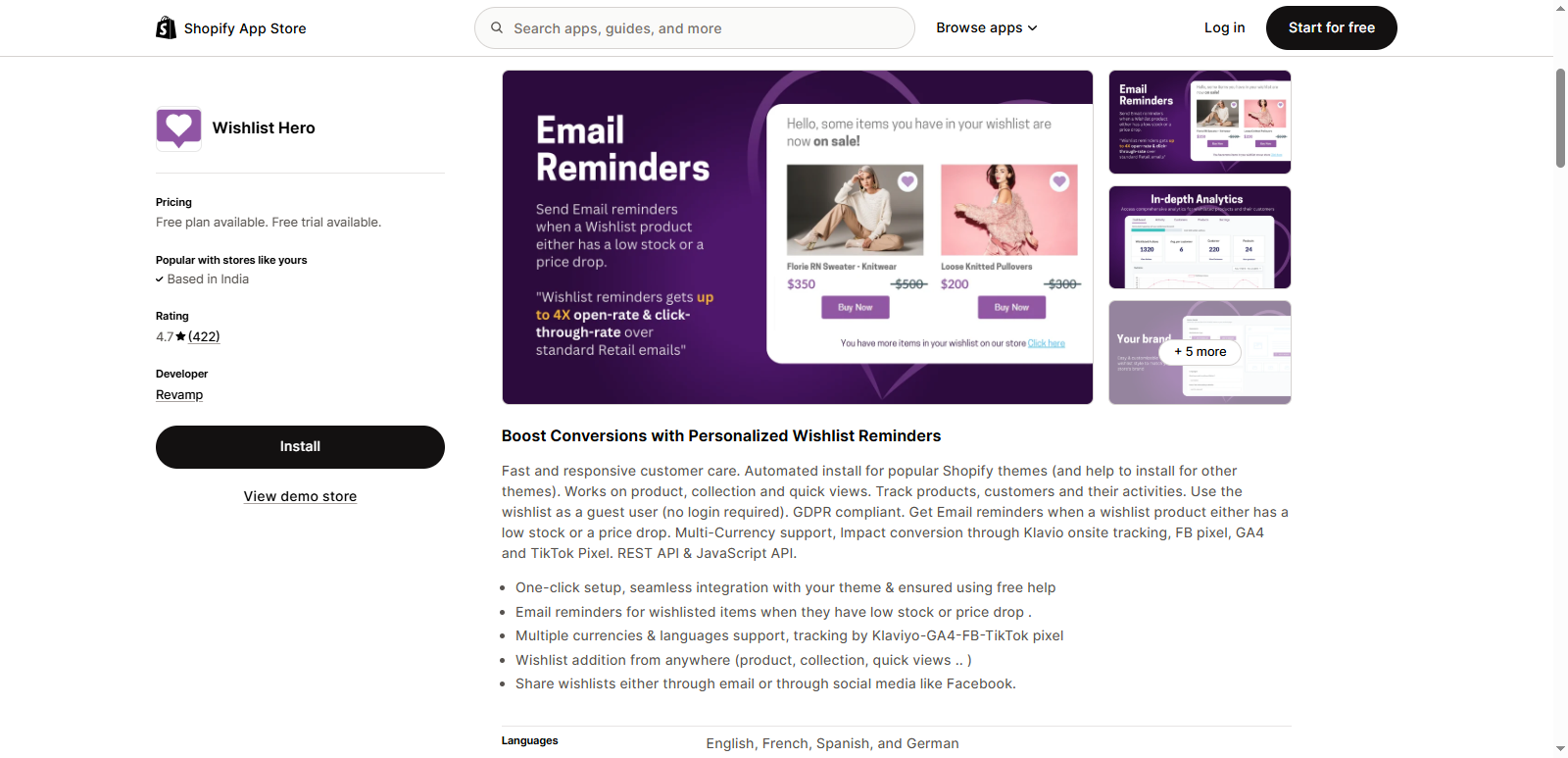
Not every shopper is ready to buy on the first visit. Wishlist Hero lets them save products for later, which gives the store a reason to follow up.
Key features
- Product wishlists: Shoppers save items with one click.
- Sharing: Customers can share lists with friends or family, which is useful for gifting.
- Reminder emails: Nudges shoppers about saved items.
- Back-in-stock alerts: Notifies shoppers when a saved product returns, where supported.
How it can grow repeat sales
Someone shopping for furniture might save several pieces while deciding. When one of them goes on sale or comes back in stock, a reminder brings them back to a product they already wanted, rather than a generic promotion.
Best for: Stores with large catalogs or products that need some thought before purchase.
Consider before installing: A wishlist only pays off if you have a follow-up plan for the products customers save.
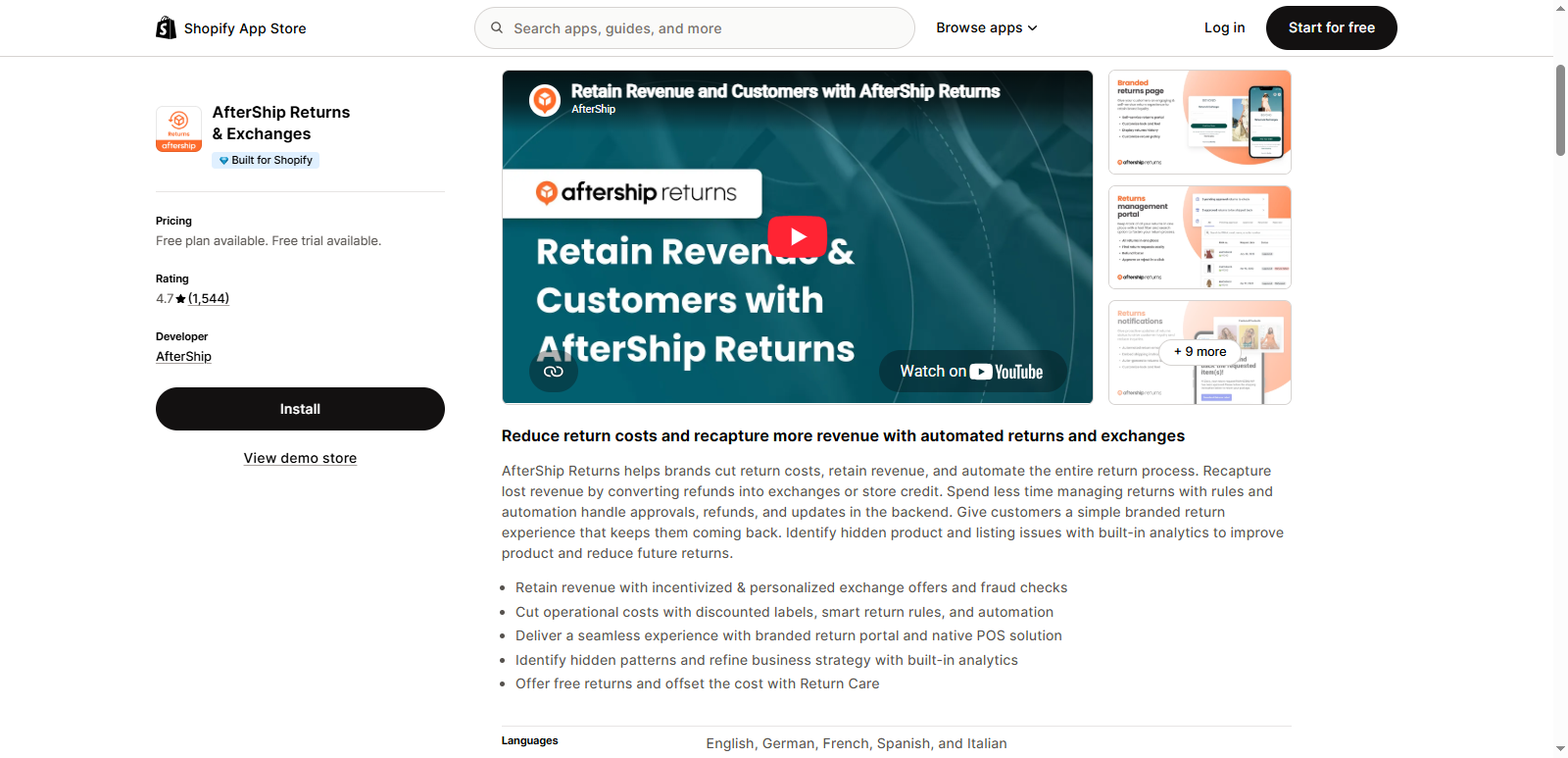
Returns are a normal part of ecommerce, but a clumsy process damages trust. AfterShip Returns & Exchanges helps merchants manage requests and offer alternatives such as exchanges or store credit.
Key features
- Branded return portal: Customers start returns on your site.
- Exchange workflows: Offers a different size, color or product before a refund.
- Return rules: Sets eligibility by product, date or reason.
- Store credit: Gives customers credit to spend later, depending on configuration.
How it can grow repeat sales
A customer orders a jacket that doesn’t fit. Instead of a straight refund, the portal offers the next size up. The customer gets a jacket they can wear and the store keeps the sale. Store credit works the same way, since the customer has to come back to use it.
Best for: Stores with regular returns or exchanges that want a smoother post-purchase experience.
Consider before installing: Compare your return volume and processing costs with the plan’s limits.
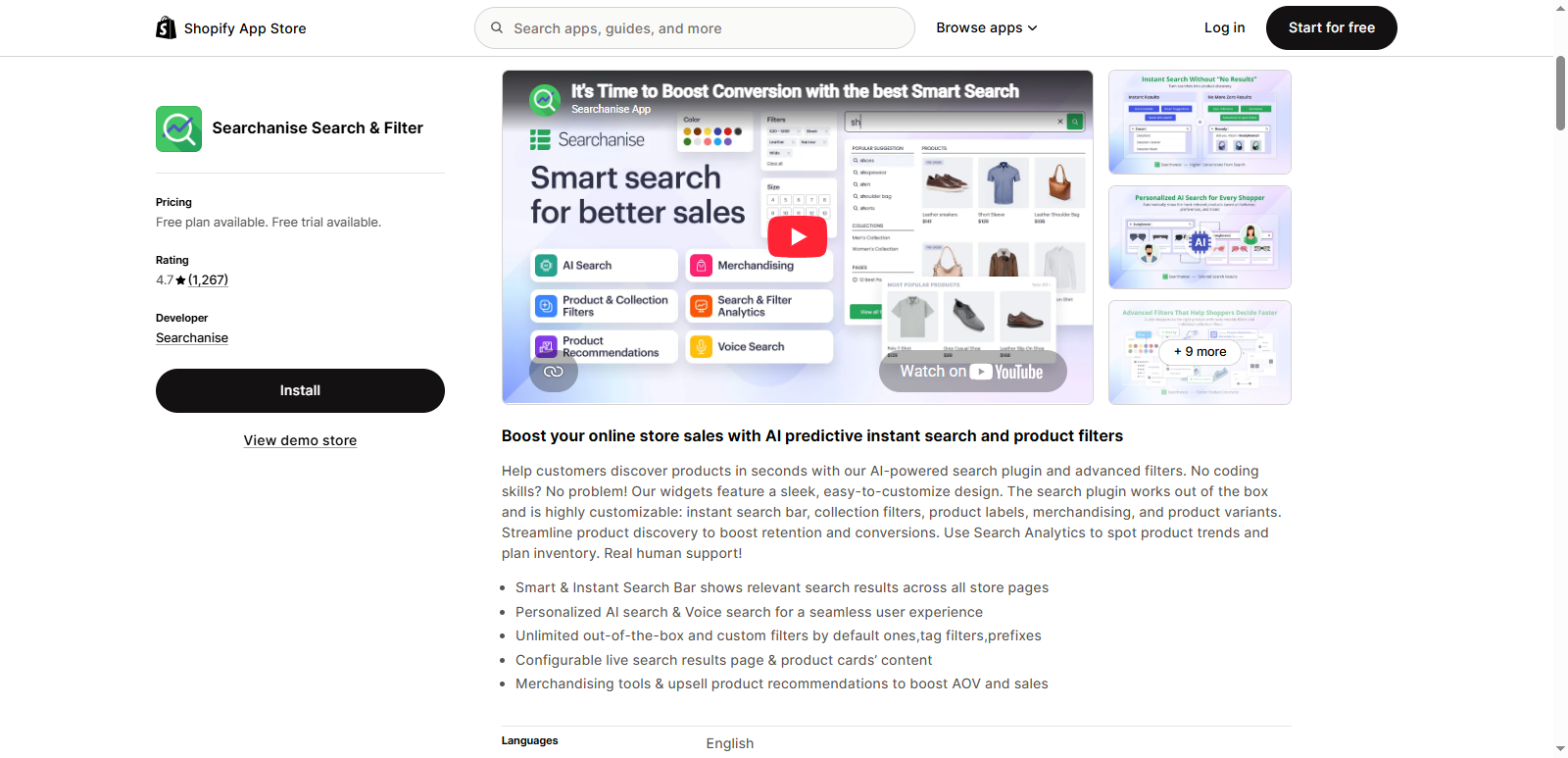
A returning customer often knows exactly what they want. If search can’t find it quickly, they may leave without buying. Searchanise adds onsite search and filtering that help shoppers move through a store’s catalog.
Key features
- Instant search: Suggestions appear as the shopper types.
- Filters: Narrows results by size, price, color and other attributes.
- Merchandising: Promotes chosen products in results, depending on the plan.
- Typo tolerance: Finds the right product even when the search is misspelled.
How it can grow repeat sales
A returning shopper looking for a replacement filter should find the right model in one search, not after browsing five unrelated collections. Fewer steps mean fewer abandoned visits from people who were ready to reorder.
Best for: Stores with large catalogs, many variants or customers who search for specific items.
Consider before installing: Test search relevance on your own catalog and check the effect on storefront speed.
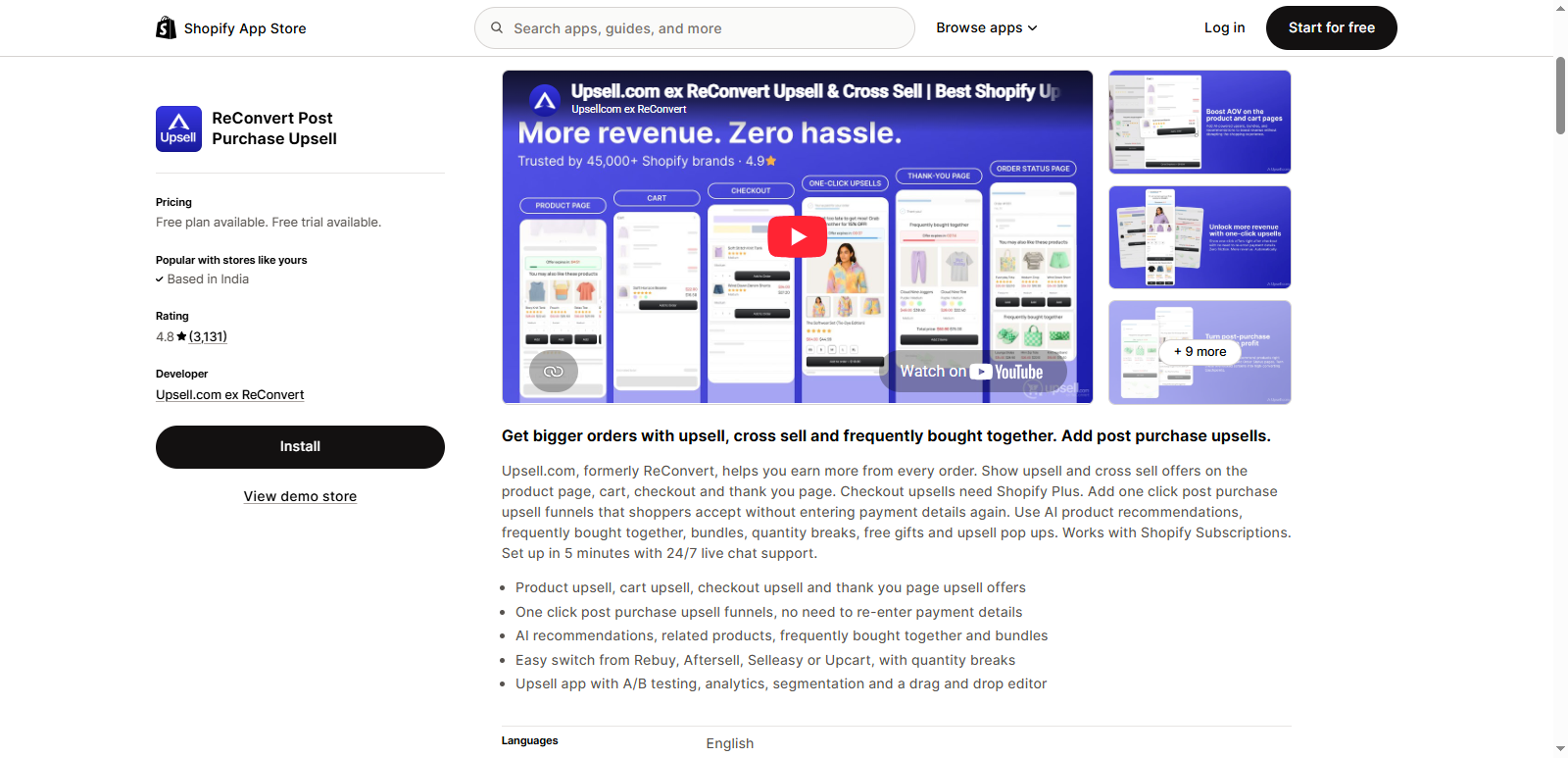 The thank-you page is one of the few moments when a customer has just paid and is still paying attention to your store. ReConvert Post Purchase Upsell turns that page, and the steps around checkout, into a place to offer a relevant add-on.
Key features
- One-click post-purchase upsells: Offers after checkout that don’t require re-entering payment details.
- Thank-you page offers: Upsells and product suggestions on the order confirmation page.
- Product and cart upsells: Offers on product pages and in the cart.
- Recommendations and bundles: Related products, frequently bought together items and bundles.
- Testing and analytics: A/B testing, segmentation and a drag and drop editor.
How it can grow repeat sales
An upsell raises the value of the current order rather than creating a new one, but the right add-on makes the main product more useful. A customer who buys a coffee grinder and adds a sample pack of beans in one click has a reason to come back for a full bag once the sample runs out.
Best for: Stores with natural add-ons, refills or accessories.
Consider before installing: Checkout upsells need Shopify Plus, and the free plan covers up to 50 orders or $50 in upsell revenue. Keep offers relevant so the confirmation page doesn’t feel like a sales pitch.
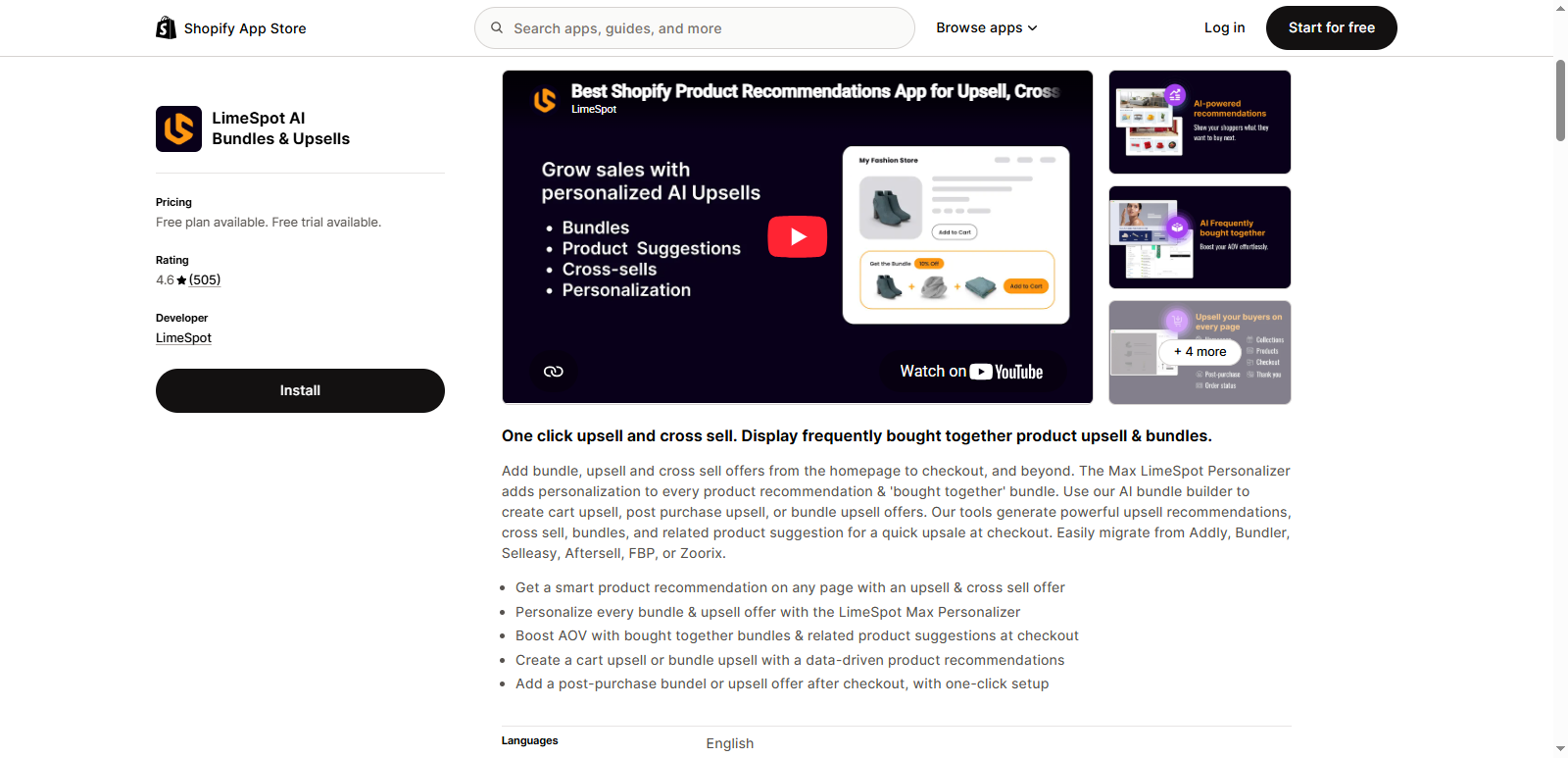 Returning customers expect a store to show products that fit what they already bought. LimeSpot AI Bundles & Upsells adds data-driven recommendations, bundles and upsell offers across the storefront, cart and post-purchase pages.
Key features
- Recommendations on any page: Related products, upsells and cross-sells wherever shoppers browse.
- Bundles: Bought together bundles and related product suggestions at checkout.
- Cart and post-purchase offers: Upsells in the cart and after checkout.
- Personalization: The Max plan’s Personalizer tailors bundles and offers to each shopper.
How it can grow repeat sales
A shopper who bought running shoes returns a month later. Instead of the same bestseller grid every visitor sees, they see socks, insoles and the newer version of their shoe. Suggestions that reflect past purchases shorten the path to a second order.
Best for: Stores with broad catalogs where returning customers benefit from tailored suggestions.
Consider before installing: The free plan covers up to 10 orders a month, and paid fees scale with order volume or revenue. The Turbo plan isn’t compatible with Shopify Plus.