
Using Referral Programs to Turn Fashion Shoppers into Brand Ambassadors
A referral program for fashion brands rewards existing customers for introducing friends, usually through a unique link that gives both people a discount, store credit or loyalty points. It works because shoppers trust a friend’s take on fit and quality. Pair it with your loyalty program and recognize frequent referrers to grow genuine brand ambassadors.
Fashion is personal. People share outfit pictures, recommend their favourite clothing brands to friends, and ask where someone bought a particular dress, handbag, or pair of sneakers. For fashion ecommerce brands, these everyday conversations represent an opportunity to attract new customers without relying entirely on paid advertising.
A well-designed referral program can turn these recommendations into a repeatable customer acquisition strategy. Instead of simply rewarding shoppers for making purchases, brands can encourage satisfied customers to introduce their products to people who trust their opinions.
The opportunity goes beyond offering a discount code. When customers consistently recommend a brand, share their purchases, and introduce new shoppers to its collections, they can become genuine brand ambassadors.
For fashion retailers, the challenge is creating a referral experience that feels natural, rewards both parties fairly, and encourages customers to keep participating.
In this guide, we’ll explore how referral programs work, what successful fashion brands can learn from real-world examples, and how Shopify stores can build referral strategies that generate new customers and strengthen long-term loyalty.
What is a Referral Program for Fashion Brands?
A referral program is a marketing strategy that rewards existing customers for introducing new shoppers to a business. Customers typically receive a unique referral link or discount code they can share with friends, family members, or their social networks.
When someone makes an eligible purchase through that referral, the existing customer receives a reward. Depending on the program, the new customer may also receive a discount or another welcome benefit.
For fashion brands, the process might look like this:
- A customer purchases a dress from an online fashion store and enjoys the fit, quality, and overall shopping experience.
- The brand invites the customer to join its refer-a-friend program.
- The customer shares a personalized referral link with a friend who is looking for a similar style.
- The friend uses the link to receive a welcome discount on their first order.
- After the purchase meets the program’s eligibility requirements, the original customer earns store credit, loyalty points, or another reward.
Both customers benefit, while the brand gains an opportunity to acquire a new shopper through an existing relationship.
Referral Programs vs. Brand Ambassador Programs
Although these terms are often used interchangeably, they serve slightly different purposes.
| Referral programs | Brand ambassador programs |
|---|---|
| Encourage customers to recommend a brand to people they know. | Build ongoing relationships with customers, creators, or influencers who represent a brand. |
| Usually reward successful referrals or purchases. | May include commissions, gifted products, exclusive access, or other benefits. |
| Often requires minimal commitment. | May involve ongoing content creation and promotion. |
| Work well for everyday customers. | Work well for highly engaged customers and creators. |
Fashion brands can combine both approaches. A referral program allows every eligible customer to recommend the brand, while a separate ambassador program can recognise customers who consistently drive referrals, create useful content, and engage with the community.
The distinction matters because not every customer needs to become an influencer to become a brand ambassador. Sometimes, a recommendation to three friends who trust their style is more valuable than a promotional post reaching thousands of people who have little interest in buying.
Why Referral Marketing Works Particularly Well for Fashion Brands
Fashion products are naturally connected to personal identity, social interactions, and individual preferences. This makes recommendations a relevant part of the shopping journey.
Here are four reasons fashion ecommerce brands should consider referral marketing.
Personal recommendations help build trust
Buying clothing online involves uncertainty. Customers may wonder whether a garment will fit properly, whether its colour will match the pictures, or whether the material will meet their expectations. A recommendation from a friend who has already purchased the product can help address some of these concerns.
For example, a customer looking for comfortable office wear might trust a colleague’s recommendation of a clothing brand more than a generic advertisement. The colleague can share their experience with sizing, fabric, and everyday wear, helping the new shopper make a more informed decision.
Referral marketing does not eliminate purchase uncertainty, but it can provide a more personal starting point for discovering a brand.
Fashion purchases naturally encourage conversations
People often discuss clothing when they receive compliments, discover a new label, or find an outfit that suits them particularly well. A referral program gives customers a simple way to act on those conversations.
Imagine a shopper wearing a jacket that attracts attention from a friend. Instead of simply mentioning the brand, the shopper can share a referral link that gives the friend an incentive to explore the collection.
The recommendation becomes easier to follow, and the brand can attribute the resulting purchase to the referring customer.
Referrals can complement paid acquisition
Fashion brands frequently compete for attention across social media, search engines, marketplaces, and influencer channels.
Referral marketing adds another acquisition route: existing customers introducing new shoppers.
However, referrals are not automatically cheaper than paid advertising. Discounts, rewards, platform fees, and returns all affect profitability. Brands should compare the total cost of acquiring a referred customer with the cost and quality of customers acquired through other channels.
Real Fashion Brand Example to Learn From
Christy Dawn: Connect Referrals With Brand Values
Christy Dawn offers a useful example of referral marketing built around a distinctive brand identity.
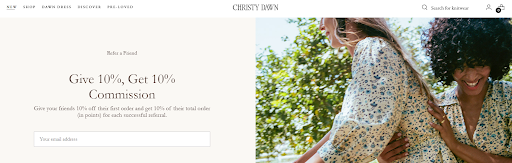
The label builds its customer program around its values. Its rewards page opens with the headline “Join The Regenerative Evolution,” which links membership to the brand’s focus on regenerative farming and organic cotton, not just to discounts.
The site footer promotes the refer-a-friend page with the line “Get 10% Christy Dawn Credit!” The reward is store credit rather than a cash discount, so a successful referral brings the customer back to shop again.
The lesson is not that every fashion retailer should copy this program. It is that referrals work best when they are part of a wider relationship. Christy Dawn’s referral link sits in the same place as its points, tiers and early access, so each recommendation adds to a customer’s ongoing connection with the brand.
What other fashion brands can learn:
- Lead with what your brand stands for. A clear identity, like Christy Dawn’s regenerative message, gives customers a reason to recommend you that goes beyond price.
- Reward referrals with store credit. Credit encourages a repeat purchase instead of simply reducing the value of an order.
- Place referrals next to your loyalty program. Customers who are already collecting points and climbing tiers are more likely to notice and use a referral offer.
- Give your most engaged customers more to aim for. Higher tiers with better perks, such as free shipping or early access, give frequent shoppers and referrers a reason to stay involved.
For a minimalist clothing label, that might mean highlighting timeless designs. For a streetwear brand, it could involve exclusive drops or a strong community identity.
How to Build a Referral Program That Turns Shoppers Into Ambassadors
A referral program should do more than distribute discount codes. Its real purpose is to make recommending the brand easy, rewarding, and worthwhile for customers.
Here is a practical framework fashion e-commerce brands can follow.
Step 1: Identify Customers Who Are Most Likely to Recommend You
Not every customer will refer friends, and that is perfectly normal.
Start by identifying shoppers who already demonstrate a strong connection with your brand. These might include:
- Repeat customers who regularly purchase from new collections.
- Customers who leave positive product reviews.
- Shoppers who engage with your social media content.
- Customers who frequently purchase from particular product categories.
- Loyalty members who actively participate in your rewards program.
For example, a customer who has purchased from your brand three times and left a detailed review may be a better candidate for an initial referral campaign than someone who has just completed their first purchase.
However, brands should avoid restricting participation too heavily. A first-time customer who loves a product may also become a valuable advocate.
Practical tip: Invite eligible customers to refer friends after a positive shopping experience. A post-purchase email, loyalty account page, or order confirmation page can introduce the program without interrupting the buying journey.
Step 2: Choose Rewards That Fit Your Brand
The reward is one of the most important parts of a referral program. It should motivate customers to participate while protecting the brand’s profitability.
Fashion retailers can experiment with several reward types like percentage discount, fixed-value discount, store credit, loyalty points, unlocking exclusive products, or providing early access to active referrers.
The best reward is not necessarily the largest discount.
Consider a fashion brand selling premium occasion wear. It might offer store credit after a successful referral rather than an immediate percentage discount. This can encourage another purchase without reducing the price of every order. A streetwear label, on the other hand, might reward frequent referrers with early access to an upcoming collection.
The objective is to choose incentives customers value and the business can sustain.
Step 3: Reward Both the Referrer and the New Customer
A two-sided referral program gives both parties a reason to participate. The existing customer receives a reward for making the introduction, while the new shopper receives an incentive to try the brand.
For example, a fashion store could offer:
- For the friend: 10% off their first eligible order.
- For the referrer: Store credit after the friend’s purchase qualifies.
These are illustrative rewards, not a universal recommendation. Each brand should test different offers against its margins and conversion rates.
It is also important to explain when rewards are earned. If the referrer’s credit becomes available only after the referred order is completed and the return window or another eligibility period has passed, state that clearly.
Clear rules help avoid customer frustration and discourage attempts to exploit the program.
Step 4: Make Sharing Effortless
Even a generous reward will struggle to generate referrals if customers find the process confusing.
Your referral experience should make it easy for shoppers to find their unique link, understand the offer, and share it with others.
Consider placing referral access in several relevant locations:
- The customer account page.
- The loyalty program page.
- Post-purchase emails.
- Order confirmation pages.
- Loyalty or rewards reminders.
- Selected post-purchase communications.
Allow customers to share their referral links through convenient channels, such as messaging apps, email, and social platforms.
For fashion brands, the message accompanying the link can also make a difference. Rather than forcing customers to write something from scratch, offer a short, editable message that sounds natural.
For example:
“I recently found this brand and thought you’d like its collection. Here’s a discount for your first order if you want to check it out.”
The message should feel like a genuine recommendation, not a scripted advertisement.
Step 5: Connect Referrals With Your Loyalty Program
A referral program becomes more useful when it works alongside the rest of your customer retention strategy.
Instead of treating referrals as a separate marketing campaign, fashion brands can integrate them into a broader loyalty program.
For example, customers could earn loyalty points for:
- Making eligible purchases.
- Referring new customers who complete qualifying orders.
- Writing honest product reviews.
- Participating in selected brand activities.
- Reaching referral milestones.
The important distinction is that each activity should have its own clearly defined reward conditions.
A customer might earn a small number of points for a qualifying referral and unlock an additional benefit after referring several new customers. More engaged advocates could receive access to an exclusive customer community or selected product launches.
This creates a progression from ordinary shopper to active participant and, eventually, a potential brand ambassador.
For Shopify stores, an integrated loyalty and referral solution can be considered as part of this approach. Before choosing an app, verify that its current referral features, reward conditions, integrations, and reporting meet your requirements.
Turn Customer Referrals Into Shareable Fashion Content
Fashion brands have another advantage: customers can demonstrate how products look and fit in real life.
With appropriate permission, customer-generated content can complement referral marketing and help prospective buyers understand a product beyond professional campaign photography.
Here are three practical ways to combine the two.
Encourage customers to share their styling ideas
Invite customers to share how they style a purchased item. For example, someone might wear the same jacket with office trousers, denim, and weekend outfits.
A referral link can accompany the content if the customer chooses to recommend the brand.
This approach gives potential shoppers a more personal view of how products can fit into everyday wardrobes.
Create a customer spotlight series
Feature selected customers in a recurring series on your website, newsletter, or social media channels.
You might highlight their favourite products, styling preferences, or reasons for choosing the brand.
With the customer’s consent, these spotlights can help build a community around the brand rather than making every interaction about discounts.
Combine referrals with customer reviews
Reviews help shoppers evaluate product quality, fit, sizing, and usability. Referral programs help those shoppers discover the brand through people they know.
Used together, the two strategies can support different stages of the buying journey.
However, brands should keep the rules clear: rewards for referrals must not depend on customers leaving positive reviews. If reviews are incentivised, customers should be free to express their honest opinions, and the brand must follow the applicable review platform’s policies.
Conclusion
Referral programs give fashion brands a practical way to turn customer satisfaction into customer acquisition. By rewarding shoppers for introducing friends to the brand, retailers can create opportunities to attract new customers while giving existing customers another reason to stay engaged.
However, the strongest programs are not built around discounts alone. They combine relevant incentives, a straightforward sharing experience, a positive shopping journey, and recognition for customers who consistently recommend the brand.
Fashion retailers can start with a simple refer-a-friend offer, connect it with their loyalty program, and gradually identify customers who want to become more involved in the brand community.
The goal is not to make every shopper a salesperson. It is to make it easy for customers who genuinely love your products to share that enthusiasm with others.
When customers have good reasons to recommend your brand and a positive experience worth talking about, referrals can become a meaningful part of your long-term fashion ecommerce growth strategy.
Frequently Asked Questions
1. What is a referral program for fashion brands?
A referral program rewards existing customers for introducing new shoppers to a fashion brand. Rewards may include discounts, store credit, loyalty points, or exclusive benefits. Many programs also offer an incentive to the new customer.
2. How can fashion brands turn customers into brand ambassadors?
Brands can encourage customers to share referral links, recommend products, and participate in community activities. Recognising frequent referrers with exclusive benefits or early access can help build longer-term relationships with their most engaged customers.
3. What rewards work best for fashion referral programs?
The right rewards depend on the brand’s margins, average order value, and customer preferences. Percentage discounts, fixed-value offers, store credit, loyalty points, and early access are options worth testing.
4. Are referral programs suitable for small fashion businesses?
Yes. A small fashion business can begin with a basic refer-a-friend offer and expand as it learns which incentives attract valuable customers. The program should be easy to manage and financially sustainable.
5. How can Shopify fashion stores track referrals?
Shopify merchants can use referral marketing or loyalty apps to generate referral links, track qualifying purchases, and manage rewards. They should also monitor acquisition costs, conversion rates, repeat purchases, and program profitability.
6. What is the difference between referral marketing and influencer marketing?
Referral marketing encourages customers to recommend a brand to their networks, often in exchange for a reward. Influencer marketing generally involves collaborating with creators who promote products to an audience. Fashion brands can use both strategies, but they should define their objectives and reward structures separately.
Add points, referrals, and VIP rewards to your Shopify store in under 5 minutes.